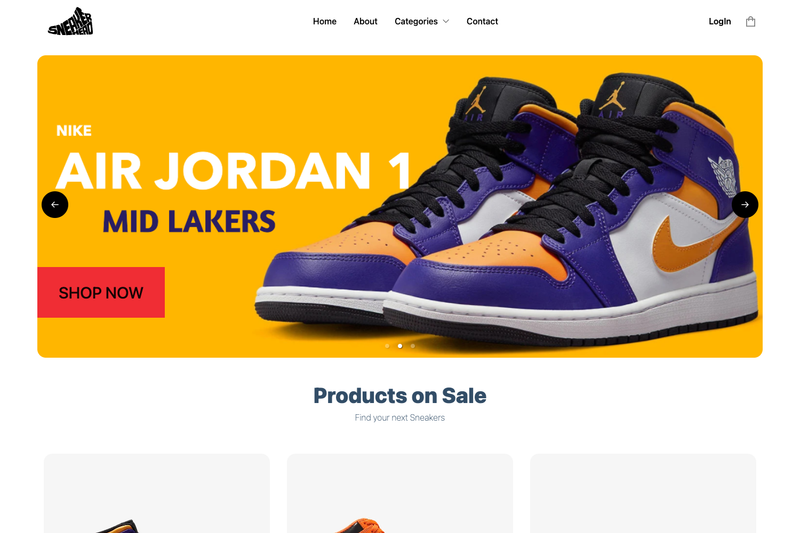
Sneaker Head is an open-source ecommerce web application built with Next.js for selling sneakers, combining Redux Toolkit for state management, Sanity as a headless CMS for the product backend, user login authentication, and Stripe for payment processing. The project is authored by Debajit-Paul and is structured for deployment on Vercel.
What is Sneaker Head?
Sneaker Head is a Next.js storefront for a sneaker shop that takes product data stored in Sanity CMS and renders it to a responsive Tailwind CSS interface. It handles shopping cart state with Redux Toolkit, authenticates users via JWT-based API routes, and completes purchases through Stripe. The code is available on GitHub and includes Sanity Studio for content management.
Key Features
- Next.js framework — Server-rendered React application with built-in routing and API routes, serving pages for the storefront and checkout flow.
- Redux Toolkit — Global state management for cart items, user session, and product catalog across the entire store.
- Sanity CMS — Headless content backend that stores product data, with Sanity Studio included for editing the catalog without touching code.
- User authentication — Email and password sign-up/sign-in implemented with bcryptjs for password hashing and jsonwebtoken for session tokens, exposed through next-connect API routes.
- Stripe integration — Payment processing for checkout, enabling secure credit card transactions.
- Tailwind CSS — Utility-first styling framework for building responsive layouts that adapt to mobile and desktop screens.
- React Hook Form — Simplifies form state and validation for authentication and checkout forms.
Who is it for?
- Developers launching a sneaker or fashion storefront: They can fork this repository, configure their own Sanity dataset, and have a working cart and checkout flow in place.
- Developers learning ecommerce architecture: The project is a practical reference for combining Next.js with Redux Toolkit, a headless CMS, Stripe, and custom authentication.
- Agencies or freelancers prototyping stores: It provides a Vercel-ready deployment with one command, plus Stripe test mode for demonstrating purchases.
What can you do with Sneaker Head?
- Store owners: Manage product listings, prices, and images through Sanity Studio, and see changes appear instantly on the Next.js storefront.
- Shoppers: Browse sneakers, add them to a cart, create an account, and pay securely via Stripe.
- Developers: Extend the JWT-based authentication to add protected routes for order history, customer profiles, or an admin dashboard.
How does Sneaker Head work?
The application uses Sanity as the content backend and Next.js API routes for authentication and checkout. To set it up locally, install dependencies with npm install --legacy-peer-deps, then run the deploy script with npm run deploy to publish to Vercel. The repo ships with bcryptjs and jsonwebtoken already wired for credential hashing and token-based sessions.
FAQ
What tech stack does Sneaker Head use?
Sneaker Head uses Next.js, Tailwind CSS, Redux Toolkit, Sanity, React Hook Form, and Stripe. It also depends on bcryptjs for password hashing and jsonwebtoken for authentication tokens, and is designed to be deployed on Vercel.
Is Sneaker Head free to use?
The source code is freely available in a public GitHub repository, so you can download, modify, and deploy it. No license file is mentioned in the repository, though.
Does Sneaker Head include user authentication?
Yes, it includes email/password login with hashed passwords using bcryptjs and session tokens via jsonwebtoken. Authentication logic lives in Next.js API routes using next-connect.
Can I use my own products with Sneaker Head?
Yes. Products are stored in Sanity CMS, so you can replace the sample dataset with your own sneaker catalog through Sanity Studio. The Next.js storefront will fetch product data from your Sanity project automatically.