Newsletter
Join the Community
Subscribe to our newsletter for the latest news and updates

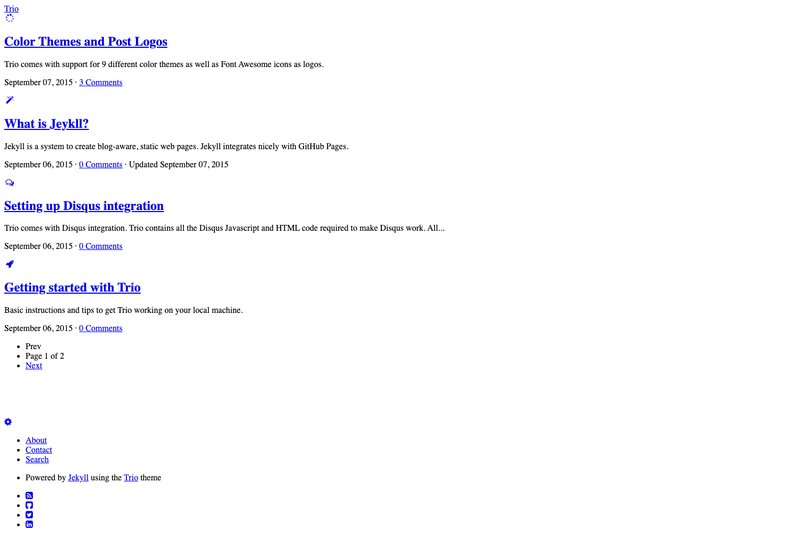
A content-focused, responsive Jekyll theme with RSS, full-text search, Disqus, and nine color themes.
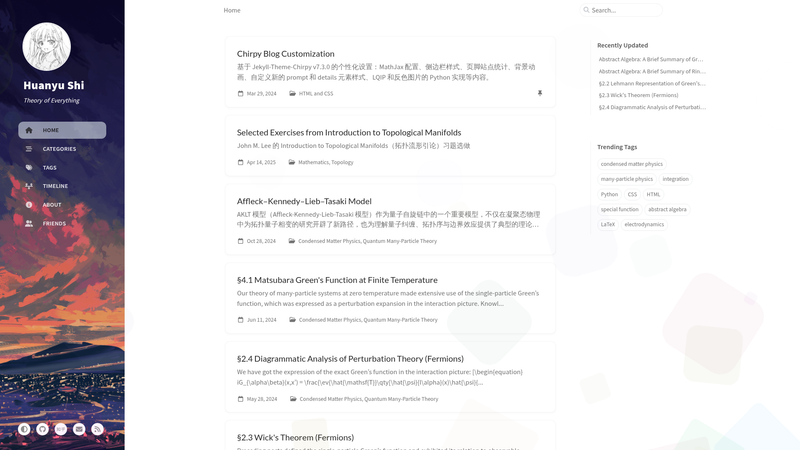
A Jekyll + Chirpy personal academic blog template tailored for physics and math study notes.
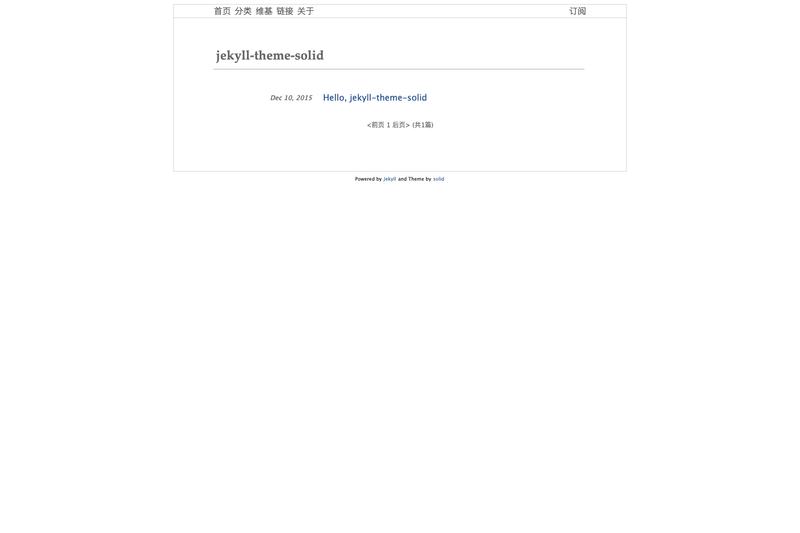
A simple and clean jekyll theme without javascript.
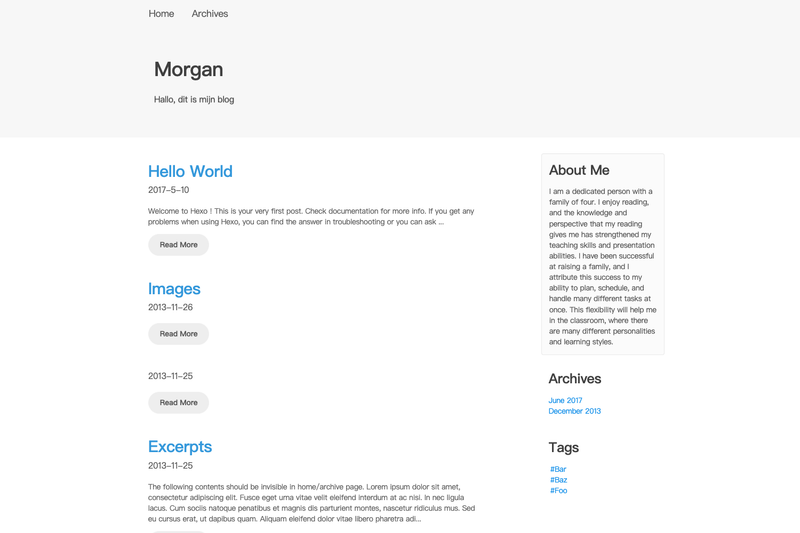
A Hexo blog theme styled with Tocas UI, featuring customizable colors, Disqus comments, code highlighting, and animated multilingual slogans.
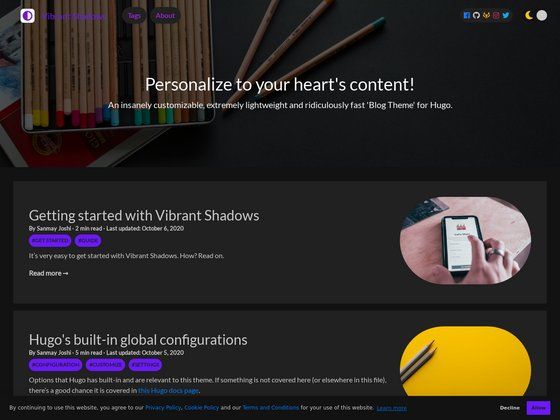
A lightweight, customizable Hugo blog theme with dark/light mode, infinite scrolling, and extensive configuration options.
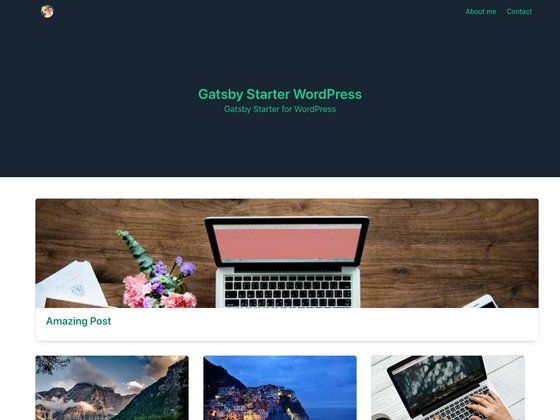
Gatsby Starter to launch your blog from WordPress
Trio is a content-focused, responsive Jekyll theme by Ankur Gupta that turns Markdown posts into a clean static blog with full-text search, Disqus comments, and nine color themes.
Trio is a Jekyll theme built for simple, content-focused blogs. It accepts Markdown files and generates a static, mobile-friendly website with an RSS feed, a 404 page, and paginated post lists. The theme runs on any Jekyll installation, is open-sourced under the MIT license, and was created by Ankur Gupta, with a live demo at perfectlyrandom.org/trio.
$theme-color variable in _sass/_colors.scss.Trio is a standard Jekyll theme. After setting up Jekyll, clone the repository and add Markdown files to the _posts directory, then run jekyll build. To change the color theme, edit the $theme-color variable in _sass/_colors.scss; to generate favicons, run the included create-favicon.sh script, which requires ImageMagick.
Trio is free to use under the MIT open-source license. No paid tiers or premium features are listed.
Yes, Trio is open-sourced under the MIT license, so you can use, modify, and distribute it freely for personal or commercial projects.
Edit the $theme-color variable in the _sass/_colors.scss file. Trio includes nine predefined colors; the default is red, defined as $base-08.
Yes, it includes full-text search powered by Simple-Jekyll-Search, so visitors can search post content without an external search service.
Use the included create-favicon.sh bash script, which relies on ImageMagick's convert command. You can modify the script to change colors and lettering.
Trio was created by Ankur Gupta and is maintained on GitHub. The project page also credits inspiration from Solo, Lanyon, Hyde, and Pixyll.