Newsletter
Join the Community
Subscribe to our newsletter for the latest news and updates

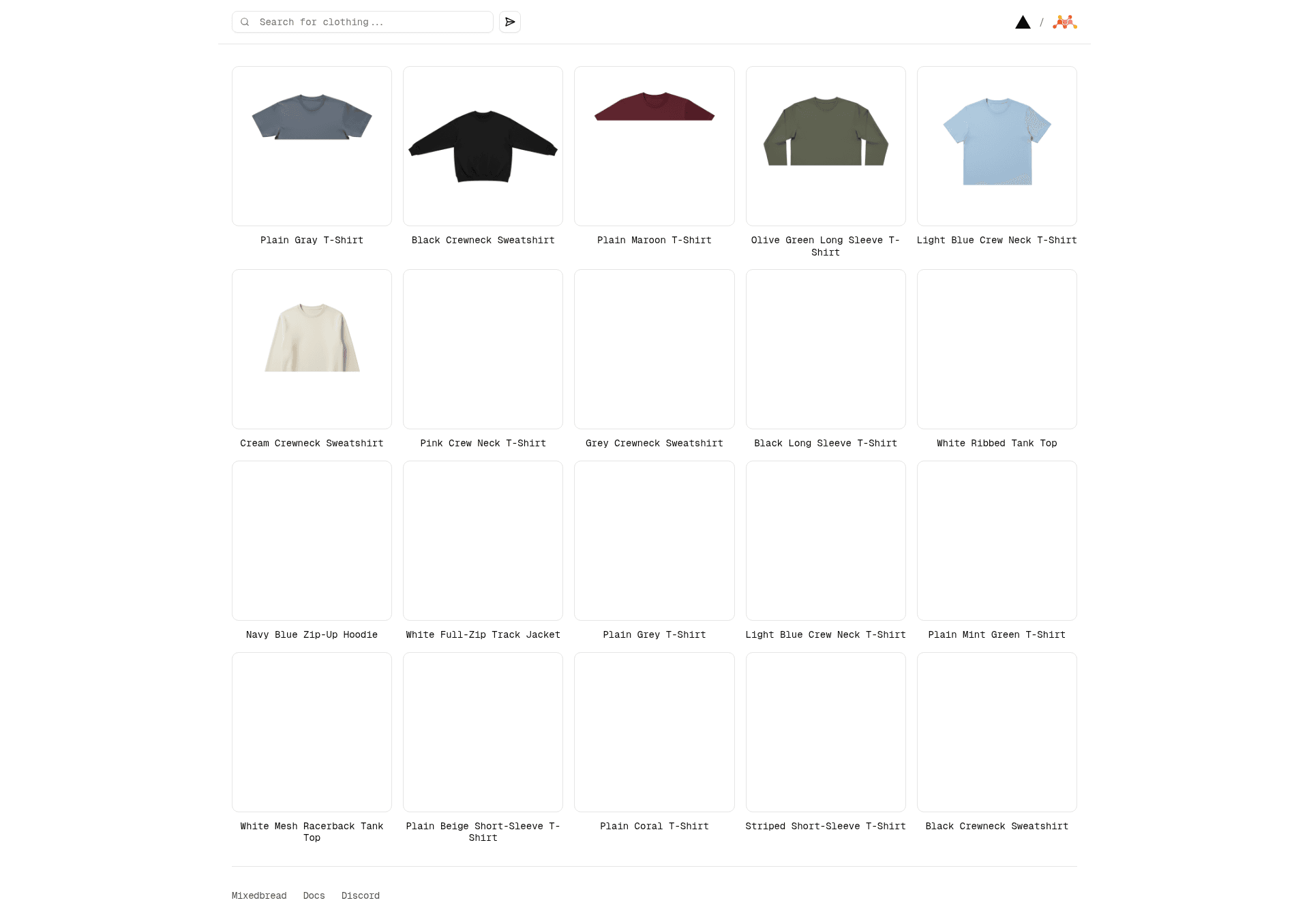
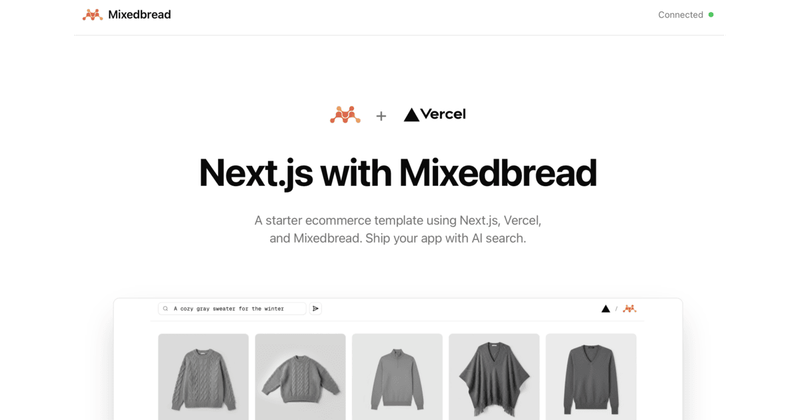
A starter template for integrating Mixedbread Search into ecommerce applications using Next.js, Vercel, and Mixedbread.
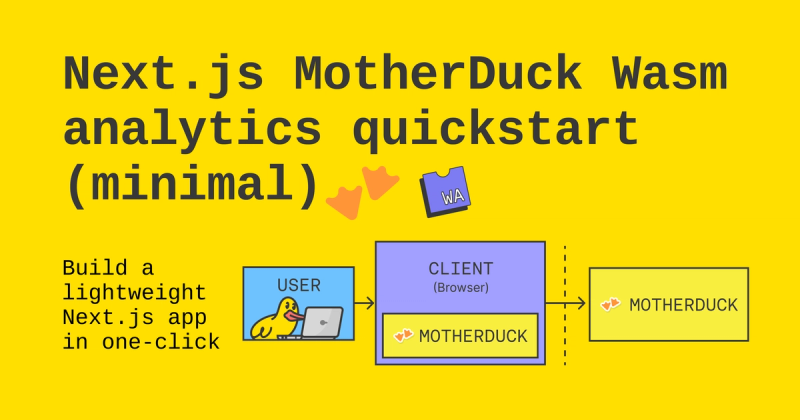
A minimal Next.js template for building analytics apps with the MotherDuck Wasm client.

A minimal Hugo theme for fintech websites, with blog, policy, terms sections and KaTeX math support.
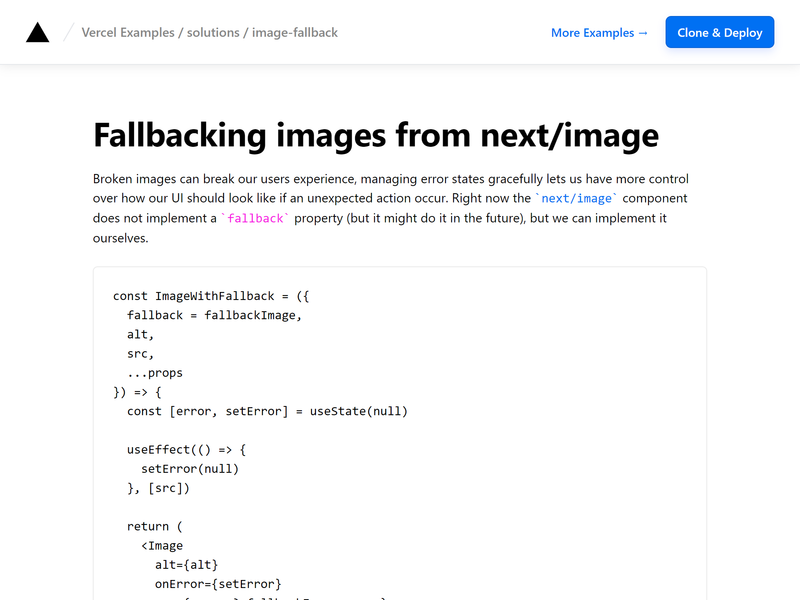
Learn how to use a fallback image while using the next/image component.

A modern LaTeX resume template for Chinese tech professionals, built with XeLaTeX and ctexart, featuring reusable modules and automatic GitHub stats.
Vercel Integration Ecommerce Demo is a starter template that demonstrates how to add Mixedbread AI-powered semantic search to an ecommerce storefront built with Next.js and deployed on Vercel. Created by Mixedbread AI, this boilerplate gives you a working product search UI out of the box, pre-configured to work with a commerce dataset, so you can focus on wiring up your own product catalog and metadata.
Vercel Integration Ecommerce Demo is a Next.js application that combines a search API route and a product grid component to deliver AI-generated search results for online stores. It takes a Mixedbread API key and store ID as environment variables and returns ranked product matches from a Mixedbread search index, rendering them with product names, descriptions, prices, categories, and image URLs. The template runs on Node.js 22 or newer, uses npm for dependency management, and is released under the MIT license.
app/api/search/route.ts that accepts search queries and returns product results using configurable parameters such as top_k and score_threshold.MXBAI_API_KEY and MXBAI_STORE_ID environment variables, giving you access to a managed search index.lib/types.ts and consumed by components/product-grid.tsx, making it straightforward to adapt to your own product data.image_url.url field on search results and renders product cards with images, names, and descriptions.Developers building ecommerce search experiences who want a working reference implementation rather than starting from scratch. Ecommerce teams planning to deploy on Vercel can use the one-click integration to provision Mixedbread credentials. Node.js developers familiar with Next.js can treat this as a learning resource for combining retrieval APIs with server-rendered React components.
The setup follows a clear sequence: install dependencies with npm install, copy .env.example to .env, add your MXBAI_API_KEY and MXBAI_STORE_ID, then run npm run dev to start the development server on http://localhost:3000. The search API route reads the environment variables, queries the Mixedbread index, and returns results that the product grid component renders. If you use your own dataset, you must update lib/types.ts, components/product-grid.tsx, and app/api/search/route.ts to match your metadata structure.
You have two options: install the Mixedbread integration from your Vercel project's Integrations tab and copy the credentials from there, or sign up at the Mixedbread Platform, create an API key, and note your store ID from the platform interface.
The template requires Node.js 22 or newer. You'll also need Git installed to clone the repository.
Yes. The template is pre-configured for a commerce dataset, but you can adapt it by updating the ProductMetadata interface in lib/types.ts, the metadata field references in components/product-grid.tsx, and the search parameters in the API route.
No. The demo store is currently not publicly accessible; the maintainers plan to add public stores in the future. You can still run the template locally or deploy your own instance using the provided configuration.