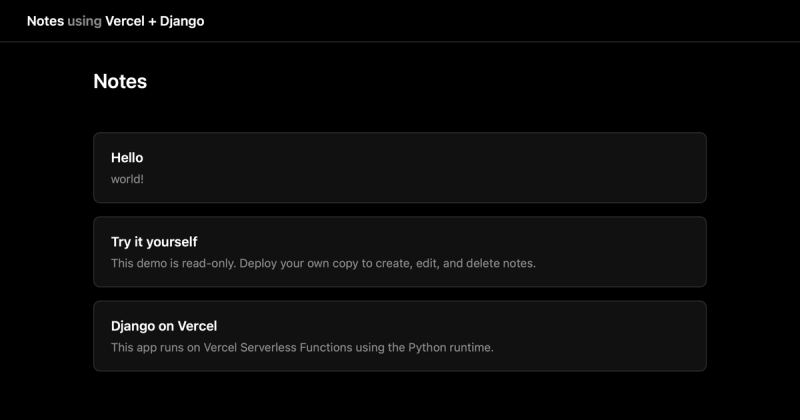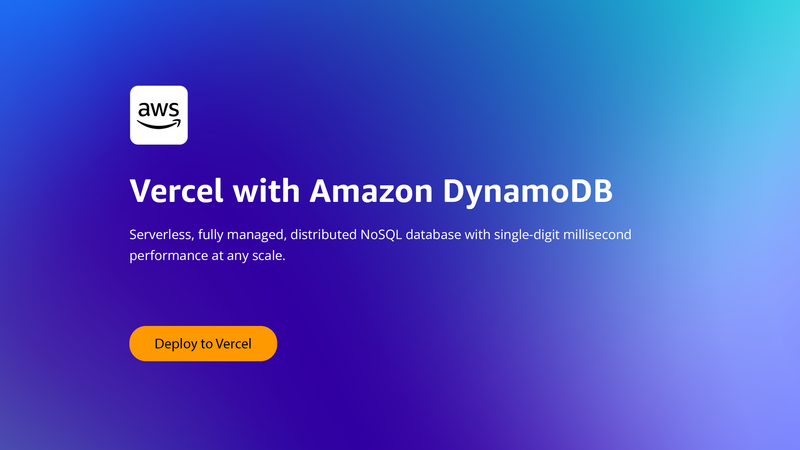
Amazon DynamoDB Movies Demo is a boilerplate Next.js application that fetches movie records from an Amazon DynamoDB table and demonstrates secure cloud-database access using Vercel's OIDC Federation.
What is the Amazon DynamoDB Movies Demo?
Amazon DynamoDB Movies Demo is a sample application built with Next.js that retrieves movies from a DynamoDB database. It runs on Vercel and connects to DynamoDB without hardcoded access tokens by using Vercel's OIDC Federation to mint short-lived AWS credentials. The project is maintained by Vercel and published on GitHub under the repository name aws-dynamodb-demo. It includes a seed script that populates the table with movie data, plus a live demo hosted at aws-dynamodb-demo.labs.vercel.dev.
Key Features
- Secure AWS access — uses Vercel OIDC Federation to connect to DynamoDB with temporary credentials; no access tokens are hardcoded in the codebase.
- Next.js app — the frontend is built with Next.js, allowing server-side rendering of the movie list fetched from DynamoDB.
- One-click deploy — clicking the Deploy button on the readme clones the repo, creates a new Vercel project, configures the AWS integration, and provisions a DynamoDB table automatically.
- Local development workflow — documented steps include pulling environment variables with
vercel env pull, installing dependencies with pnpm, seeding the database viapnpm run db:seed, and launching the dev server on port 3000. - pnpm project — all package scripts use pnpm, including
install,db:seed, anddev. - Vercel Marketplace support — the readme points to Vercel Marketplace for installing Amazon DynamoDB into a project.
Who is it for?
- Developers new to AWS integration — this demo shows the full path from a Next.js page to a DynamoDB query, so they can see how the pieces fit together.
- Vercel users who need AWS resources — teams can copy the OIDC Federation pattern to avoid storing long-lived AWS keys in environment variables.
- Full-stack engineers — the seed script and data model demonstrate how to prepare a DynamoDB table for a small application.
What can you do with the Amazon DynamoDB Movies Demo?
- Build a serverless reference app: follow the deploy and local setup instructions to get a working Next.js app connected to DynamoDB in minutes.
- Learn OIDC Federation: inspect how Vercel provisions temporary AWS credentials so you can replicate the same setup in your own projects.
- Seed and query DynamoDB: use the included seed script to load movie entries and see how the app reads them back.
How does it work?
- Click the Deploy button in the readme to clone the repository, create a Vercel project, install the AWS integration, and provision a DynamoDB table.
- Clone the newly created GitHub repository and run
vercel env pullto fetch environment variables locally. - Install dependencies with
pnpm install, seed the table withpnpm run db:seed, and start the app withpnpm run devat http://localhost:3000.
FAQ
Does the demo require hardcoded AWS credentials?
No. The app connects to DynamoDB using Vercel's OIDC Federation, which exchanges Vercel-issued identity tokens for temporary AWS credentials. This avoids storing access keys in the codebase or environment variables.
How do I deploy this demo?
Use the Deploy with Vercel button on the readme. It clones the repository, sets up a Vercel project, configures the AWS integration through Vercel Marketplace, and provisions a DynamoDB table. After deployment, clone the resulting GitHub repo to work locally.
What package manager is required?
The project uses pnpm. The setup commands are pnpm install, pnpm run db:seed, and pnpm run dev.
Where is the live demo?
A hosted version of the app is available at https://aws-dynamodb-demo.labs.vercel.dev.