Newsletter
Join the Community
Subscribe to our newsletter for the latest news and updates

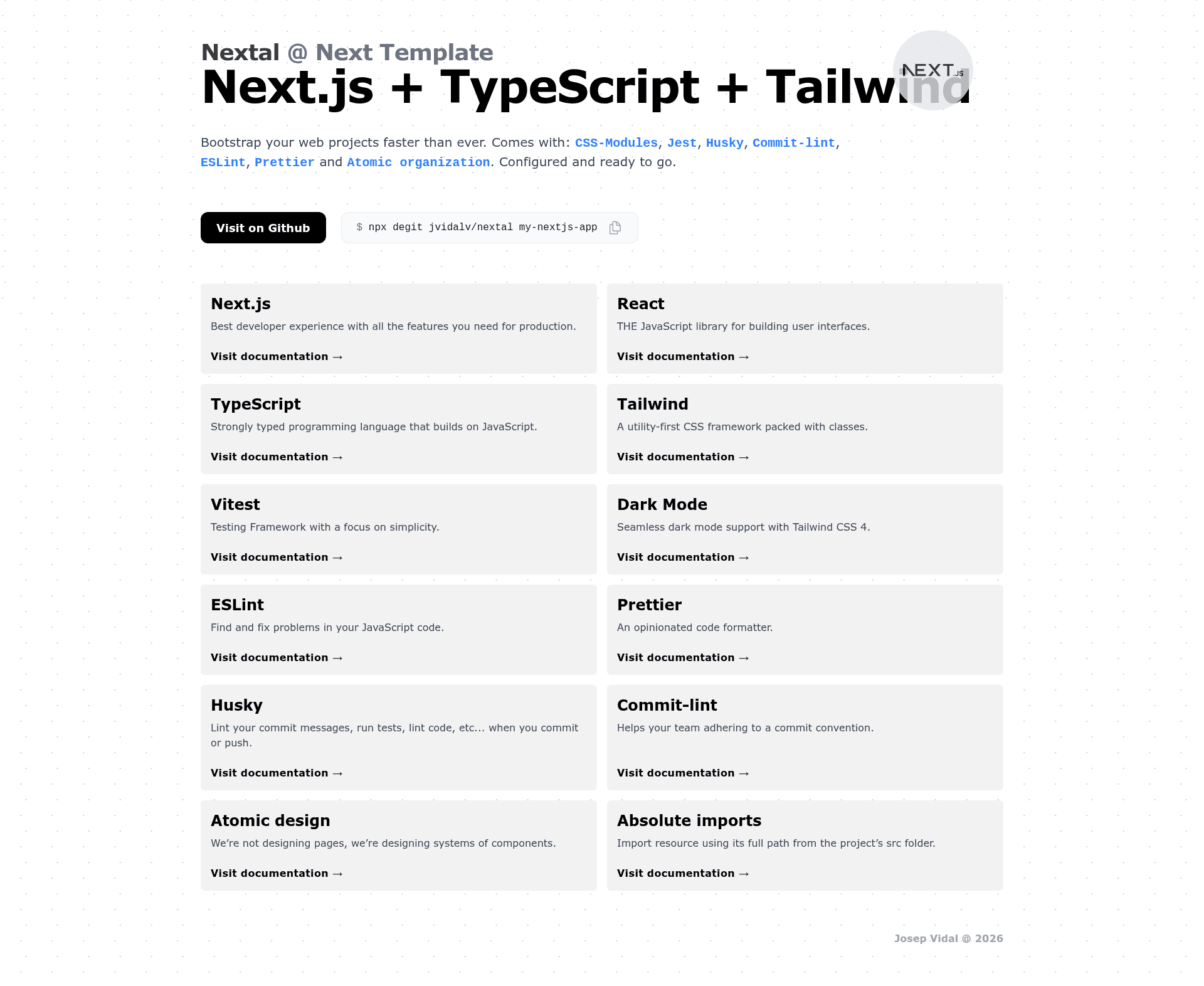
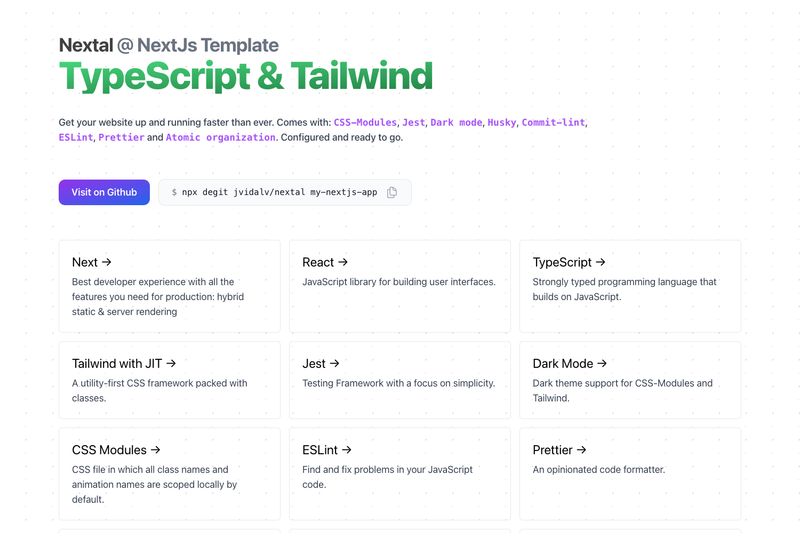
Nextal is a boilerplate for Next.js 16 apps with TypeScript, Tailwind CSS 4, Vitest, ESLint, Prettier, Husky, and Commitlint.
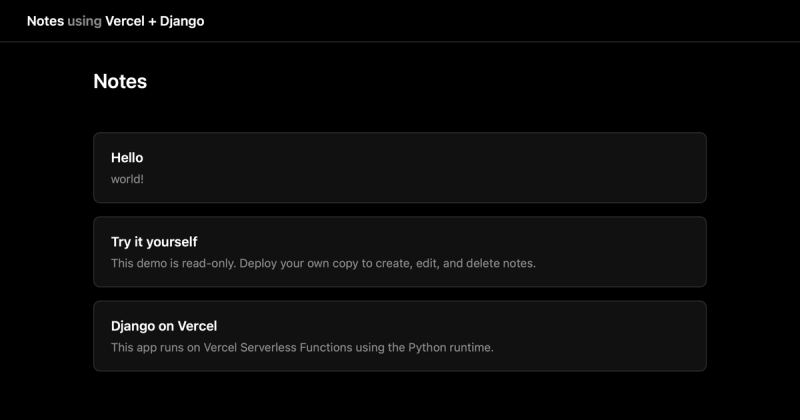
A simple note-taking app built with Django, using SQLite locally and Postgres on Vercel.
Demo Next.js app that fetches movies from Amazon DynamoDB, using Vercel OIDC Federation for secure access without hardcoded tokens.

A high performance skeleton starter for GatsbyJS with an advanced feature set.
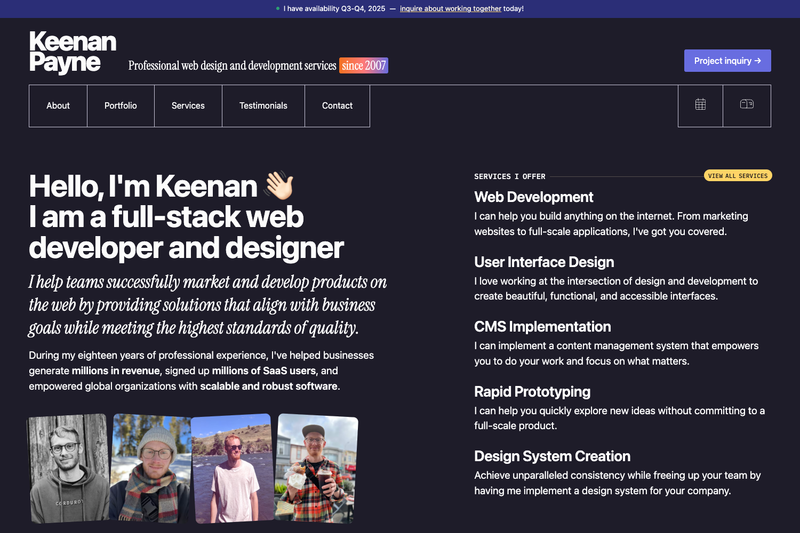
Simple Jekyll boilerplate using @ConciseCSS with SCSS and npm build scripts.
Nextal is a boilerplate template for starting Next.js 16 applications with TypeScript, Tailwind CSS 4, and a pre-configured toolchain for testing, linting, and deployment. It is a GitHub template that scaffolds a new project using the Next.js App Router (the /app folder) and React 19, with strict TypeScript mode enabled by default.
Nextal is a starter template created by jvidalv (Josep Vidal) to remove the setup bottleneck when building Next.js apps. It takes a GitHub template or a npx degit jvidalv/nextal my-nextjs-app command as input and produces a runnable Next.js project with testing, linting, and formatting already configured. The template runs locally via yarn dev and deploys zero-config to Vercel, which auto-detects Next.js 16 and sets up preview deployments for pull requests.
/app folder and the current Next.js conventions for file-based routing and server components.@react/testing-library, ready to run without manual wiring.yarn build and yarn start commands for production-like builds and one-click Vercel deployment.npx degit jvidalv/nextal my-nextjs-app.npx degit jvidalv/nextal my-nextjs-app to clone with a clean git history.yarn (or npm install -g yarn first if not installed).yarn dev to develop at http://localhost:3000, or yarn build followed by yarn start for a production build.Nextal is a free open-source template. The source is available on GitHub and the included LICENSE file can be edited to reflect your own authorship.
Yes, Nextal is a free open-source starter template. You can create a repository from the GitHub template or clone it with degit at no cost, and there are no paid tiers associated with the template itself.
Nextal uses Next 16 with React 19, TypeScript with strict mode, Tailwind CSS 4, and Vitest for testing. It also includes ESLint, Prettier, Husky, and Commitlint.
You can click the "Deploy with Vercel" button in the README, or push your code to GitHub, GitLab, or Bitbucket, import the repository at vercel.com, and Vercel will auto-detect Next.js and configure the build. No extra configuration is required.
Yes, Vitest is integrated for unit testing along with @react/testing-library, so you can write and run tests immediately after scaffolding the project.
The template's commands use yarn. If you don't have yarn, the README instructs you to run npm install -g yarn first. Alternatively, you can run the equivalent npm commands manually after installation.