Newsletter
Join the Community
Subscribe to our newsletter for the latest news and updates

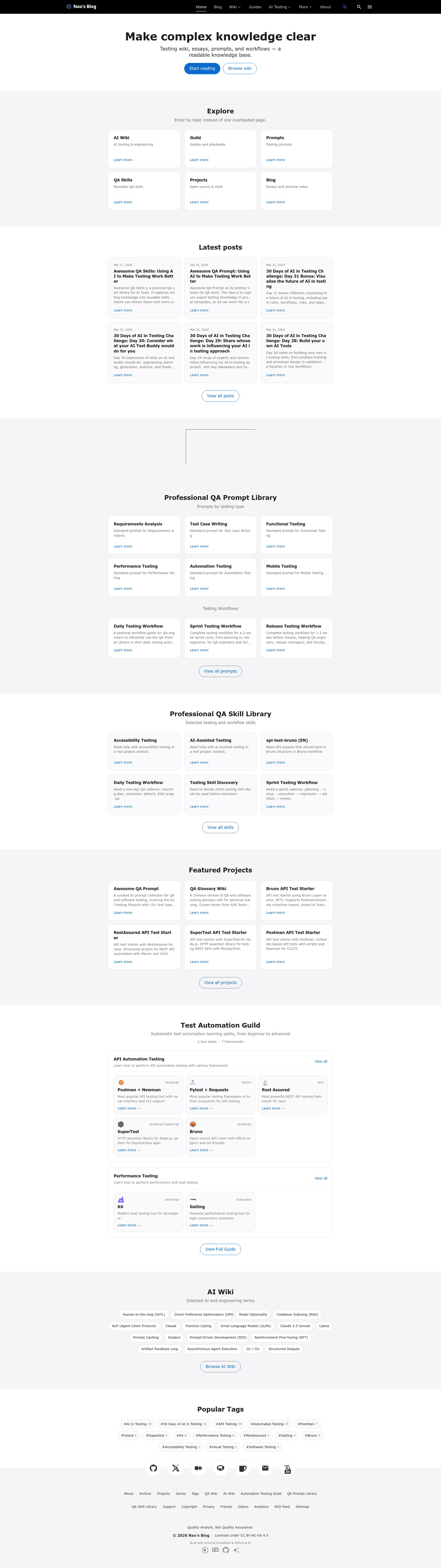
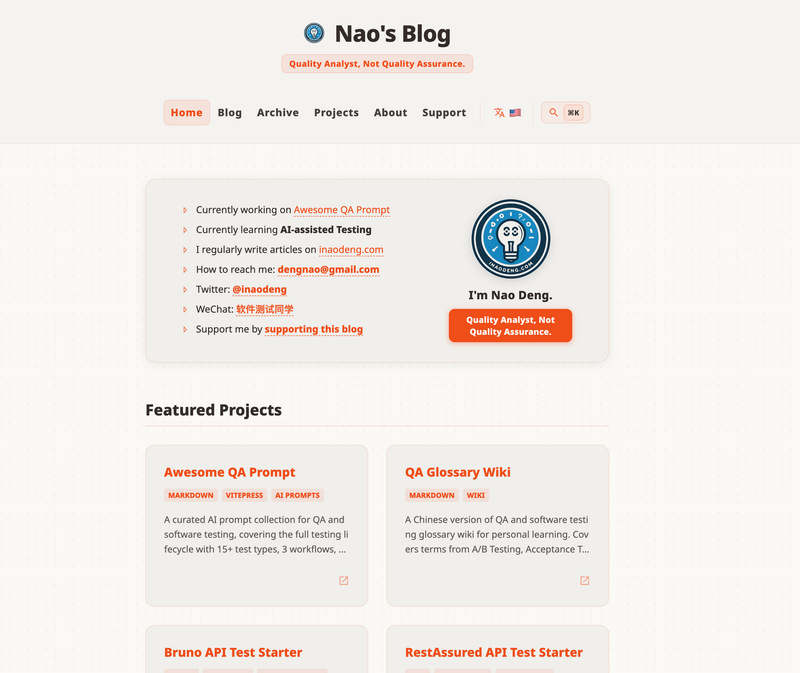
Astro 5 bilingual blog template with env-var-driven site and author config, MDX posts, search, comments, and static deployment.
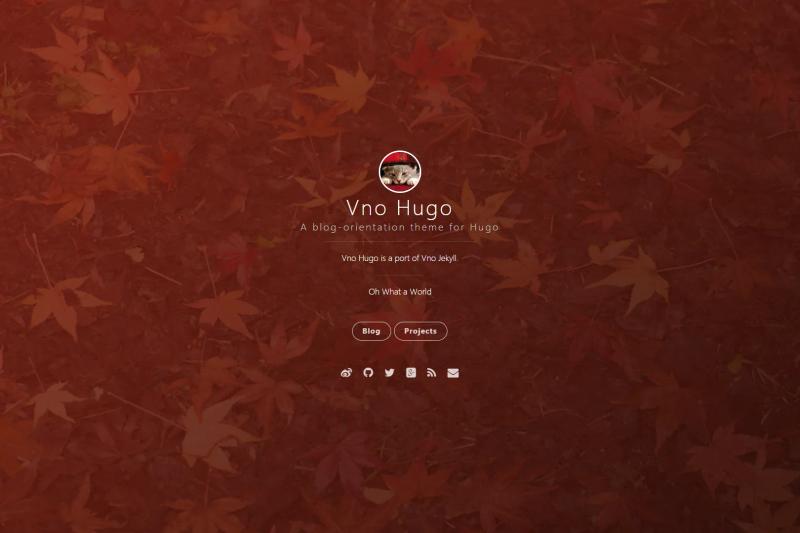
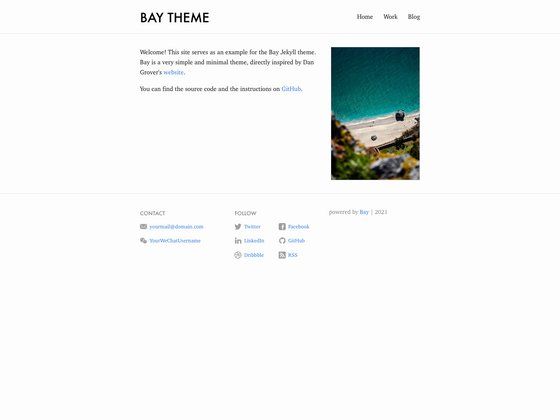
Simple responsive Hugo theme ported from Vno-Jekyll, with MathJax support and easy customization.
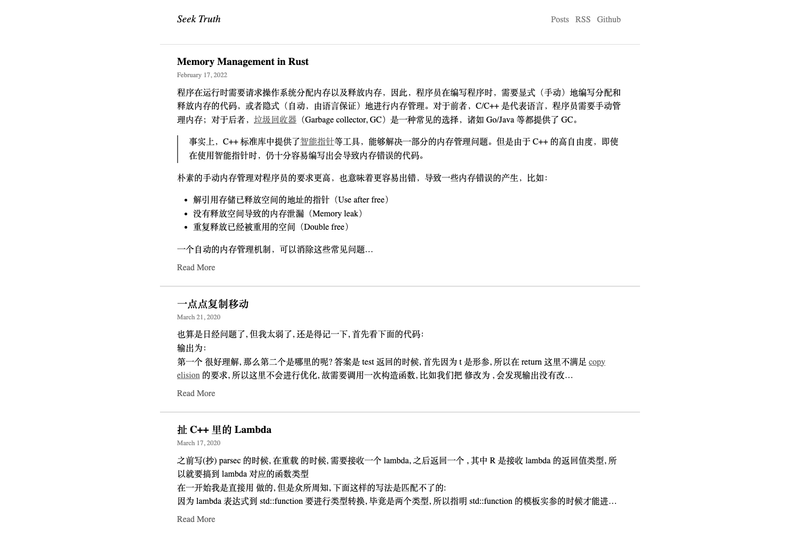
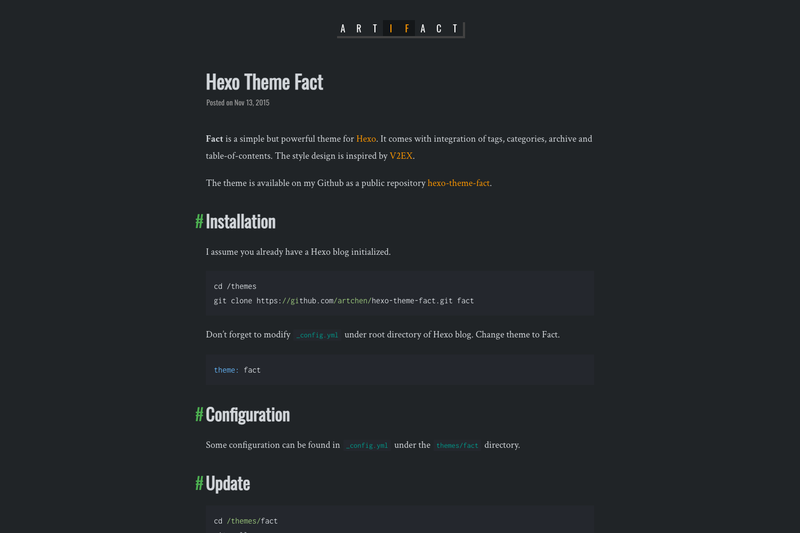
Purainite is a simple and clean theme for Hexo, a static site generator, with easy installation and syntax highlighting.
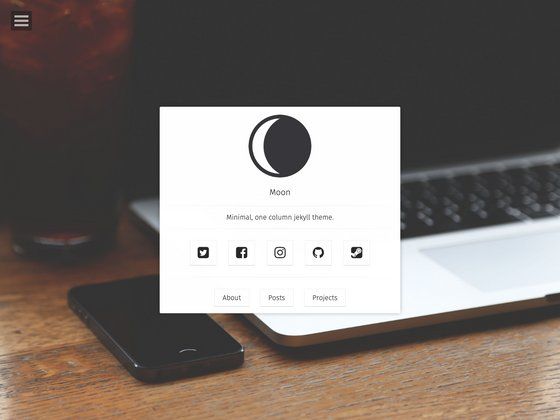
Moon is a minimal, one column Jekyll theme for responsive blogs and portfolios with Disqus, syntax highlighting, and MathJax support.
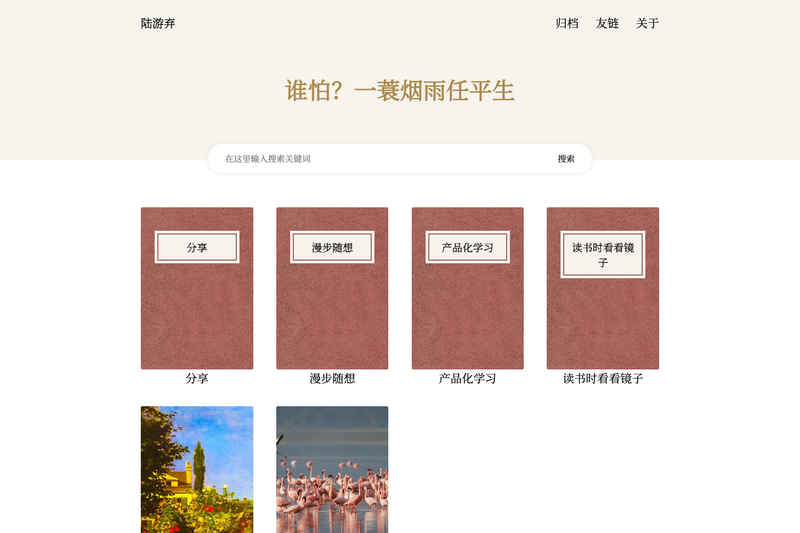
A Hexo blog theme that turns your blog into a bookshelf, with categories as books and posts as table-of-contents entries.
astro-i18n-starter-pro is an open-source Astro 5 blog template that builds a bilingual (English and Simplified Chinese) static site with site identity, author, and third-party services configured via environment variables. It is a fork of astro-i18n-starter by psephopaiktes, adapted so the same repository can be reused for multiple sites by editing a single .env file.
astro-i18n-starter-pro is a blog-themed Astro 5 starter that takes MDX posts from src/blog/en/ and src/blog/zh-cn/ and outputs a static site with RSS, sitemap, pagination, and share buttons. All key site information — URL, titles, descriptions, author name, social links, and status/stats pages — is read from environment variables rather than hard-coded, which lets you deploy the same template to different domains without touching components. The template includes GitHub Actions workflows for Cloudflare and GitHub Pages deployment.
PUBLIC_SITE_URL, PUBLIC_SITE_TITLE_EN, PUBLIC_SITE_TITLE_ZH_CN, PUBLIC_SITE_DESCRIPTION_EN, PUBLIC_SITE_DESCRIPTION_ZH_CN, and PUBLIC_AUTHOR_NAME in .env; Giscus, Algolia, Google Analytics GA4, and social links are also configured there.en and zh-cn locales; languages and default locale are defined in src/locales.ts.search-index.json implementation, with Algolia as an optional replacement..github/workflows/deploy-cloudflare.yml and .github/workflows/gh-pages.yml.Developers and bloggers who want a ready-made two-language blog without building i18n routing and content structures from scratch will find this template useful. It also fits anyone who maintains several small blogs or documentation sites and wants to switch branding by changing environment variables instead of forking code. Teams deploying on Cloudflare Pages/Workers or GitHub Pages get CI/CD scripts already in the repo.
.env to change the site URL, title, description, author, and social links, then deploy a separately-branded blog without modifying components.Start by cloning or downloading the repository, then run npm install. Copy .env.example to .env and fill in at least the required variables (PUBLIC_SITE_URL, bilingual titles/descriptions, and PUBLIC_AUTHOR_NAME). Add MDX files to src/blog/en/ or src/blog/zh-cn/, then run npm run dev for local development, npm run build to generate the static site, and npm run preview to verify the build.
The template is open source, and its license matches the upstream project and the LICENSE file in the repository. Content you publish using the template belongs to the site's author.
At minimum you must set PUBLIC_SITE_URL, PUBLIC_SITE_TITLE_EN, PUBLIC_SITE_TITLE_ZH_CN, PUBLIC_SITE_DESCRIPTION_EN, PUBLIC_SITE_DESCRIPTION_ZH_CN, and PUBLIC_AUTHOR_NAME. All other variables, such as Giscus, Algolia, GA4, and social links, are optional and documented in .env.example.
Each MDX post's frontmatter supports up to 3 tags. It can also include an optional author, updated date, series, and categories.
Push the repo with .github/workflows/gh-pages.yml included; the workflow builds and publishes to the gh-pages branch. Make sure PUBLIC_SITE_URL and other build-time variables are available in the GitHub Actions environment (Settings → Secrets and variables → Actions).
Yes, a local search-index.json search is included by default. You can switch to Algolia by configuring the appropriate environment variables.