Newsletter
Join the Community
Subscribe to our newsletter for the latest news and updates

An Astro theme that ports WebStackPage, a navigation directory layout, into a static site template.
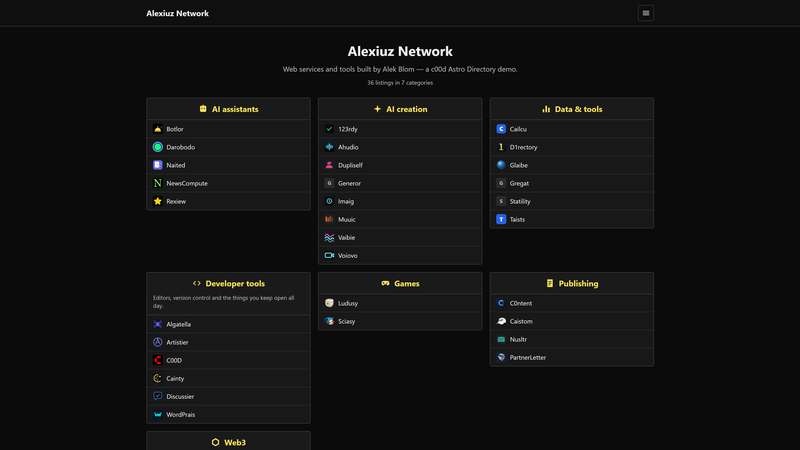
A ranked link directory as a static Astro site with category boxes, ratings, per-category pages, and client-side search, building from local JSON or a live API.
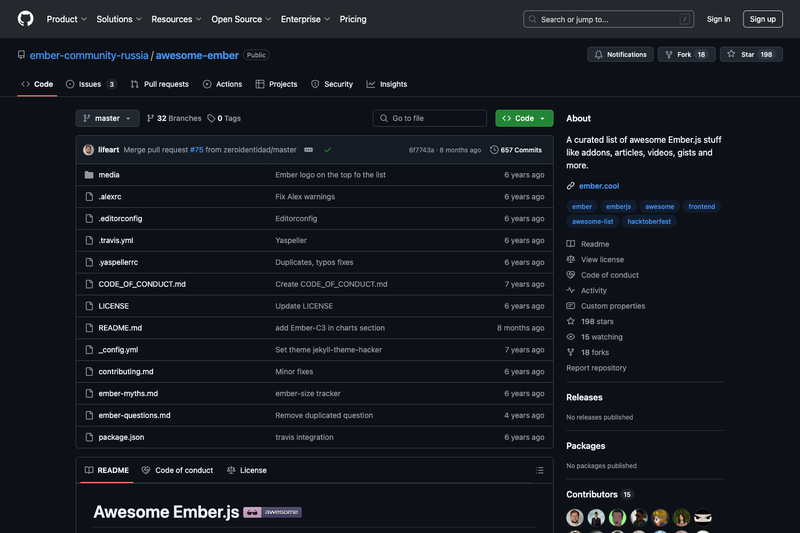
A curated list of awesome Ember.js stuff like addons, articles, videos, gists and more.
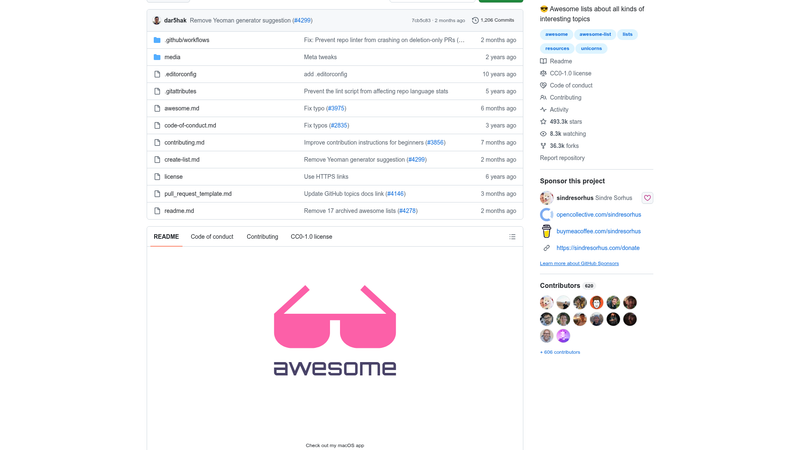
A curated directory of awesome lists covering programming languages, platforms, tools, and learning resources on GitHub.
Astro Webstack is an open-source Astro theme that ports the WebStackPage design into a static-site template for building web navigation directories.
Astro Webstack is an Astro port of WebStackPage.github.io, converting the popular webstack navigation layout into an Astro project. It takes the original WebStackPage structure and reimplements it using Astro's .astro page files, producing a static site that can be built with npm run build and deployed anywhere. The theme was created with support from Trae, and the repository is published on GitHub under the topics astro-template and astro-theme.
After cloning the repository, run npm install to install dependencies. Use npm run dev to start the development server on localhost:4321, where you can edit src/pages/index.astro and add new .astro or .md files to create routes. When ready, npm run build generates the static site into ./dist/, and npm run preview lets you verify the production build locally.
Free — the theme is distributed as an open-source GitHub repository; no paid tiers are mentioned in the README.
Astro Webstack is an Astro theme that ports the WebStackPage navigation directory design. It converts the original webstack layout into an Astro project, using .astro pages and components to build a static site that can be generated with npm run build.
Clone the repository, then run npm install to install dependencies. Use npm run dev to start the local development server at localhost:4321, and edit files in src/pages/ to customize your site.
Yes. Astro supports components written in Astro, React, Vue, Svelte, and Preact. Place them in the src/components/ directory and import them into your pages.
Place static assets like images in the public/ directory. Files there are copied as-is to the root of your built site, ready to be referenced from your pages.
It builds your production site into the ./dist/ directory. You can then preview that build locally with npm run preview before deploying the static files to any host.