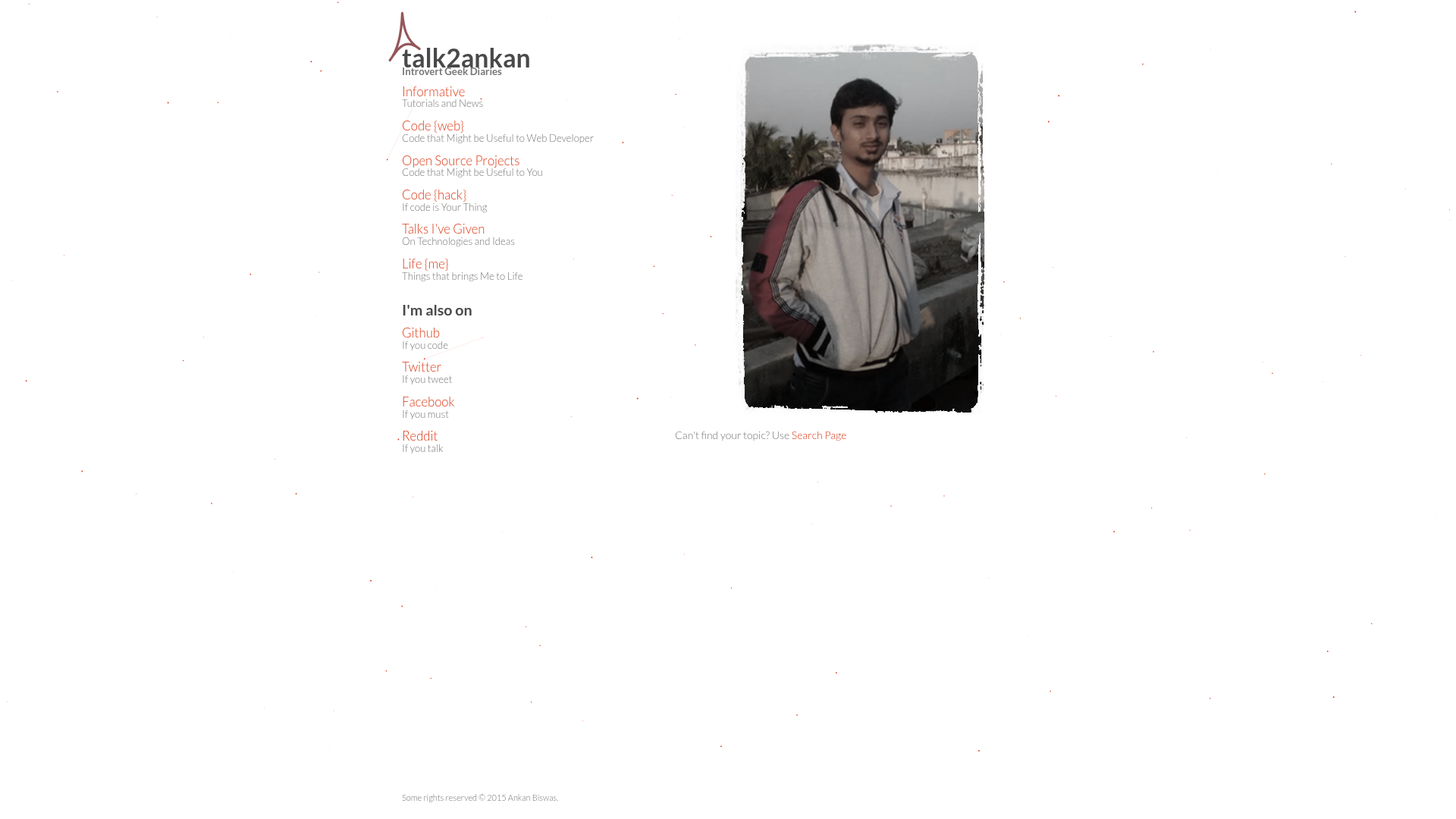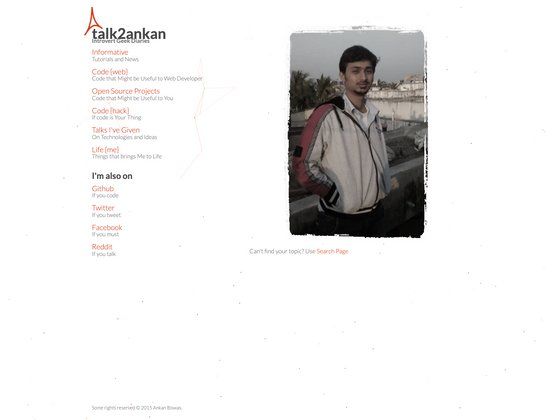
Atmos Plus is a Jekyll-based personal blog template, a modified copy of the atmos.org design, that automatically builds a static website when the repository is pushed to GitHub.
What is Atmos Plus?
Atmos Plus is a static site template built with Jekyll, created by Ankan Biswas as the source for his personal website at blog.ankanbiswas.in. It is a "copycat, modified version" of the atmos.org design, adapted with a collection of blog posts dating back to 2013. The template takes Markdown posts and configuration files as input, and Jekyll generates a static HTML site as output, ready to be served from any static hosting service. The readme credits three reference sites for its layout: atmos.org, dhrubajyoti-das.github.io, and danhixon.github.io.
Key Features
- Jekyll static-site generation — Pushing the repository to GitHub triggers Jekyll to transform the source into a static site, eliminating the need for a dynamic server.
- Blog post archive — Includes a personal collection of posts from 2013 onward, stored in the
_posts/directory and written in Markdown. - Modified atmos.org layout — The design closely follows the atmos.org aesthetic, with desktop snapshots (atmos-plus-0.png and atmos-plus-1.png) showing the resulting pages.
- Split license — All code outside
_posts/andimages/is MIT licensed, while the author's posts and images are copyrighted and cannot be reused without permission. - Reference-driven development — The project lists three public personal-site examples that served as references, making it useful for comparing design approaches.
Who is it for?
- Developers launching a personal blog — They can fork or copy the template, replace the content in
_posts/andimages/, and have a functional Jekyll blog on GitHub Pages. - Jekyll users seeking a design baseline — The modified atmos.org layout offers a starting point that can be further customized.
- Bloggers on GitHub Pages — Because the site rebuilds on push, writers can publish by simply committing Markdown files.
What can you do with Atmos Plus?
- Personal blogging: Write Markdown posts, commit them to the
_posts/directory, and push to GitHub to publish updates to your site. - Template learning: Inspect how a real Jekyll project organizes posts, config, and layout files, with links to three reference implementations.
- MIT-licensed reuse: Legally reuse the template's code (excluding the author's posts and images) in your own projects under the MIT license.
How does Atmos Plus work?
The workflow follows Jekyll's standard build process: content is written in Markdown inside _posts/, then the repository is pushed to GitHub. Jekyll automatically compiles the source into static HTML files, which can be served by any static host. The template includes reference screenshots in the readme to demonstrate the desktop appearance.