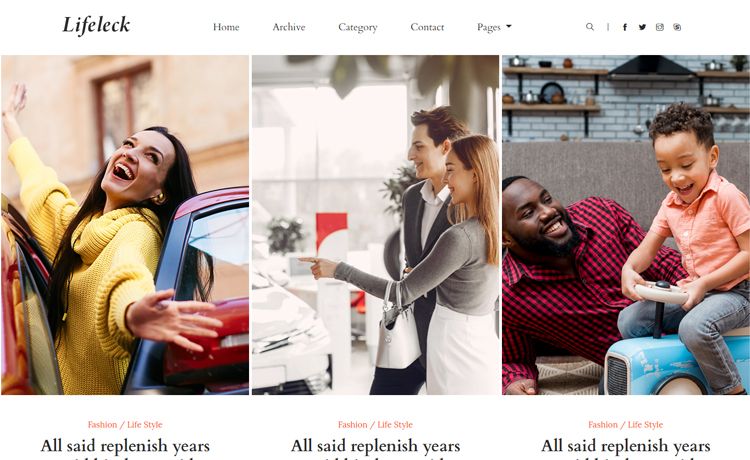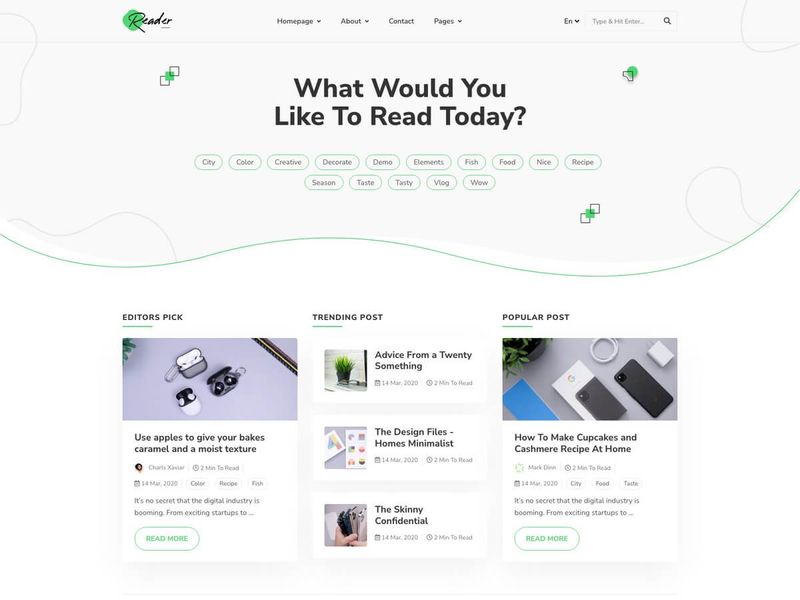
Reader is a free Bootstrap blog template built by Themefisher that produces a static blog website from hand-edited HTML and CSS files, with optional Node.js and Gulp tooling for live-reload development and production builds. It runs entirely in the browser once static files are hosted, requires no database or backend, and is distributed free of charge under the MIT license for code.
What is Reader?
Reader is a lightweight, free blog template developed by Themefisher, a design agency that has released many HTML themes. It takes static HTML and CSS files as input and outputs a ready-to-host blog website that you can preview by opening index.html in any browser. The template is built on the Bootstrap CSS framework and can be customized either by directly editing files in the theme folder or through a Gulp-based workflow that compiles assets and rebuilds the site.
Key Features
- Bootstrap framework — Reader is styled with the Bootstrap CSS framework, giving you a responsive grid, typography, and component classes without writing custom CSS from scratch.
- Free and MIT licensed — The template's code is released under the MIT license, allowing free use for personal and commercial projects, with no attribution required.
- Two customization paths — You can edit HTML and CSS directly in the theme folder for a simple setup, or use the advanced Gulp workflow with npm scripts for live reload and a production build.
- Local development server — The
npm run devcommand starts a preview server that watches source files and reloads the browser automatically when changes are saved. - Production build script — The
npm run buildcommand compiles your customized files into a cleanthemefolder ready to upload to any static host. - Documentation and support — A dedicated documentation site at docs.themefisher.com/reader covers setup and usage, and paid technical support is available by email for integration questions.
- GitHub issue tracking — Bugs and feature requests are handled through the official GitHub repository issue tracker.
Who is it for?
Reader is aimed at bloggers and developers who want a clean, no-frills blog layout without paying for a theme. Developers comfortable with HTML and CSS can use the direct edit method to quickly customize the template, while front-end developers who prefer a build toolchain can use the Gulp workflow. Small publishers and personal bloggers can host the static output on any web server or static hosting service, since no server-side processing is required.
What can you do with Reader?
- Personal bloggers: publish a static blog by editing the existing HTML pages, updating content and styling directly in the code, then uploading the folder to any static web host.
- Front-end developers: use the npm and Gulp environment to preview changes live in the browser, compile a production build, and hand off the final theme folder to a client.
- Agency projects: use the MIT-licensed code as a starting point for client work, with the flexibility to modify the Bootstrap-based components to match brand needs.
How does Reader work?
First download the template archive from GitHub and unzip it. For a basic setup, open the index.html file in your browser and edit the HTML and CSS files in the theme folder. For an advanced workflow, install Node.js and Gulp once, then run npm install followed by npm run dev to serve the site locally; npm run build generates a production-ready theme folder.
Pros and cons
- Pro: Free to use with an MIT code license.
- Pro: Live-reload development environment via Gulp.
- Con: Images included in the demo are for demonstration only and are not licensed for reuse.
- Con: No built-in content management system; content is edited directly in static HTML files.
Pricing
Reader is free. The repository is public on GitHub, and the code is released under the MIT license. There is no mention of paid tiers; Themefisher offers paid technical support for integration questions separately.
FAQ
Is Reader free to use?
Yes, Reader is free. The template code is released under the MIT license, which permits free use, modification, and distribution for personal and commercial projects. The images in the demo are not part of the code license, however.
How do I get Reader?
You can download the template from the GitHub repository by visiting github.com/themefisher/reader and using the Code → Download ZIP option, or directly from the archive link. The live preview is available at demo.themefisher.com/reader.
Does Reader require Node.js?
No, Node.js is only needed for the advanced Gulp workflow. The basic usage just requires editing the HTML and CSS files in the theme folder and opening index.html in a browser. Node.js and Gulp are prerequisites only if you want to use npm run dev and npm run build.
Can I use Reader commercially?
Yes, because the code is MIT licensed, you can use Reader in commercial projects without paying a fee. You cannot freely reuse the demo images, since those are not covered by the same license.
What support options are available?
Themefisher uses GitHub Issues for bug reports and feature requests, and offers paid technical support via email at [email protected] for questions about integrating the template.