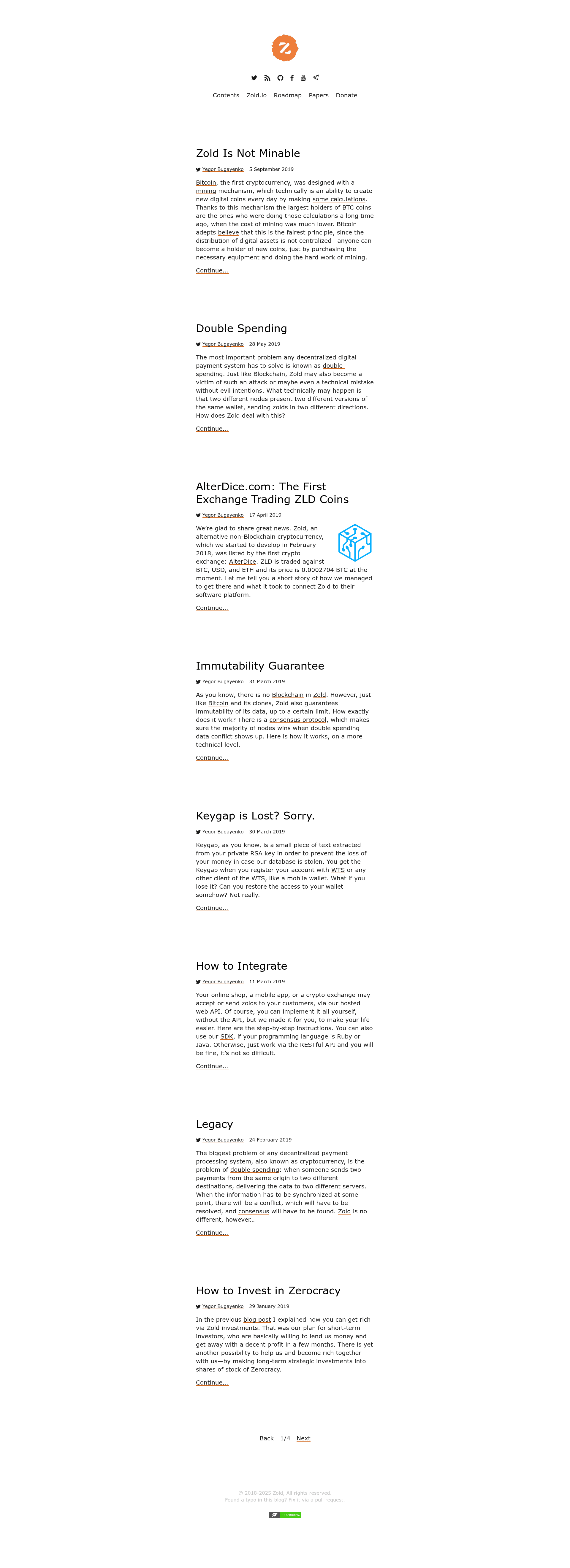
Blog.zold.io is a Jekyll-based blog template for the Zold cryptocurrency project, built to accept article submissions as Markdown files via pull requests and publish them automatically with GitHub Actions.
What is Blog.zold.io?
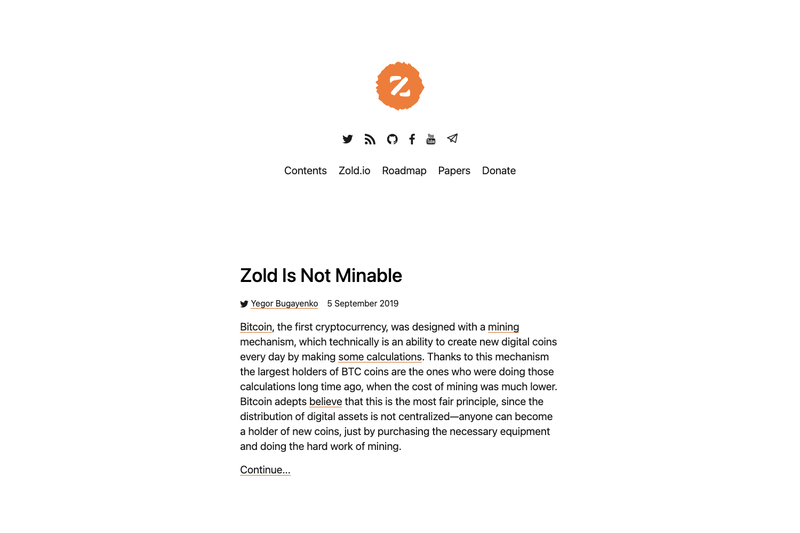
Blog.zold.io is the Markdown-to-static-site repository that powers the official Zold blog at blog.zold.io. It runs on Jekyll, the Ruby-based static site generator, and takes drafts written in Markdown inside the _drafts directory as input. The output is a static website that GitHub Actions builds automatically through the jekyll.yml workflow. The repository is maintained by the Zold team and licensed under the MIT License, as shown by the license badge in the README.
Key Features
- Jekyll static site generator — Converts Markdown content into a blog; local preview runs with
bundle exec jekyll serve --future --draftsand opens at http://localhost:4000. - GitHub Actions workflow — The included jekyll.yml workflow handles automated builds and deployment whenever changes are pushed to the repository.
- Pull-request contribution workflow — Writers contribute by copying example.md into the _drafts directory, editing it, and submitting a pull request; no direct write access is needed.
- Wanted topics list — The README links to https://blog.zold.io/wanted.html, a page listing topics the Zold project is specifically interested in covering.
- Local rendering environment — Requires Ruby 2.3+, Rubygems, and Bundler; the commands
bundle updateandbundle exec jekyll serve --future --draftsare provided. - Community and documentation links — Includes a link to the Zold White Paper at https://papers.zold.io/wp.pdf and a Telegram group at https://t.me/zold_io for live discussion.
- Transparent build status — README badges show the status of the GitHub Actions workflow, the MIT license, hits-of-code counts, and SixNines availability.
Who is it for?
- Zold community members who want to publish articles about Zold or cryptocurrencies on the official blog by submitting pull requests.
- Technical writers who prefer a Git-based contribution workflow and want their Markdown drafts reviewed and merged by maintainers.
- Jekyll developers seeking a minimal, working example of a blog with drafts, future posts, and a GitHub Actions build pipeline they can fork.
What can you do with Blog.zold.io?
- Cryptocurrency writers: Draft an article in Markdown, drop it in _drafts, open a pull request, and see it published once merged.
- Blog maintainers: Automate the entire publishing pipeline from a GitHub repository to a static site without a traditional CMS.
- Jekyll hobbyists: Fork the repository to explore how drafts, future-dated posts, and GitHub Actions are configured, then adapt it for other projects.
How does Blog.zold.io work?
- Clone the repository and install Ruby 2.3+, Rubygems, and Bundler.
- Run
bundle updateto install the Jekyll dependencies. - Run
bundle exec jekyll serve --future --draftsto preview the blog locally at http://localhost:4000, with drafts included. - Create a new Markdown file by copying example.md in the _drafts directory, rename it, and edit the content.
- Submit a pull request; the maintainers review it, and once merged, the GitHub Actions workflow builds and deploys the updated blog.
FAQ
Do I need Ruby to contribute an article?
No. Ruby, Rubygems, and Bundler are only needed if you want to preview your article locally with Jekyll. You can write and submit a Markdown file through a pull request without installing anything; GitHub Actions handles the build after merge.
What is the _drafts directory?
The _drafts directory stores unpublished blog posts. Jekyll only renders drafts when the server is run with the --future and --drafts flags, so in-progress articles stay off the live site until they are merged and processed by the workflow.
Is this template free to use?
Yes, the repository is released under the MIT License, so you are free to fork it and use it as a starting point for your own Jekyll blog, as long as you keep the license information.
How are topics for articles chosen?
The project publishes a list of wanted topics at https://blog.zold.io/wanted.html. Writers are encouraged to check this list and submit drafts that match subjects the Zold team is interested in.