Newsletter
Join the Community
Subscribe to our newsletter for the latest news and updates

A starter boilerplate powered by 11ty, Sanity, Gulp, Tailwind CSS, rollup.js, Alpine.js and Taxi.js.
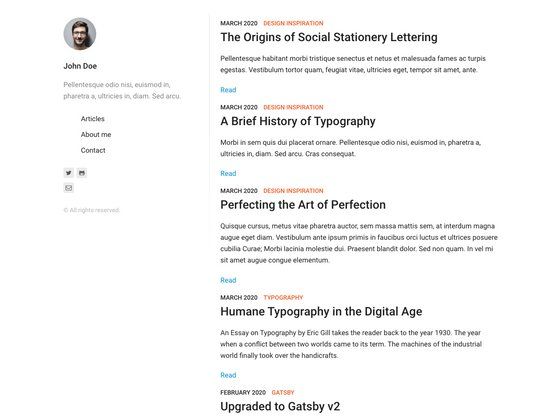
Minimal mobile-first blog starter using Scully (Angular) and Kontent headless CMS, deployable to Netlify.
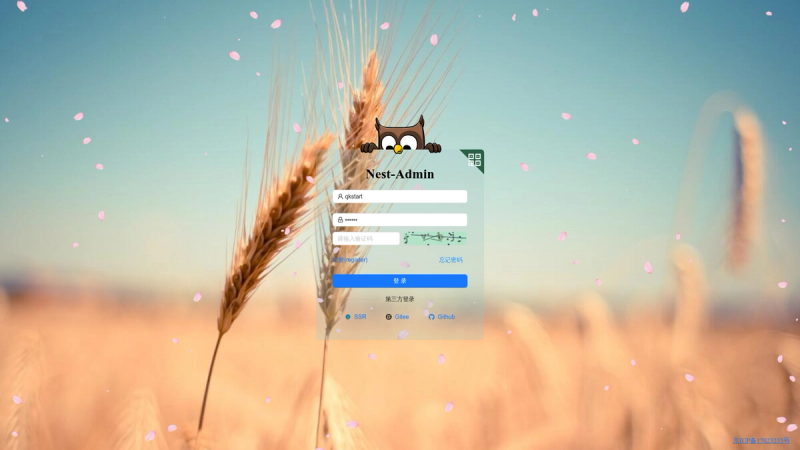
A general admin management system built with React, Ant Design, Nest.js, and MySQL. Continuously updated.

Official Gatsby default starter for creating React-based static sites with Gatsby's standard configuration files.
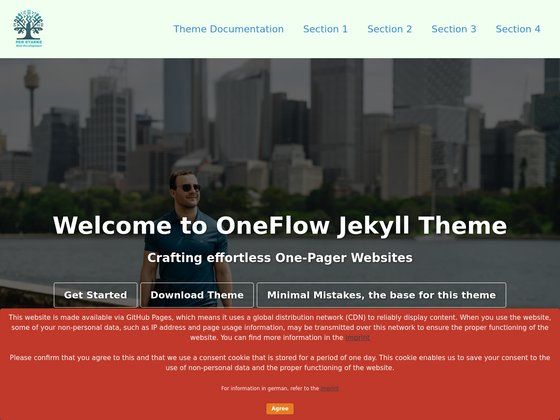
Jekyll Theme to easily create stunning & practical One-Pager Websites
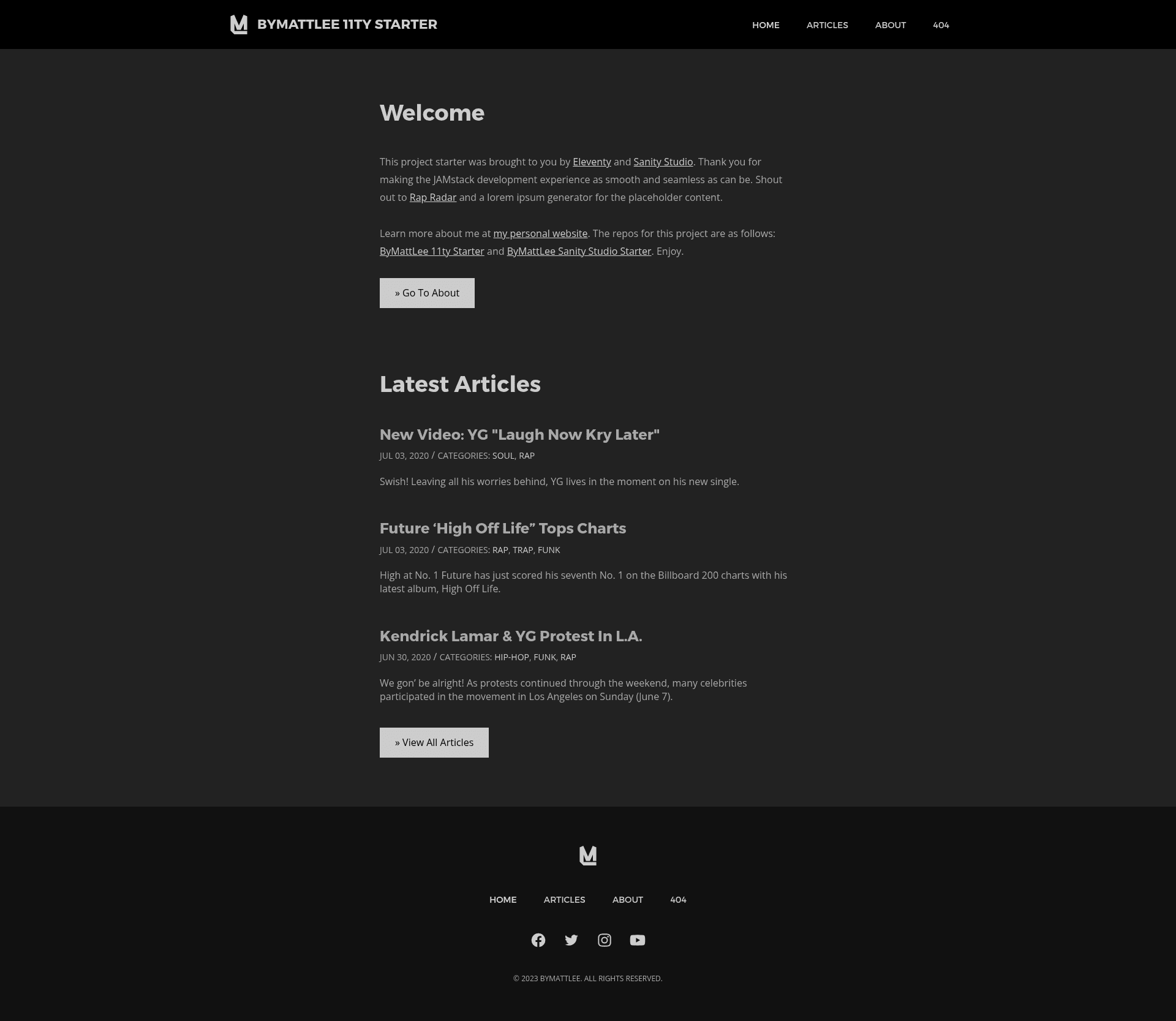
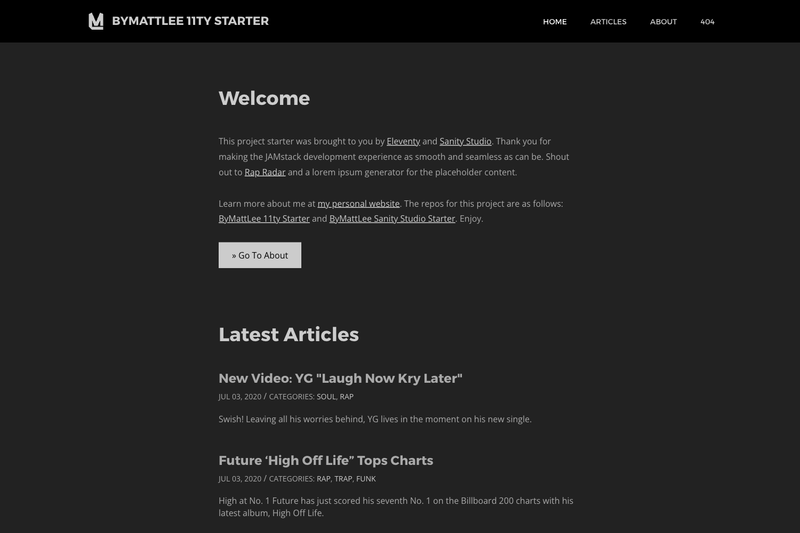
ByMattLee 11ty Starter is an open-source boilerplate that combines Eleventy (11ty), Sanity CMS, Gulp, Tailwind CSS, rollup.js, Alpine.js, and Taxi.js into a ready-made static-site build system, producing a minified HTML site in a dist directory.
The starter is a pre-configured project scaffold for building static websites: Eleventy generates HTML, Sanity provides a headless CMS backend, Gulp orchestrates the build, Tailwind CSS handles utility-first styling, rollup.js bundles JavaScript, Alpine.js powers declarative UI interactions, and Taxi.js adds animated page transitions. It takes source files from src/site and src/assets, compiles them through a Gulp pipeline, and outputs a production-ready site to dist. The project is maintained by Matt Lee (@bymattlee), and a live demo is available at https://bymattlee-11ty-starter.netlify.app/.
The starter bundles a complete build system with Gulp, Eleventy, Tailwind CSS, rollup.js, Alpine.js, and Taxi.js, handling HTML rendering, style and script compilation, and asset optimization in one workflow.
src/site/_includes and content from Sanity's Cloud API into flat HTML files; markup is minified for staging and production.src/assets/scss/main.scss, including the @apply, theme(), and @screen directives from Tailwind.src/assets/js into dist/assets/js/main.min.js, with components in src/assets/js/components and vendor scripts in src/assets/js/vendors.src/assets/images are optimized and resized to widths of 200, 400, 600, 800, 1000, 1200, 1400, 1600, and 1800 pixels; the imageSrc shortcode generates responsive srcset values.dist/assets/svg/sprite.svg, while fonts, videos, and other assets under src/assets are copied unchanged to dist/assets.src/site/robots.njk.The starter is aimed at developers who want a modern static-site setup without wiring the pieces together themselves. Front-end developers can use it to launch a content-driven marketing site or blog with Sanity as the CMS and Eleventy as the output layer. Agencies and freelancers can use it as a base for client projects, since the Gulp build includes separate staging and production commands (yarn stage and yarn prod). Developers who prefer utility-first styling can use the Tailwind and SCSS workflow to rapidly prototype and maintain consistent spacing and typography.
These project types are a natural fit for the starter's built-in features:
After installing Node 16.17.1 LTS and Yarn, run yarn in the project root to install dependencies. Update the Sanity options and environment URLs in config.js, then use yarn dev for development with Browsersync and live reload, yarn stage for a staging build, or yarn prod for a production build. Files in src/site are compiled to dist, and all assets under src/assets are processed or copied into the output directory.
The installation instructions specify Node 16.17.1 LTS. Use this exact version to avoid compatibility issues with the Gulp pipeline and dependencies.
Yes, the repository is publicly available on GitHub under a standard open-source license. No pricing or license restrictions are mentioned in the documentation.
Yes, because the starter pulls data from the Sanity Cloud API. The README recommends pairing it with the ByMattLee Sanity Studio Starter repository, and you must set your Sanity options in config.js before building.
The starter is configured to fetch data from Sanity, but you could adapt it to use other data sources since Eleventy supports many data formats. The built-in configuration, however, is specifically wired for Sanity.
In staging and production builds, PurgeCSS removes unused CSS. In development, all styles are injected into the browser for faster iteration.