Newsletter
Join the Community
Subscribe to our newsletter for the latest news and updates

A minimalistic, single column theme for Jekyll, created by Ankit Sultana under the MIT license.
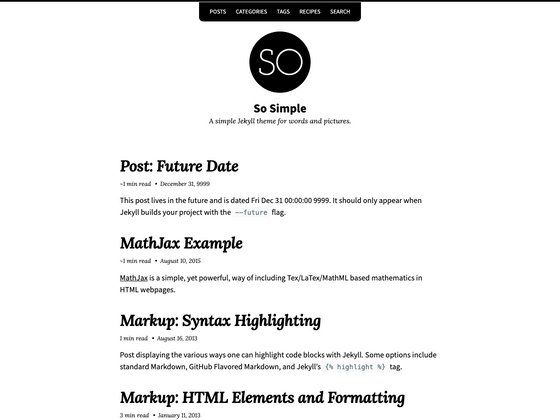
A simple Jekyll theme for words and pictures, featuring microformats markup, Disqus comments, Google Analytics, and SEO via jekyll-seo-tag.
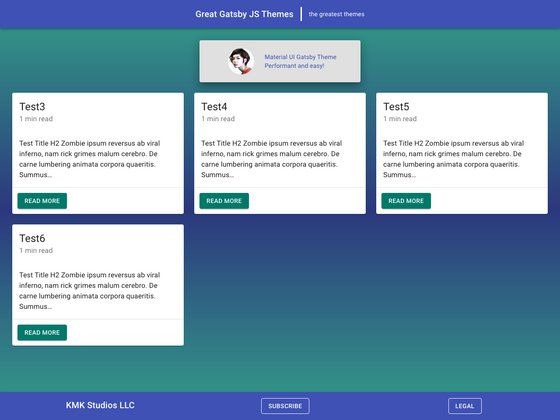
Gatsby starter that uses a Material-UI blog theme, letting you set up a blog with minimal effort.
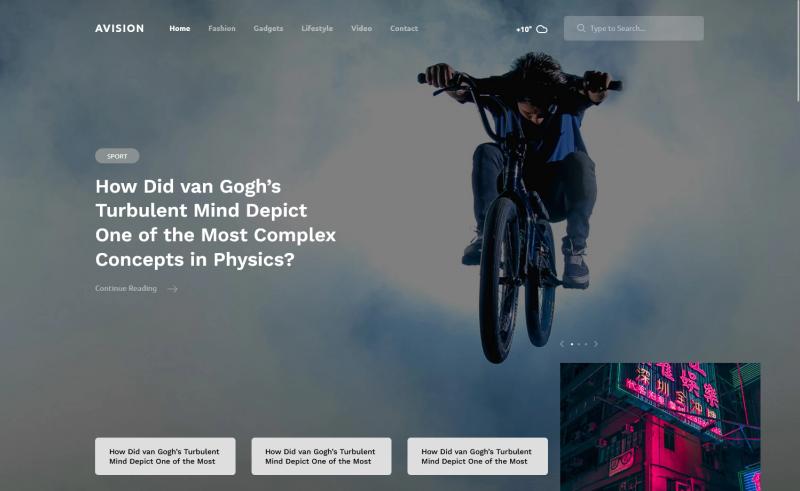
A free Bootstrap 4 HTML5 blog template with a custom dot slider, sticky navigation, video section, and multiple ready pages.
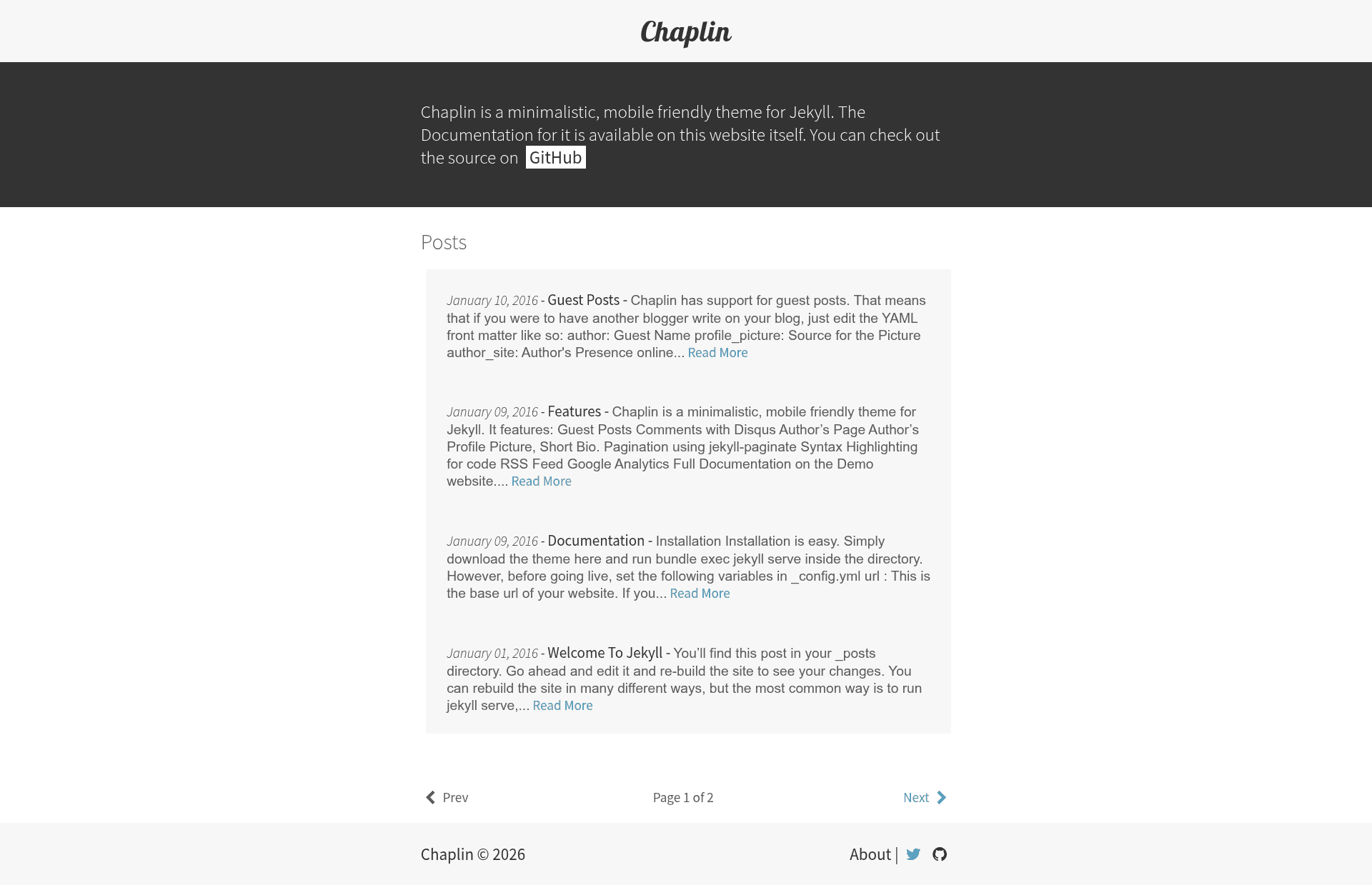
Chaplin is a minimalistic, single-column Jekyll theme for personal blogs and portfolios, built by Ankit Sultana and distributed under the MIT license. It is designed for writers and developers who want a clean, no-frills blog without learning a complex framework.
Chaplin is a minimalistic, single-column theme for Jekyll, the static site generator. It takes Markdown posts placed in the _posts directory and renders them into a clean, blog-style website. The theme is authored by Ankit Sultana, hosted on GitHub at bk2dcradle/Chaplin, and released under the MIT license. It is designed to be lightweight and easy to customize through simple configuration variables.
url, baseurl, and tracking_id in _config.yml to adapt the theme to your domain and analytics.google_analytics: true and providing your tracking ID._includes/disqus.html to add comments to posts.$heading-font variable in _sass/_vars.scss to alter the look of headings.year-month-day-name-of-the-file.markdown format using any text editor; Jekyll handles the rest.Chaplin is for developers and writers who want a clean, no-frills blog without learning a complex framework. It suits Jekyll users who already know how to write Markdown and want a theme that gets out of the way. It's also a good fit for personal portfolios where the content should speak for itself, given the single-column layout and minimal styling.
_config.yml to _includes.Installation is straightforward: download the repository, run bundle exec jekyll serve locally to preview, then set url, baseurl, and tracking_id in _config.yml before going live. Posts are added by creating Markdown files with the standard Jekyll date-prefixed naming convention in the _posts folder.
Yes, Chaplin is open-source under the MIT license, so you can use, modify, and distribute it freely with attribution.
Download the theme from GitHub as a ZIP file, extract it, run bundle exec jekyll serve inside the directory, and then customize the _config.yml variables for your site.
Set tracking_id to your Google Analytics ID and set google_analytics to true in _config.yml. The theme will then include the tracking snippet automatically.
Get the universal embed code from Disqus, paste it into the _includes/disqus.html file, and comments will appear on your blog.
Chaplin uses Rouge, which is the default syntax highlighter for Jekyll 3 and above. You don't need to configure anything extra to highlight code blocks.