Newsletter
Join the Community
Subscribe to our newsletter for the latest news and updates

Minimalistic and responsive blog theme for Hugo, built with Bulma CSS.
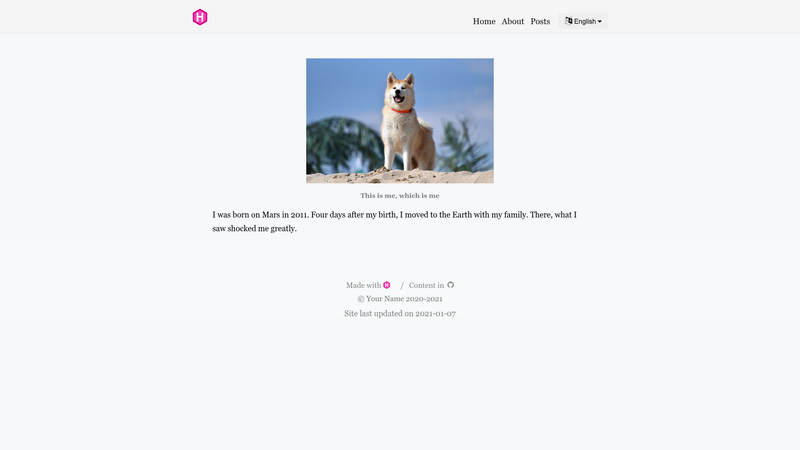
A simple, MIT-licensed Hugo theme for building multilingual personal blogs.
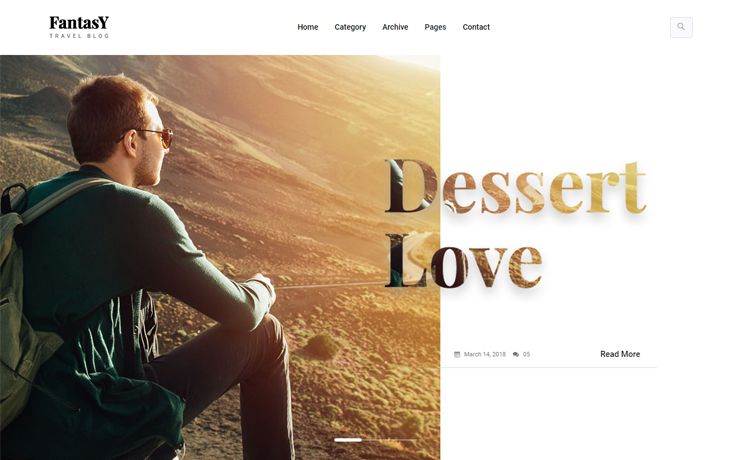
Free Bootstrap 4 HTML5 travel blog website template with responsive layout, Google Maps, newsletter signup, and multi-page design.
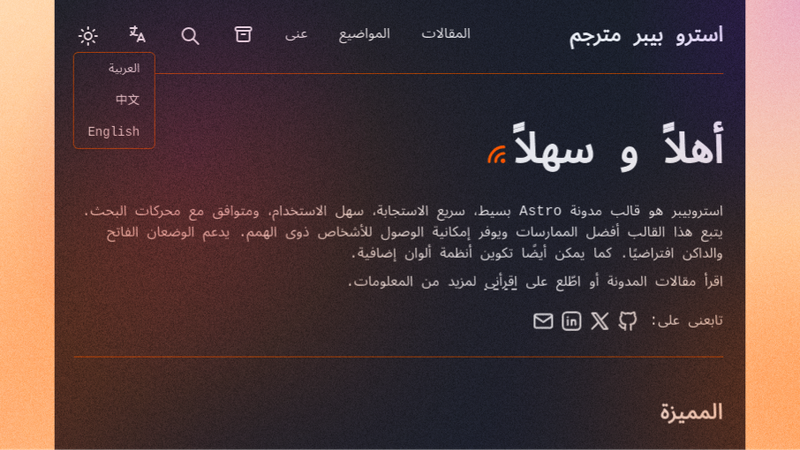
AstroPaper fork adding internationalization (i18n), RTL support, and a language switcher to Astro blog themes.
An open-source Eleventy starter blog optimized for Chinese, with perfect Lighthouse score, RSS, sitemap, search, and offline support.
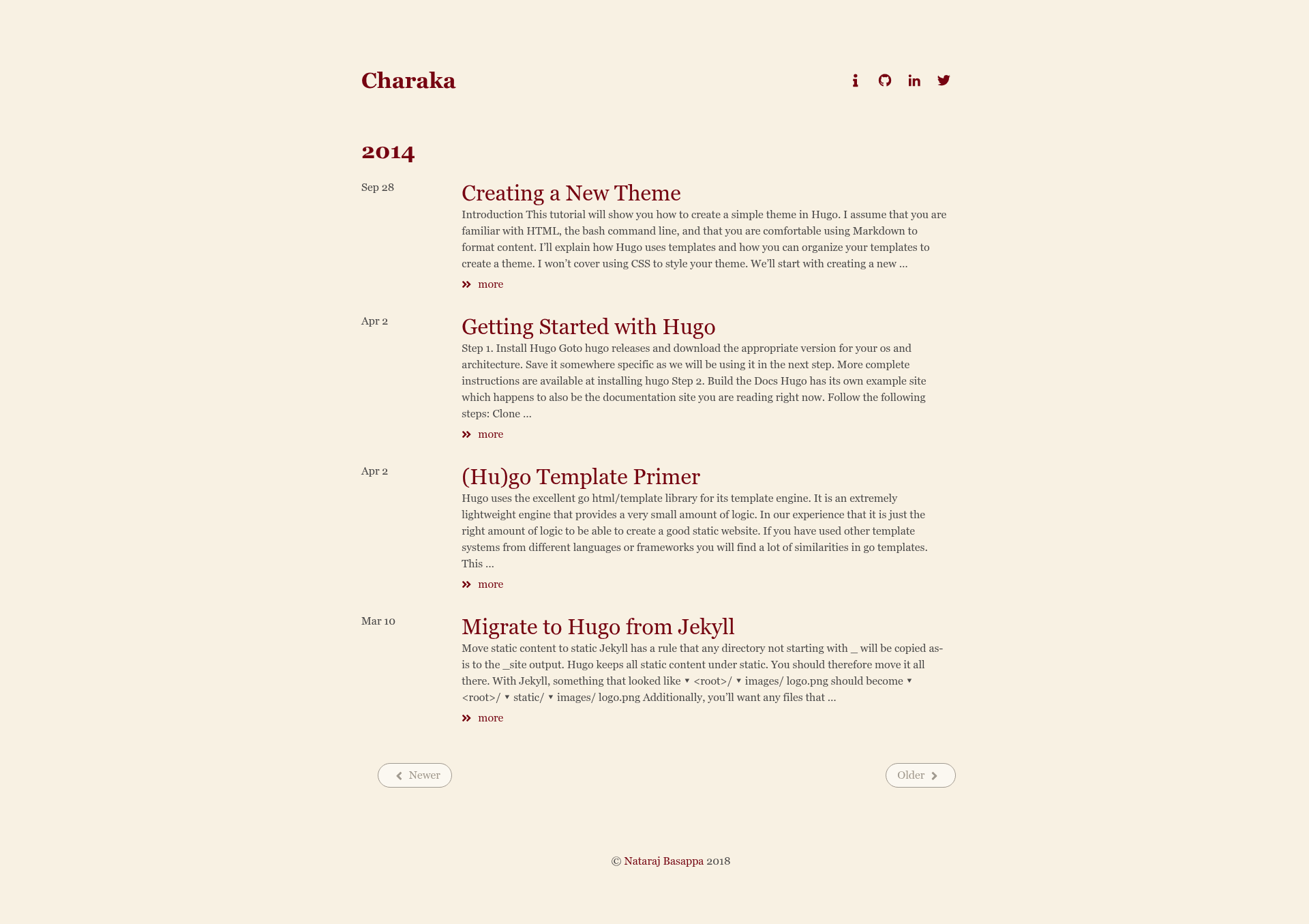
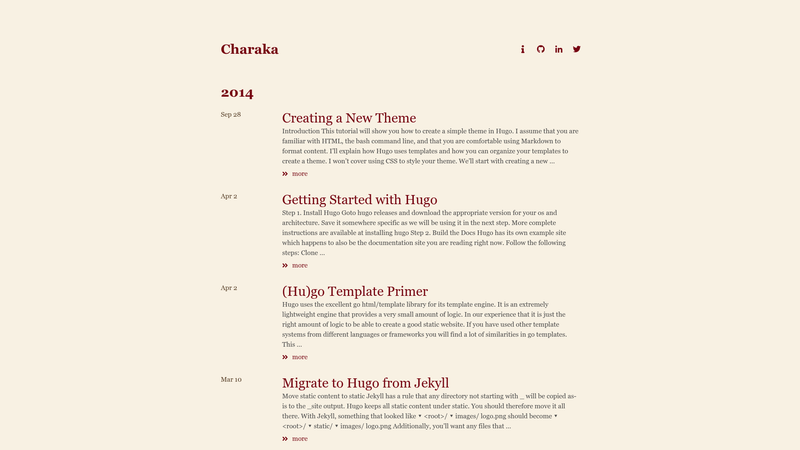
Charaka (ಚರಕ) is a minimalistic and responsive blog theme for the Hugo static site generator, built on the Bulma CSS framework and designed for clean, readable typography. Its core function is to take Markdown content from a Hugo site and render it as a lightweight, mobile-friendly blog or documentation site.
Charaka is an open-source Hugo theme created by Nataraj Basappa and released under the MIT License. As a Hugo theme, it inputs standard Hugo content (Markdown files with front matter) and outputs a static HTML website with a minimal blog layout. It uses Bulma, a modern CSS framework, for styling, and includes configuration options for social links, analytics, comments, and syntax highlighting.
Charaka follows standard Hugo theme conventions. After cloning the repository into your Hugo themes directory, you copy the provided example config.toml into your site root, add content to the content folder, and run hugo server to preview at localhost:1313. For style changes, install npm dependencies and use the provided npm scripts to compile SCSS to CSS.
Charaka is free and open source under the MIT License. No paid tiers, premium themes, or feature-gated functionality are mentioned in the repository; the full source code is available on GitHub.
Yes, Charaka is released under the MIT License, meaning you can use, modify, and distribute it freely, including in commercial projects, with attribution.
The README states that Hugo v0.145.0 or higher is required to build the theme correctly.
Clone the repository to your Hugo themes directory, copy the exampleSite config.toml to your project root, and run hugo server. The site will be available at localhost:1313.
Yes, the example configuration includes fields for a Disqus shortname and a Google Analytics tracking ID, so you can enable both with minimal setup.
Yes, the theme uses SCSS. After running npm install, you can edit style.scss and run npm run css-build to compile changes, or use npm run css-watch for live updates.