Newsletter
Join the Community
Subscribe to our newsletter for the latest news and updates

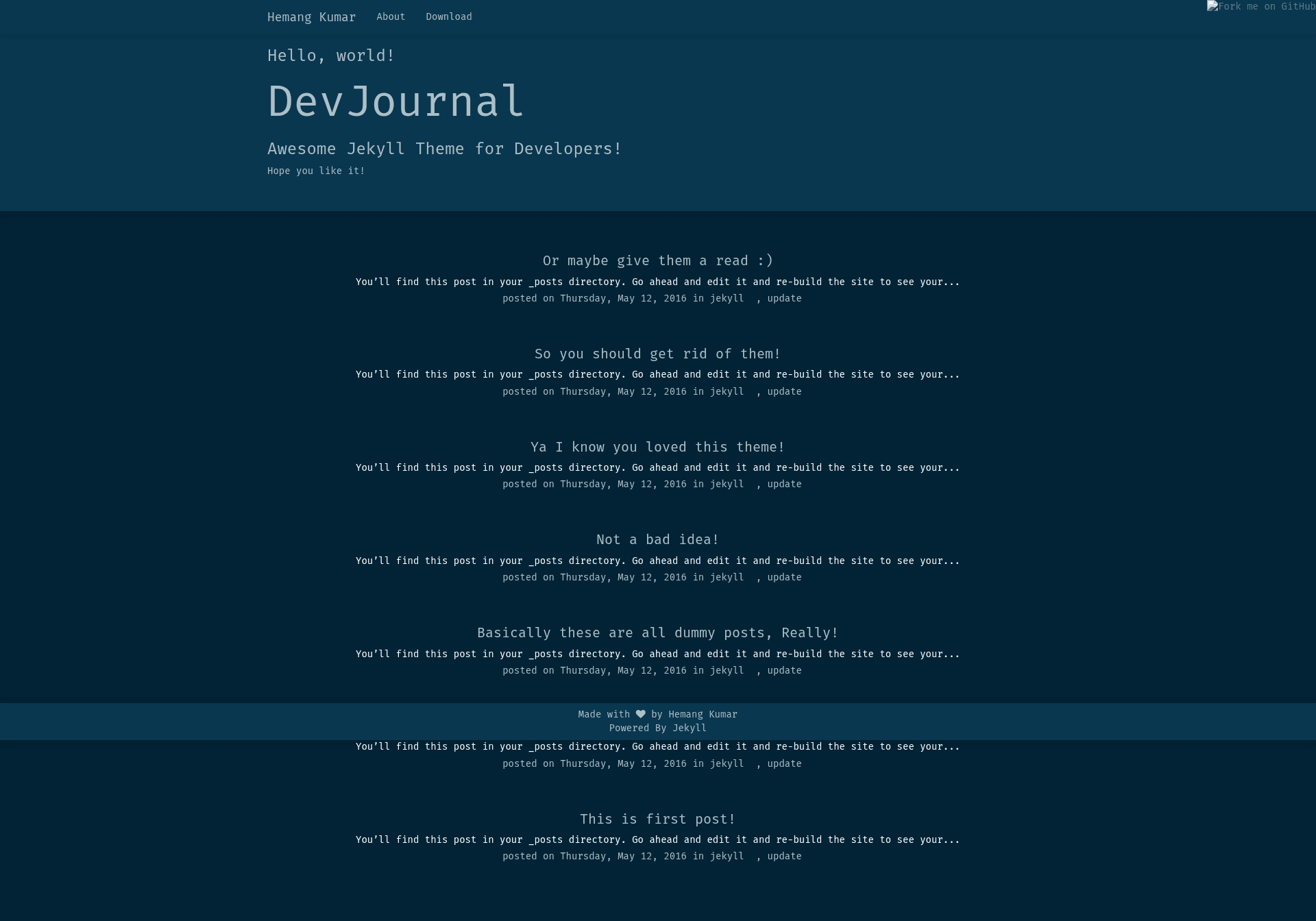
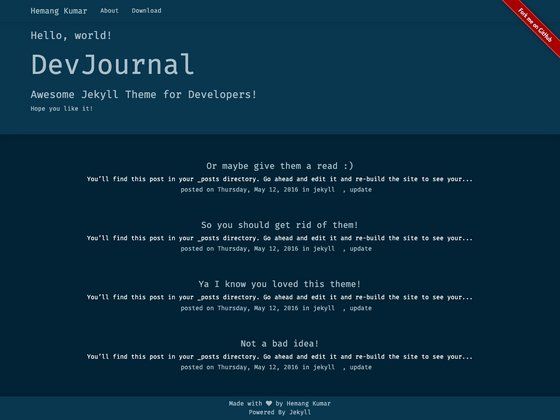
A minimal, text-based Jekyll theme for developers to create blogs and pages with Markdown.
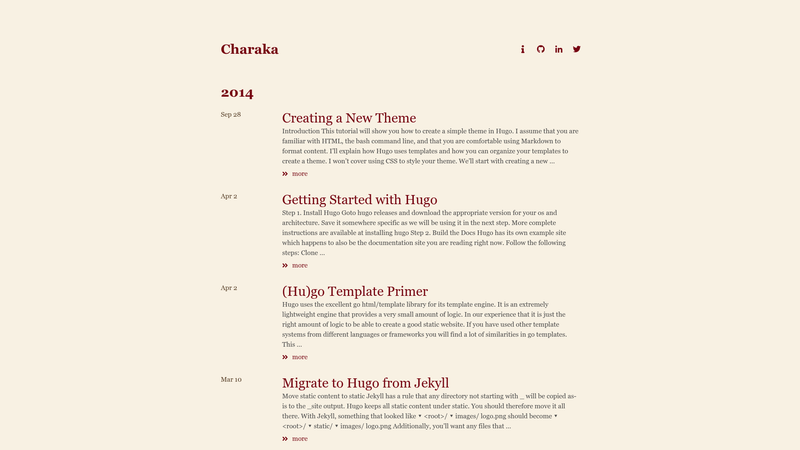
Minimalistic and responsive blog theme for Hugo, built with Bulma CSS.

An open-source Eleventy starter blog optimized for Chinese, with perfect Lighthouse score, RSS, sitemap, search, and offline support.
Minimalist, responsive Jekyll theme for writers and engineers with variable post types, MathJax, and GitHub Pages deployment.
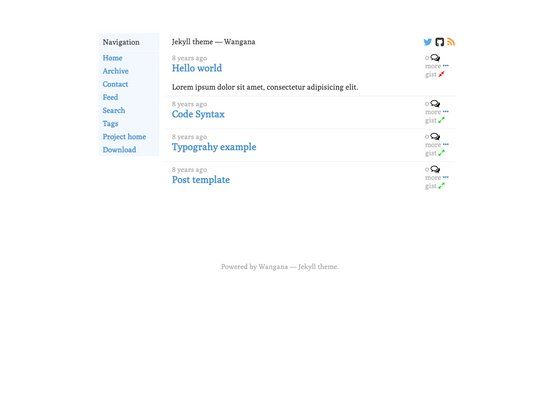
Responsive Jekyll theme for GitHub-hosted blogs, with SCSS styling and local build via Jekyll.
DevJournal is a minimal, text-based Jekyll theme for developers who want a fast, distraction-free blogging platform powered by Markdown files. It converts simple front matter and Markdown content into a static site with support for posts and pages, all styled with a clean, geek-friendly aesthetic.
DevJournal is a free, open-source Jekyll theme created by Hemang Kumar (GitHub user hemangsk) for developers who want to publish content without a database or CMS. It takes Markdown files with YAML front matter as input and outputs a static website with blog posts and individual pages. The theme is distributed via its GitHub repository under the MIT license.
2016-03-30-i-love-design.markdown.DevJournal works as a standard Jekyll theme. You start by cloning the repository, then add your content as Markdown files with YAML front matter. Jekyll processes these files on build, applying the template layouts (post, default, page) and outputting static HTML. The theme requires no database; all site data lives in your text files.
Create a .markdown file inside the _posts folder, naming it according to Jekyll's date-based format, for example 2016-03-30-i-love-design.markdown. Add front matter with layout, title, date, and categories, then write your content in Markdown.
Create a .md file in the root directory with a name like about.md. In the front matter, set layout: page, provide a title, a permalink (for example /science/), and an optional tagline. The page will be accessible at that permalink.
Yes, DevJournal is released under the MIT license, so it's free to use, modify, and distribute. The source code is available on GitHub.
No, DevJournal is a static-site Jekyll theme. It uses Markdown and YAML front matter files, and Jekyll builds static HTML output. No database or server-side processing is needed.
Yes, the theme is designed to be flexible. You can modify the layouts, styles, and add features by forking the repository and submitting pull requests to the original project.