Newsletter
Join the Community
Subscribe to our newsletter for the latest news and updates

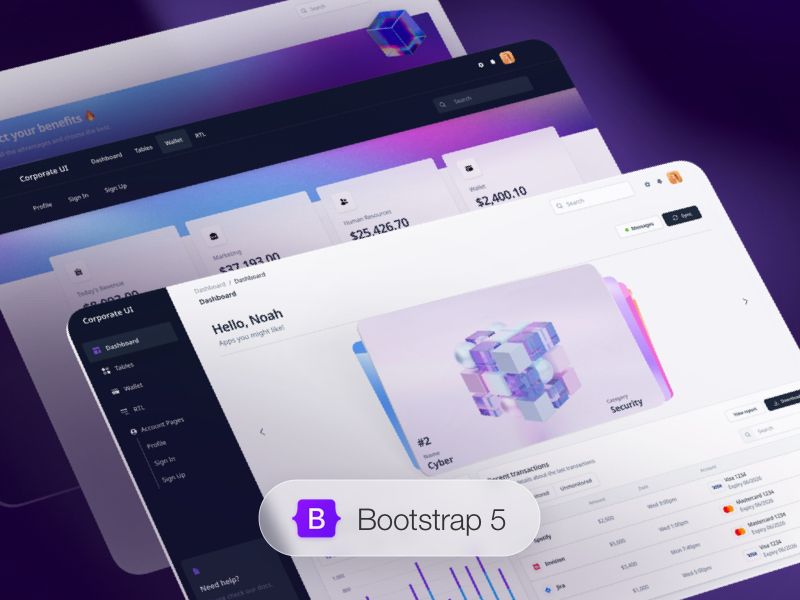
Free and open-source Bootstrap 5 dashboard template with over 70 UI components and prebuilt example pages.
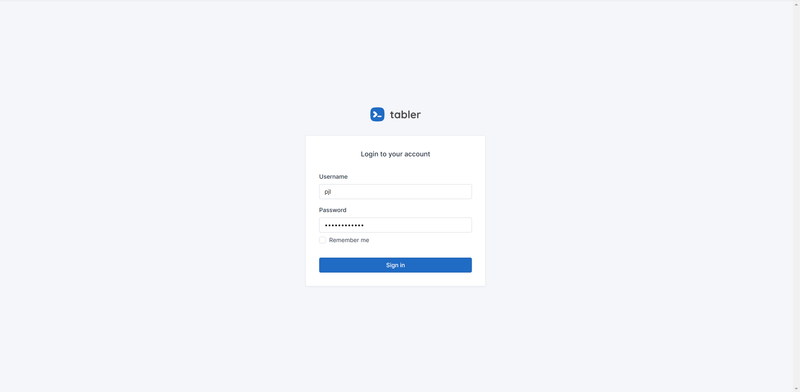
A fast admin dashboard based on FastAPI and TortoiseORM with tabler UI, inspired by Django admin.
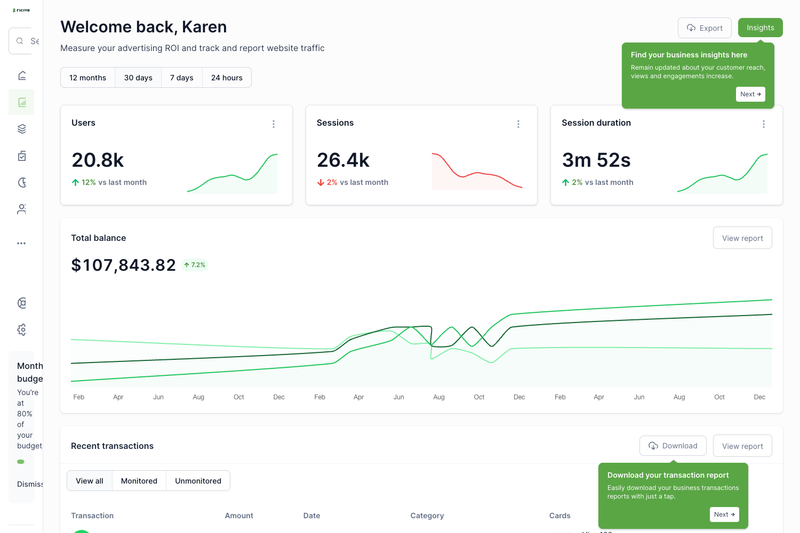
A Next.js dashboard template with Tailwind CSS and Chart.js, built as a frontend developer technical test for Ricive.
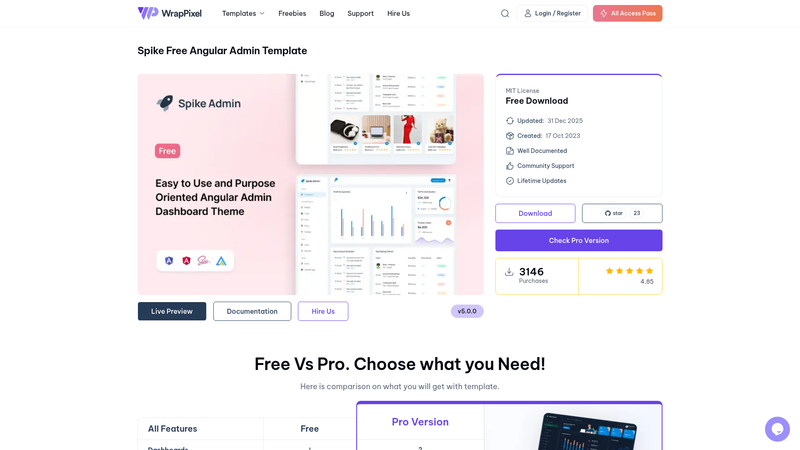
Free Angular 17 admin dashboard template by Wrappixel with 7+ pages, 10+ UI components, and a responsive Bootstrap 5 layout.
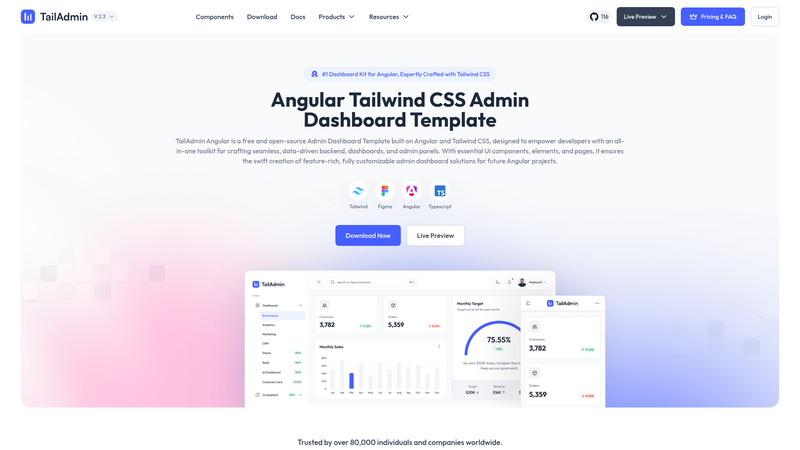
Free, open-source Angular admin dashboard template built with Tailwind CSS, including pre-built UI components, charts, and pages.
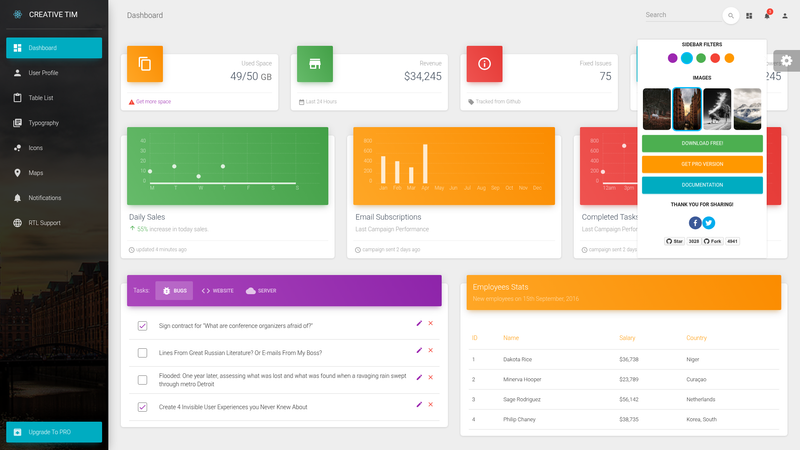
Free Material-UI admin dashboard template for React with Google Material Design, multiple color filters, and pre-built pages.
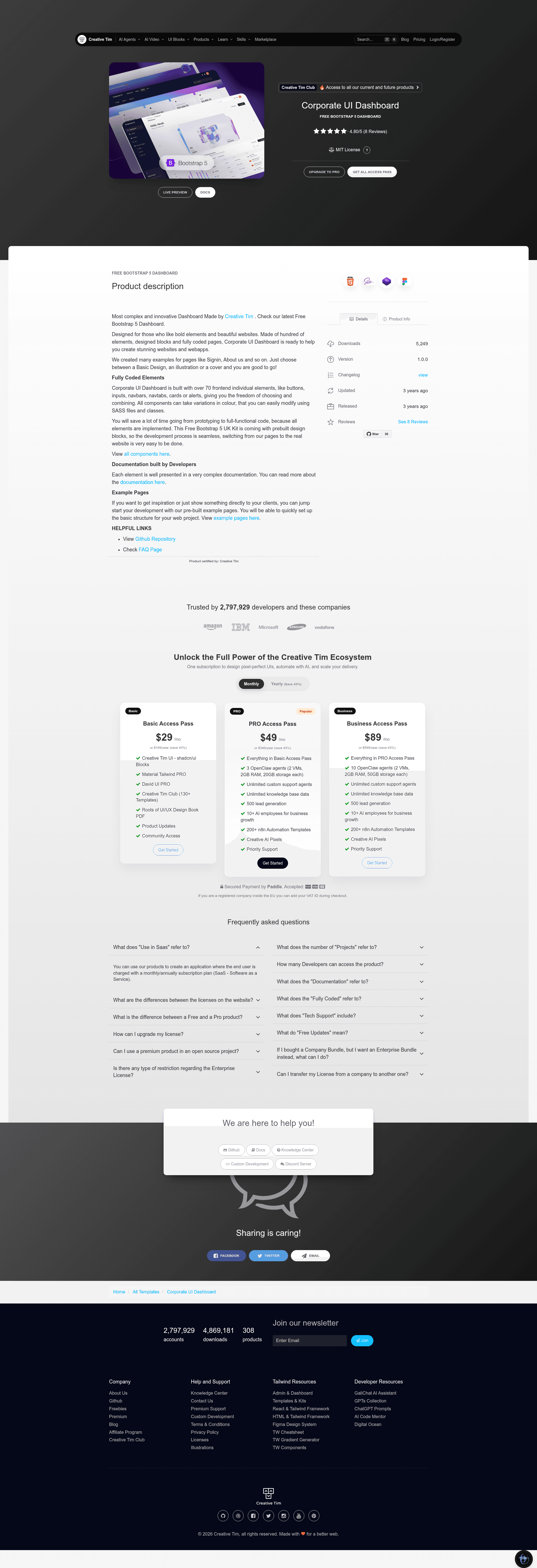
Corporate UI Dashboard is a free, open-source Bootstrap 5 admin dashboard template by Creative Tim, delivering over 70 prebuilt UI elements and example pages for building corporate-style web interfaces.
Corporate UI Dashboard is a free Bootstrap 5 dashboard template created by Creative Tim, designed for building bold, corporate-style web applications. It takes a static HTML/CSS/JS structure as its base and outputs a fully coded front-end with example pages such as dashboard, sign-in, and sign-up. The template includes a Gulp-based build system and can be deployed to any static hosting service, with one-click deployment to Genezio also available.
The template is built on Bootstrap 5 and uses Popper.js for interactive components like tooltips and popovers. It comes with a dedicated documentation site hosted by Creative Tim, covering each element in detail. The download includes assets, documentation, pages, and a package.json for npm-based workflows.
npm install to install local dependencies, then start customizing the HTML, SASS, and JavaScript files.Corporate UI Dashboard is free to download and open source. The license agreement is available on the Creative Tim website.
Yes, Corporate UI Dashboard is free and open source, released under Creative Tim's license. You can download it from the product page and use it for personal or commercial projects according to the license terms.
It uses Bootstrap 5 along with Popper.js for floating elements like tooltips and popovers. The template is designed specifically for Bootstrap 5.
Yes, to use the local build system you need Node.js installed. Running npm install in the root directory will install the dependencies defined in package.json.