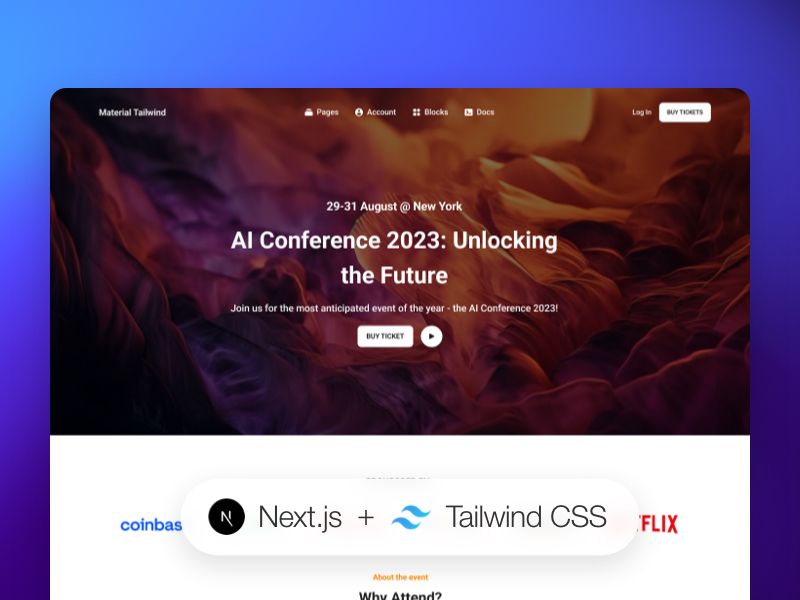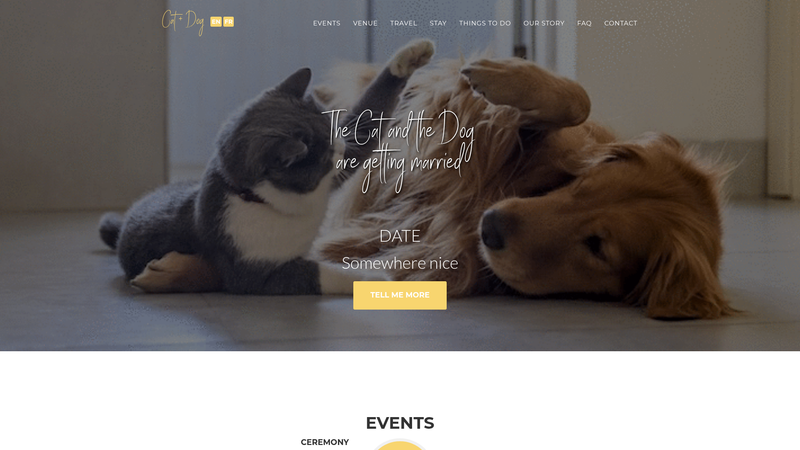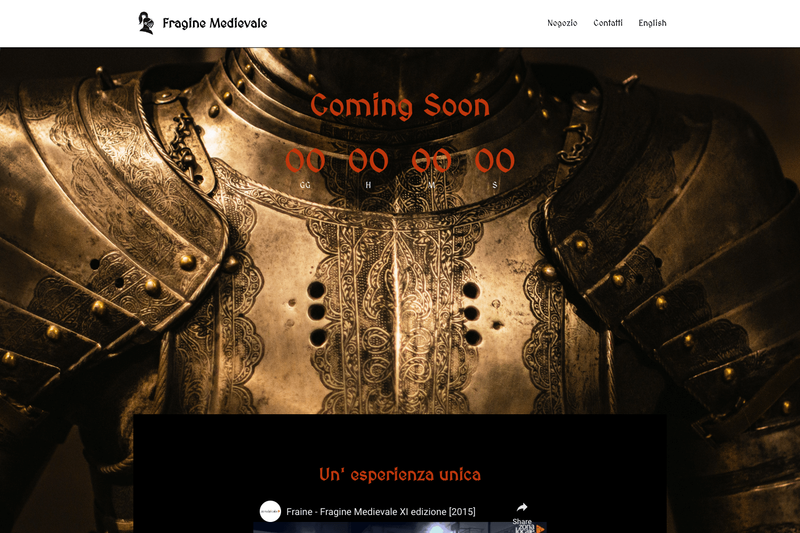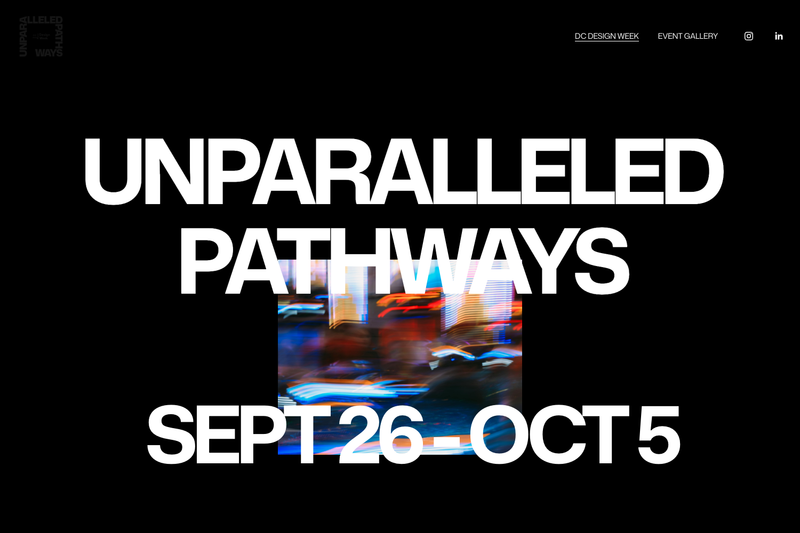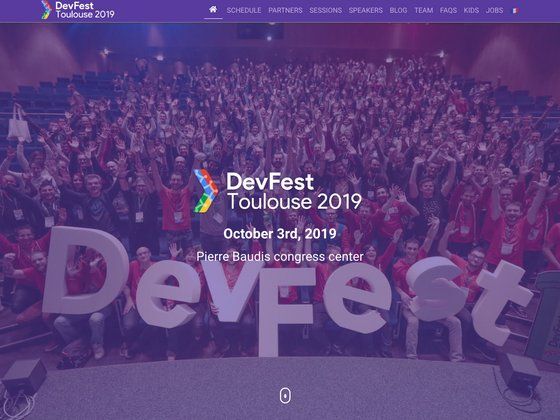
DevFest Theme Hugo is a Hugo theme for conference and event websites, created by the GDG Toulouse community for the 2019 DevFest Toulouse conference. It takes markdown content with front matter and shortcodes and generates a complete static site with a landing page, speaker and session listings, partners, ticket pricing, location map, blog, team, and FAQ pages. The theme runs on Hugo, the static site generator written in Go, and requires Node.js tooling to transpile and minify its Sass assets.
Key Features
- Modular home page shortcodes — the landing page is assembled from Hugo shortcodes such as
{{% jumbo %}},{{% home-info %}},{{% home-speakers %}},{{% home-subscribe %}},{{% home-tickets %}},{{% home-location %}},{{% partners %}}, and{{% album %}}, each accepting parameters for images, dates, coordinates, and categories. - Multilingual English and French support — language configuration in
config.tomlenables a language switcher in the header, with per-language site params like description. - Predefined content schemas — front-matter templates for partners, speakers, sessions, team members, and blog posts specify fields such as name, company, photoURL, socials, tags, videoId, and draft status.
- Ticket shortcode —
{{< ticket >}}renders a ticket item with name, start/end dates, price in euros, info text, sold-out state, and a purchase URL, used inside a home-tickets block. - Data-driven footer —
data/footer.ymldefines social share links (Facebook, Twitter), follow links (Facebook, Twitter, LinkedIn, YouTube), and content columns with links to previous conference editions. - Sass build workflow —
npm installfetches dependencies,npm startwatches Sass for live edits, andnpm run buildoutputs minified styles; the theme uses Node and npm rather than a bundled precompiled CSS file. - SEO and favicon configuration — site params include Google Analytics ID, Google Webmaster verification key, Open Graph share image, theme color
#673ab7, and favicon files for common sizes.
Who is it for?
- DevFest and Google Developer Group organizers — who need a conference site patterned after the DevFest Toulouse 2019 site, with matching sections for speakers, sessions, and partners.
- Event organizers — who want a ready-made Hugo theme with ticket blocks, location maps, and email subscription calls to action.
- Hugo developers — who prefer to customize a theme using npm and Sass, and who can adapt content types for other events.
What can you do with it?
- Launch a full conference site quickly — the README walks through installing Hugo, adding the theme as a git submodule, installing npm dependencies, and flipping the theme on in
config.toml. - Publish speaker and session details — add markdown files under content with the documented front-matter fields; sessions can include language, level, tags, slides URL, YouTube video ID, and speaker references.
- List partners and team members — create content files with partner category, website, and logo; team members can have a photo and social profile links.
- Blog and legal pages — blog posts take title, brief, image, and date front matter, while FAQ and code-of-conduct pages are plain markdown assigned to the main menu.
How does the theme work?
Hugo reads the configuration and content directories, then combines content with layout templates to output a static site. To customize styling, run npm start to watch Sass changes, or npm run build to generate a minified production CSS. The home page output is driven by shortcodes placed in the home _index.md file, and the header/footer pull from menu definitions and data/footer.yml.
FAQ
Is DevFest Theme Hugo free to use?
Yes, the theme is released under the MIT license, as stated in its LICENSE file. You can use it for any conference or event without license fees.
What are the installation requirements?
You need Hugo installed on your system and the Node.js toolchain. The setup steps in the README create a new site, add the theme as a git submodule, run npm install, and then build the theme assets before starting hugo server.
Does the theme support languages other than English and French?
The theme was designed with English and French in mind. The README notes that if you use another language you should add month names to layouts/partials/date-short.html, so support for additional locales requires manual editing.
Is the sessions feature stable?
The README marks the sessions content type as "not yet stable." It provides front-matter fields for sessions, but development was still in progress when the documentation was written, so expect possible changes.
Can I use the theme to sell tickets directly?
The theme does not process payments. The ticket shortcode displays ticket names, prices, dates, and a sold-out flag, and links out to an external ticketing service via a url parameter, such as the billetweb.fr page used for DevFest Toulouse 2019.