Newsletter
Join the Community
Subscribe to our newsletter for the latest news and updates

A TypeScript, Next.js 13, and Chakra UI template for building Discord bot dashboards with customizable features.

A healthcare dashboard built with Next.js and Firebase that tracks water, steps, sleep, nutrition, and mental health.
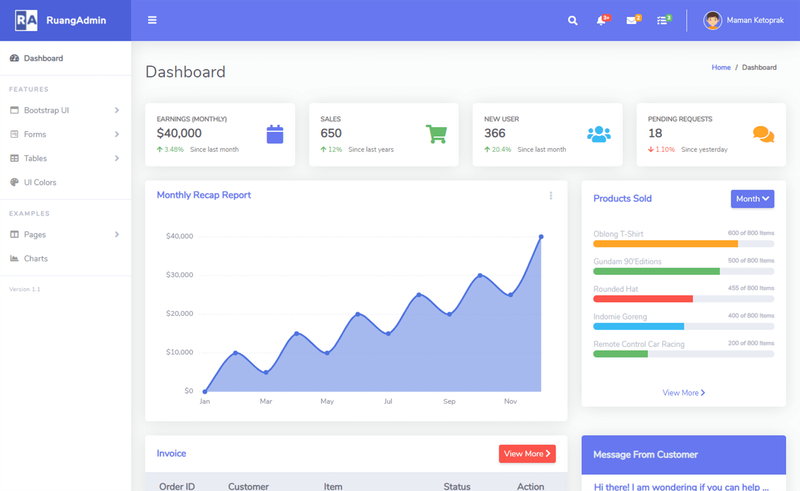
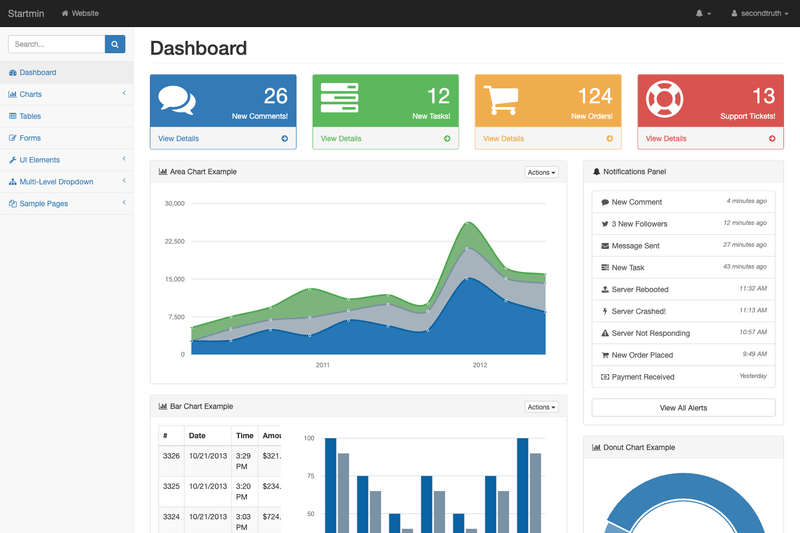
Free, responsive Bootstrap 4 admin dashboard template with authentication pages, forms, tables, charts, and a multi-page layout for web app backends.
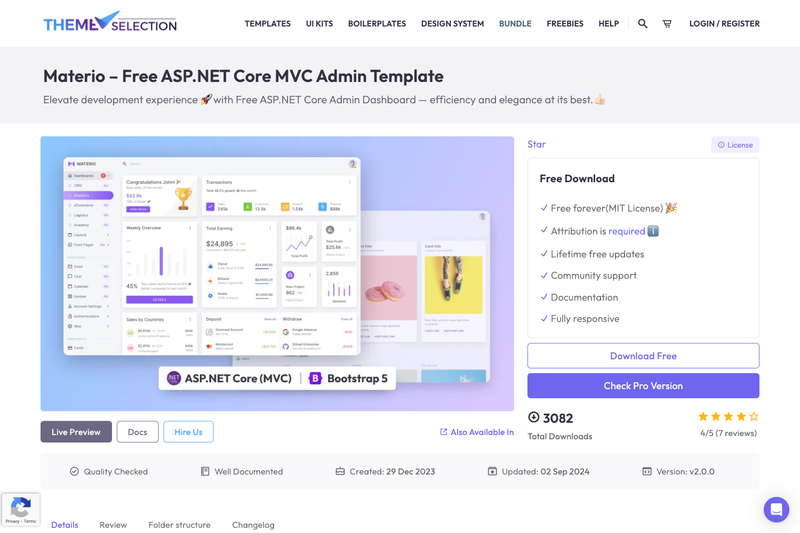
Free Bootstrap 5 ASP.NET Core MVC admin dashboard template with analytics, layouts, pages, and UI components.
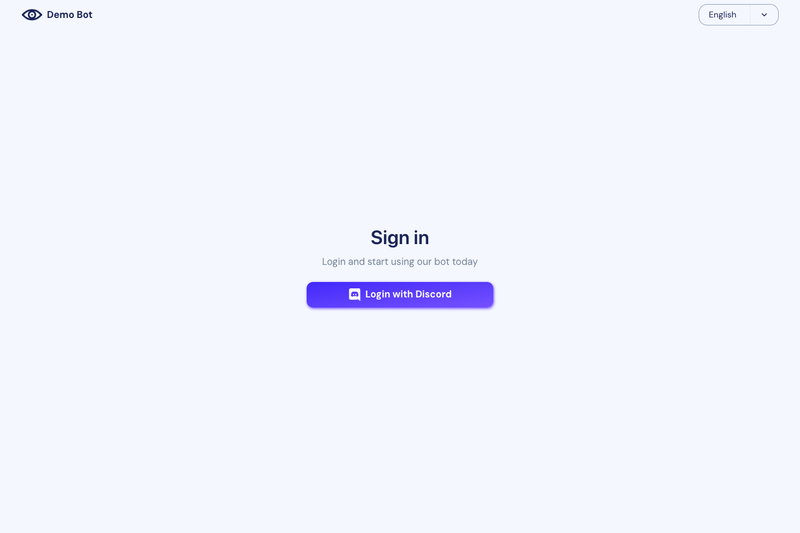
Discord Bot Dashboard Next is a TypeScript and Next.js 13 template for building web dashboards that let Discord server admins configure bot features through a clean Chakra UI interface. It is available on GitHub and includes a built-in Discord OAuth flow, a feature configuration system, and support for light/dark themes plus multi-language (i18n) localization.
Discord Bot Dashboard Next is a front-end template that connects a Discord bot to a web dashboard using Next.js 13 API Routes for authorization. It takes configuration files and a running backend server as inputs, and produces a responsive dashboard where users can log in via Discord OAuth, select a guild, enable/disable bot features, and edit feature options. The template is built with React 18 and Chakra UI 2.0, and its source is organized into pages, components, API utilities, and config folders. The project is deprecated: the maintainer recommends considering alternatives, and no support is provided, though it remains usable.
localization.md file./api/auth/login redirects to Discord, /api/auth/callback stores the access token in HTTP-only cookies.src/config/features.tsx; each feature has an ID, name, description, icon, and a useRender function that renders a configuration panel.src/api/bot.ts defines a client for fetching guild data and feature states from a backend server.src/config/common.tsx holds bot name, icon, invite URL, and guild settings; TypeScript types in src/config/types/custom-types.ts control feature shapes.The setup involves eight steps: clone the repo, install dependencies (PNpm preferred), customize files under src/pages, src/components, src/api, and src/config, define feature types in custom-types.ts, configure general information in src/config/common.tsx, create a .env file for required variables, implement a backend server with the documented API routes, then run pnpm run dev on port 3000. The authorization flow is Login -> Discord OAuth -> API Routes -> Client: after the user authorizes, the access token is stored in HTTP-only cookies and the client uses it to call the backend with a Bearer header.
The template is publicly available on GitHub with no stated price, so it can be used as a free starting point. No paid tiers or license restrictions are mentioned in the README.
Yes, the template is publicly accessible on GitHub and the README does not mention any payment or licensing cost. You can clone the repository and use it as the base for your own dashboard, but the maintainer warns that support is no longer provided.
The template uses TypeScript, Next.js 13, React 18, and Chakra UI 2.0. Authorization is handled through Next.js API Routes with Discord OAuth. The backend is not included; you must write your own server in any language that exposes the required REST routes.
The README starts with a 'Deprecated' notice stating that the maintainer recommends other alternatives and will no longer provide support. You can still use the code, but you should be prepared to maintain or extend it yourself.
Yes, the dashboard requires a backend to provide guild info, roles, channels, and feature storage. The README specifies GET, PATCH, POST, and DELETE routes under /guilds/{guild}/features and similar endpoints, and it links to an official Node.js TypeScript example backend.
Create an application in the Discord Developer Portal, add the callback URL APP_URL/api/auth/callback to the OAuth2 redirects, and configure the required environment variables. The built-in flow handles the rest, storing the access token in HTTP-only cookies.