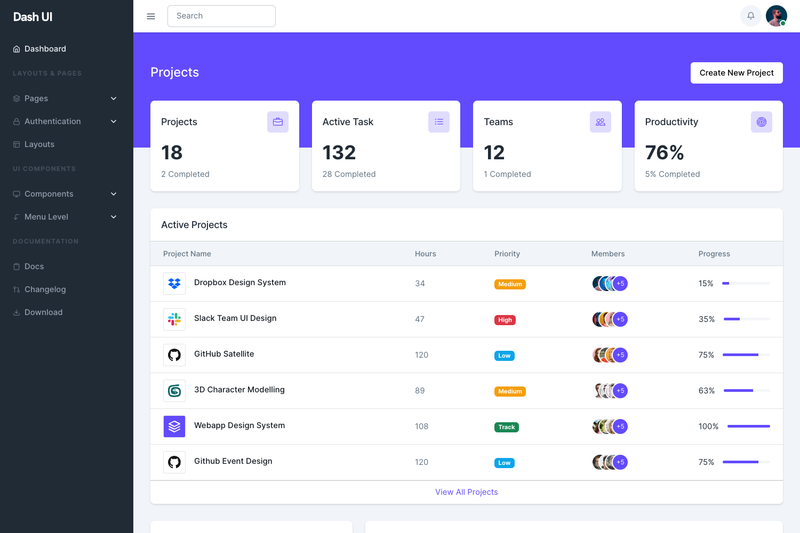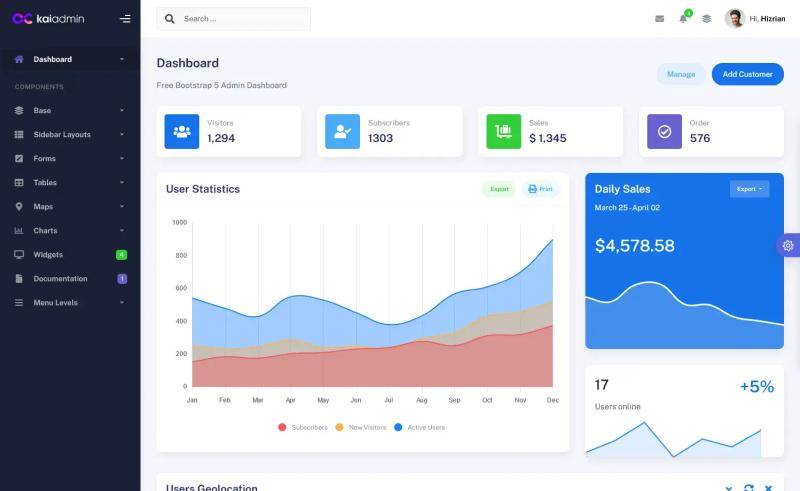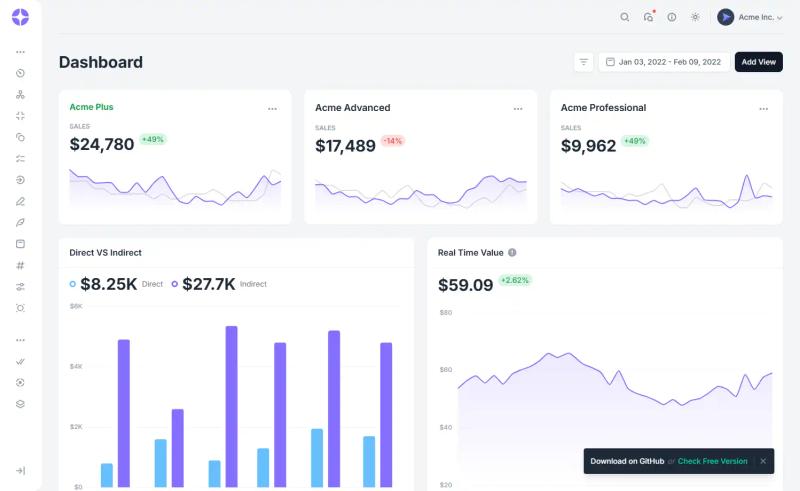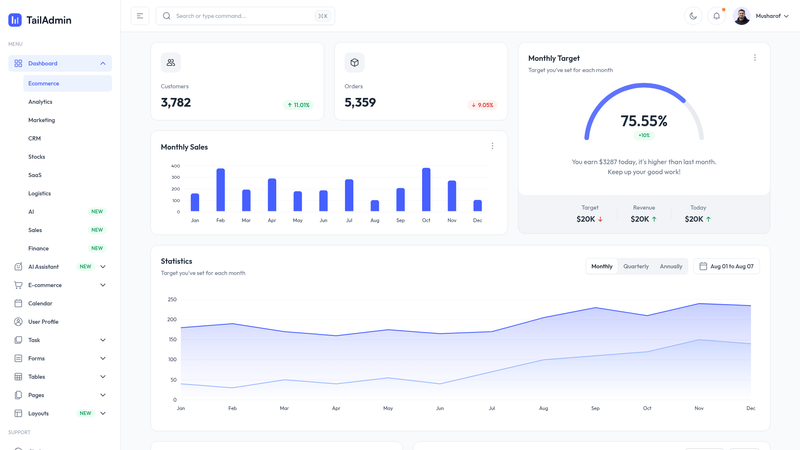
The Ecommerce CMS Dashboard is an open-source, Next.js 13-based admin panel that lets store owners manage products, track orders, and control store content from a single dashboard interface.
What is the Ecommerce CMS Dashboard?
The Ecommerce CMS Dashboard is an open-source admin dashboard template built with Next.js 13, Tailwind CSS, and Prisma. It provides the management side of an online store: you can add and update products, track incoming orders, and handle store content through a web-based CMS interface. The project runs on the Next.js App Router and connects to a companion storefront repository, so it is designed as the back-office half of a full ecommerce setup. The codebase was created following a YouTube tutorial by Code With Antonio and is published on GitHub.
Key Features
- Next.js 13 App Router — Uses the app directory structure with app/page.tsx as the main starting point, compatible with server components and auto page updates during development.
- Tailwind CSS styling — Utility-first styling keeps the UI fully customizable by editing class names in the component files.
- Prisma with MySQL — Repository metadata lists Prisma as the ORM on MySQL, providing a typed schema for products, categories, and order data.
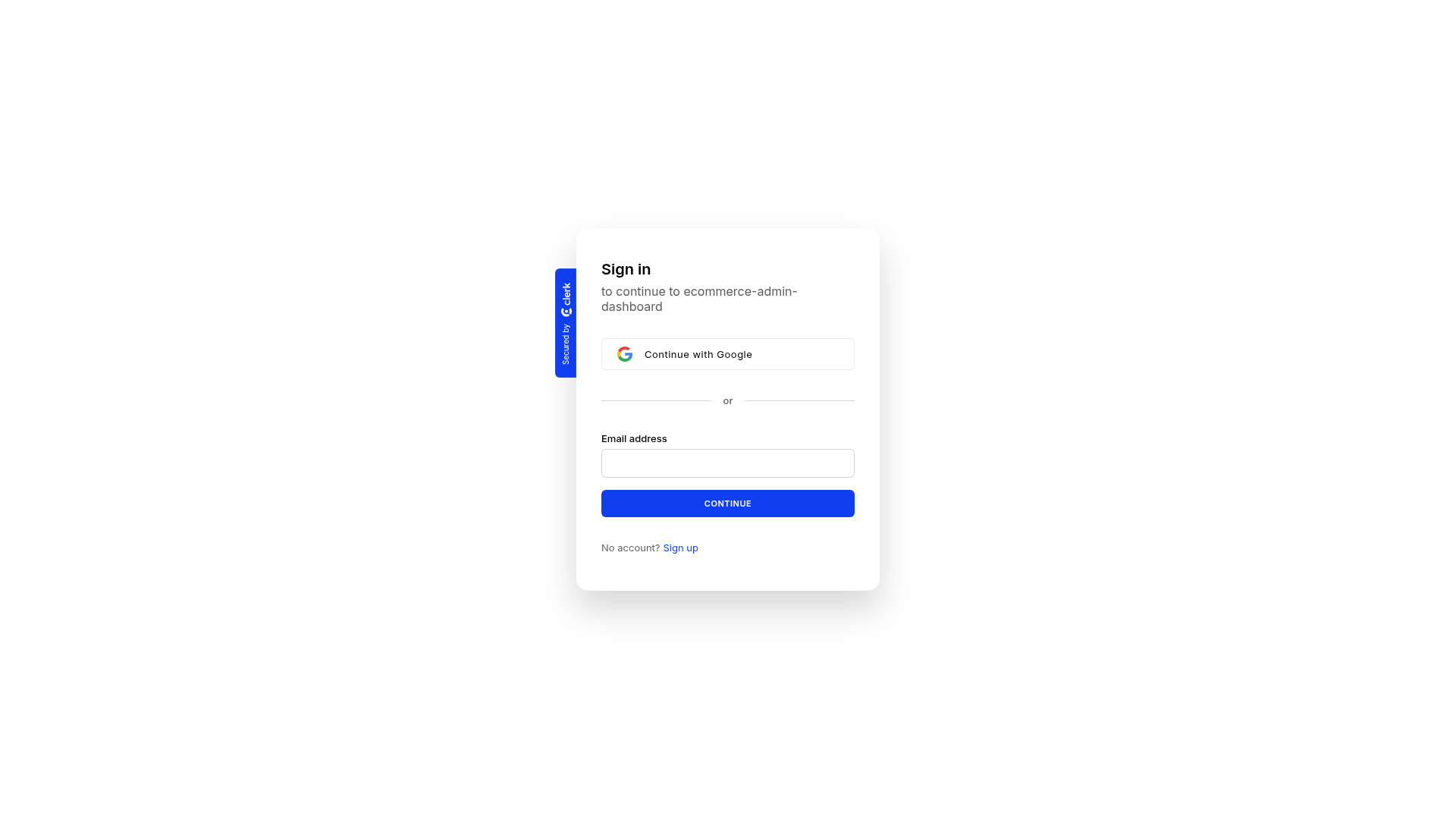
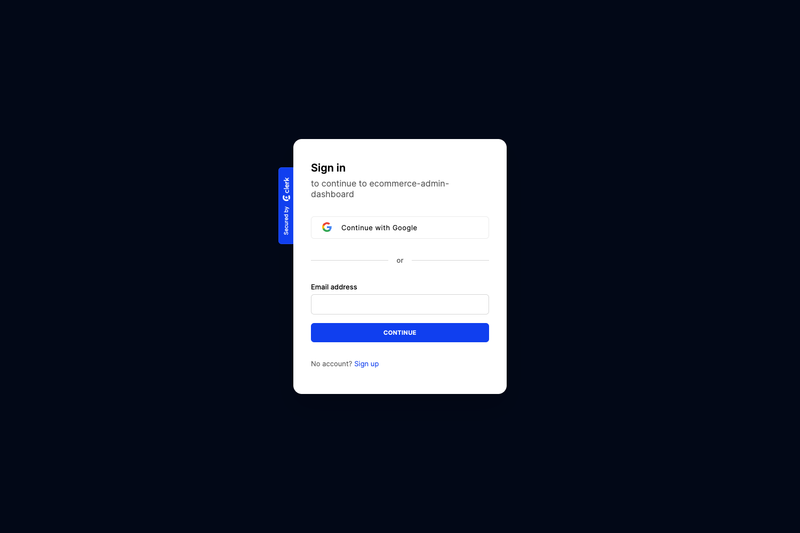
- Clerk authentication — The metadata includes Clerk, which supplies a ready-made sign-in flow and session management for store administrators.
- Stripe payments — Stripe integration is present in the stack, enabling order checkout and payment tracking that surfaces in the dashboard.
- shadcn-ui components — The interface relies on shadcn-ui, a collection of accessible, copy-pasteable React components styled with Tailwind.
- Optimized Inter font — next/font automatically loads and optimizes Inter as the default Google Font.
- Vercel deployment ready — The README includes the standard Next.js deployment instructions for shipping the dashboard on Vercel.
Who should use this template?
- Ecommerce store owners — can self-host an admin panel to add products, update listings, and track orders without building a custom backend.
- Full-stack developers — get a complete reference for integrating Next.js 13, Prisma, Clerk, and Stripe in a real dashboard app.
- Tutorial followers — can build the same project step by step with the Code With Antonio YouTube tutorial.
- Freelancers and agencies — can fork the dashboard as a foundation for client ecommerce builds that pair with a separate storefront.
What can you do with this template?
- Product management: add new products and update existing product information (pricing, description, images) through the admin CMS forms.
- Order tracking: monitor orders coming in from the connected store and view their status in the dashboard.
- Development testing: run the local dev server with npm run dev, yarn dev, pnpm dev, or bun dev and edit app/page.tsx to see changes instantly.
- Deployment: deploy the dashboard to Vercel using the provided instructions and link it to the companion store repository.
FAQ
Is this template free?
Yes, the project is open-source and available on GitHub. The README shows standard public repository usage, so you can clone or fork it without a license fee.
Does this work without a storefront?
The dashboard is designed to work with a companion storefront. The README says the deployed version is connected to a separate GitHub repository, making this the admin side of the pair, not a standalone store.
What is the tech stack?
The stack includes Next.js 13 with the App Router, Tailwind CSS, Prisma ORM on MySQL, and next/font for Inter. Repository metadata also lists Clerk, Stripe, and shadcn-ui as part of the project.
Can I deploy it to Vercel?
Yes. The README includes a Deploy on Vercel section with a link to the Vercel platform and references the Next.js deployment documentation.