Newsletter
Join the Community
Subscribe to our newsletter for the latest news and updates

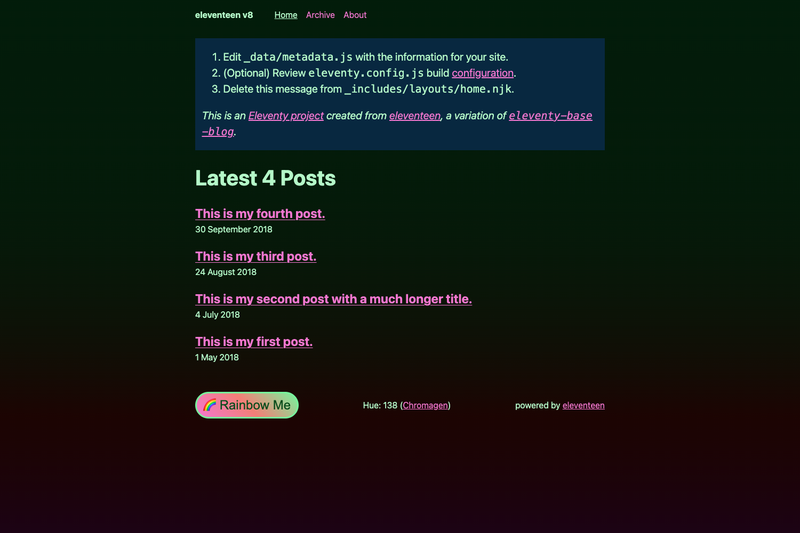
Eleventy blog starter with Rainbow Mode color schemes powered by Chromagen, based on Eleventy Base Blog.
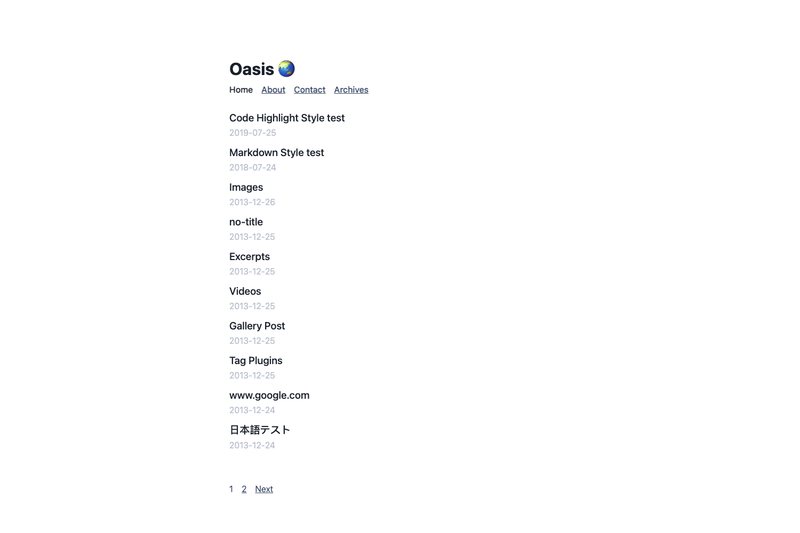
A pure and simple Hexo blog theme with minimal design, PrismJS highlighting, and feed support.
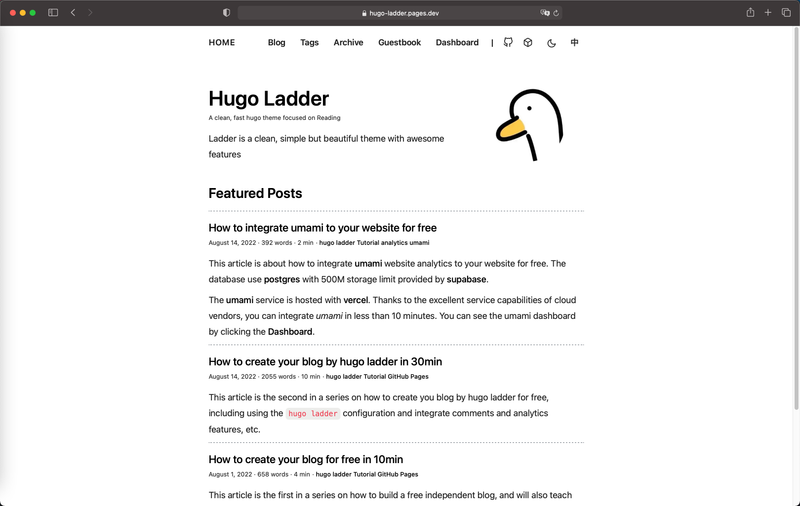
A fast, clean Hugo blog theme with multi-language, dark mode, and mobile support. Now unmaintained, migrated to nextjs-blog-template.
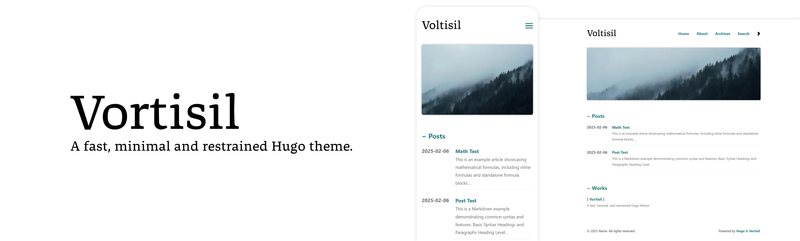
A fast, minimal, and restrained Hugo blog theme with dark/light themes, MathJax, Giscus comments, and GitHub Pages deployment.
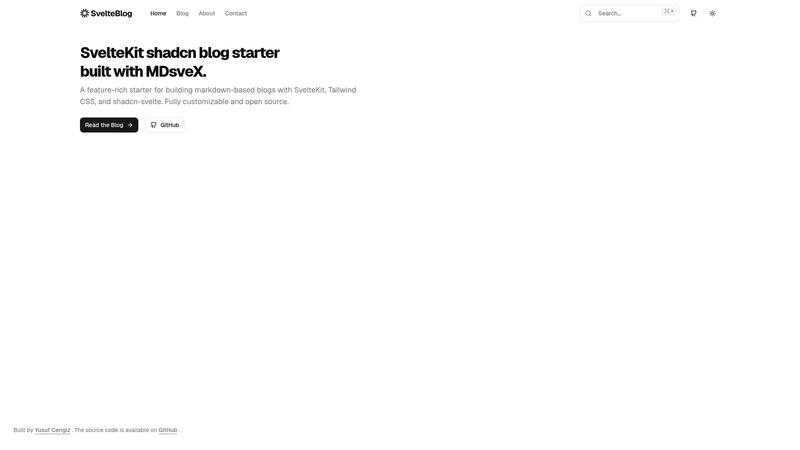
Production-ready SvelteKit blog starter with shadcn-svelte UI, MDsveX Markdown, Tailwind CSS, TypeScript, auto sitemap/RSS, and SEO. Perfect for developers.
Eleventeen is an open-source Eleventy (11ty) blog starter template that builds on the official Eleventy Base Blog and adds a Rainbow Mode color-scheme system powered by Chromagen. It runs on the Eleventy static site generator, authored by Zach Leatherman, and outputs a zero-JavaScript, fully pre-rendered static site. The project is maintained by Ricky de Laveaga for web projects by Famebot and Artist Activist, and is available on GitHub at rdela/eleventeen. As input it takes Markdown (or any configured template format) blog posts and content pages; as output it produces HTML with generated RSS/JSON feeds, a sitemap, tag pages, and optimized images.
Eleventeen is an evolving variation of the Eleventy Base Blog starter repository, designed to show how to build a blog with Eleventy while adding a distinctive Rainbow Mode. It is built on Eleventy, the open-source static site generator created by Zach Leatherman, and is maintained by Ricky de Laveaga for web projects by Famebot and Artist Activist. The template produces a fully static, zero-JavaScript site: content is exclusively pre-rendered, with all URLs decoupled from the file system and templates configured via the Eleventy Data Cascade. It is distributed on GitHub under the rdela/eleventeen repository and can be deployed to Netlify, Vercel, GitHub Pages, or StackBlitz.
mono option to true in _data/metadata.js to disable it.srcset/sizes, output <picture> markup when needed, and include width/height attributes, lazy loading, and async decoding.eleventy-plugin-bundle, keeping the output lean.draft: true to exclude it from production builds; drafts only appear during --serve or --watch.sitemap.xml, zero-maintenance tag pages, and a 404 page out of the box..github/workflows/gh-pages.yml.sample, and StackBlitz support.netlify-plugin-lighthouse v6+._data/metadata.js, run npm install and npm run d to get a local development server with live reload via Eleventy Dev Server.draft: true on posts to keep them out of production builds while previewing locally.netlify.toml for Netlify, the Vercel import URL, or the GitHub Pages workflow sample.Clone the repository, edit _data/metadata.js for site details, and optionally review eleventy.config.js. Install dependencies with npm install, then run npm run d or npm run start for a local server using npx @11ty/eleventy --serve, or npm run build for a production build. Debug mode is available via npm run debug.
fail_deploy_on_score_thresholds input.Rainbow Mode is a third color-scheme preference (alongside light and dark) generated by Chromagen. It is the default in Eleventeen and applies a rainbow palette to the site. To disable it, set the mono option to true in _data/metadata.js.
Yes, Eleventeen is open source and published on GitHub under the Famebot organization. There is no pricing or paid tier mentioned; you can clone, use, and modify it freely.
Yes. Add draft: true to a post's front matter. Drafts are only included when running with --serve or --watch, and they are excluded from full production builds via the eleventyExcludeFromCollections computed data.
One-click deploy buttons are available for Netlify and Vercel, and a sample GitHub Actions workflow for GitHub Pages is in .github/workflows/gh-pages.yml.sample. You can also try it on StackBlitz.