Newsletter
Join the Community
Subscribe to our newsletter for the latest news and updates

A fast, modern Astro blog theme with flash-free dark mode, SEO, RSS, tag pages, and Tailwind CSS, customizable via a single config file.
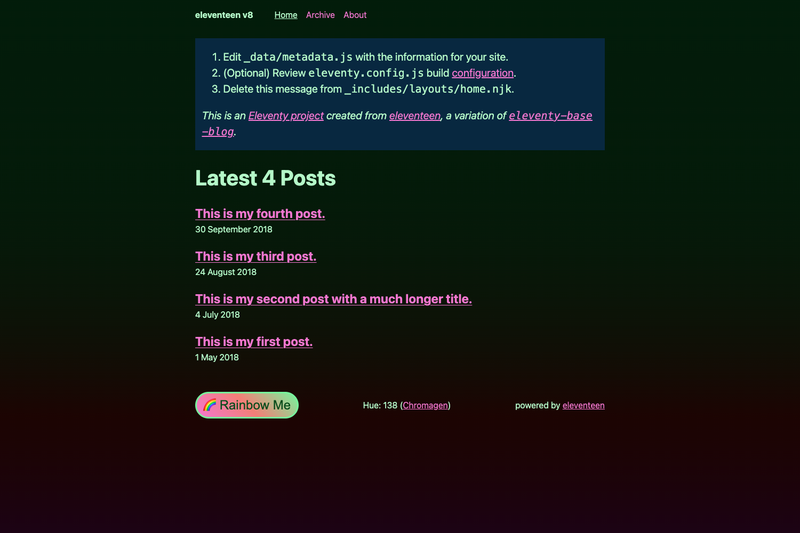
Eleventy blog starter with Rainbow Mode color schemes powered by Chromagen, based on Eleventy Base Blog.
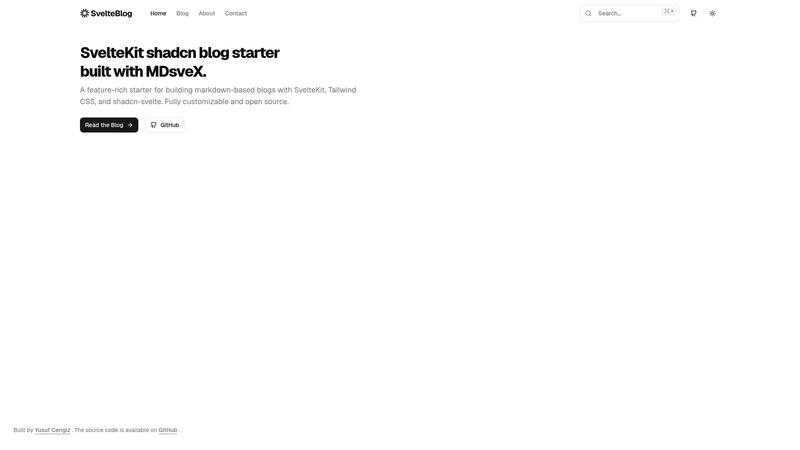
Production-ready SvelteKit blog starter with shadcn-svelte UI, MDsveX Markdown, Tailwind CSS, TypeScript, auto sitemap/RSS, and SEO. Perfect for developers.
Eleventy-powered blog template with Netlify continuous deployment, created by Phil Hawksworth.
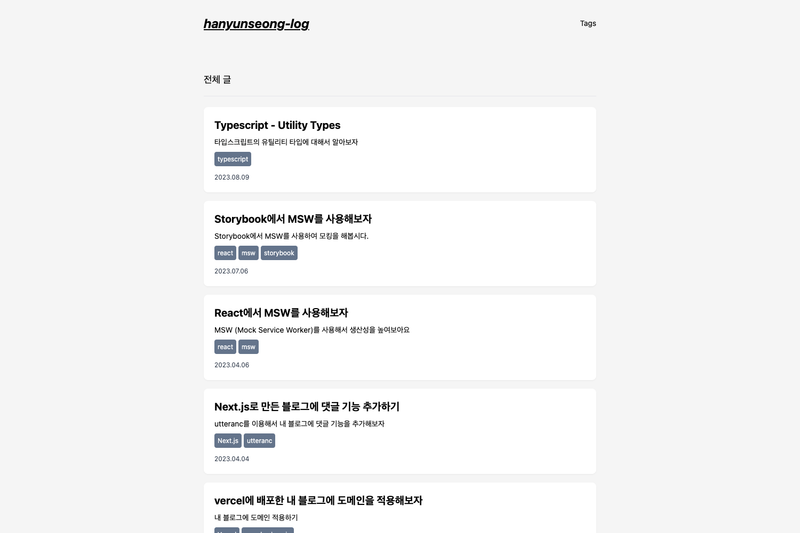
Next.js static blog template using markdown files with GitHub-based publishing, utterances comments, and auto sitemap.
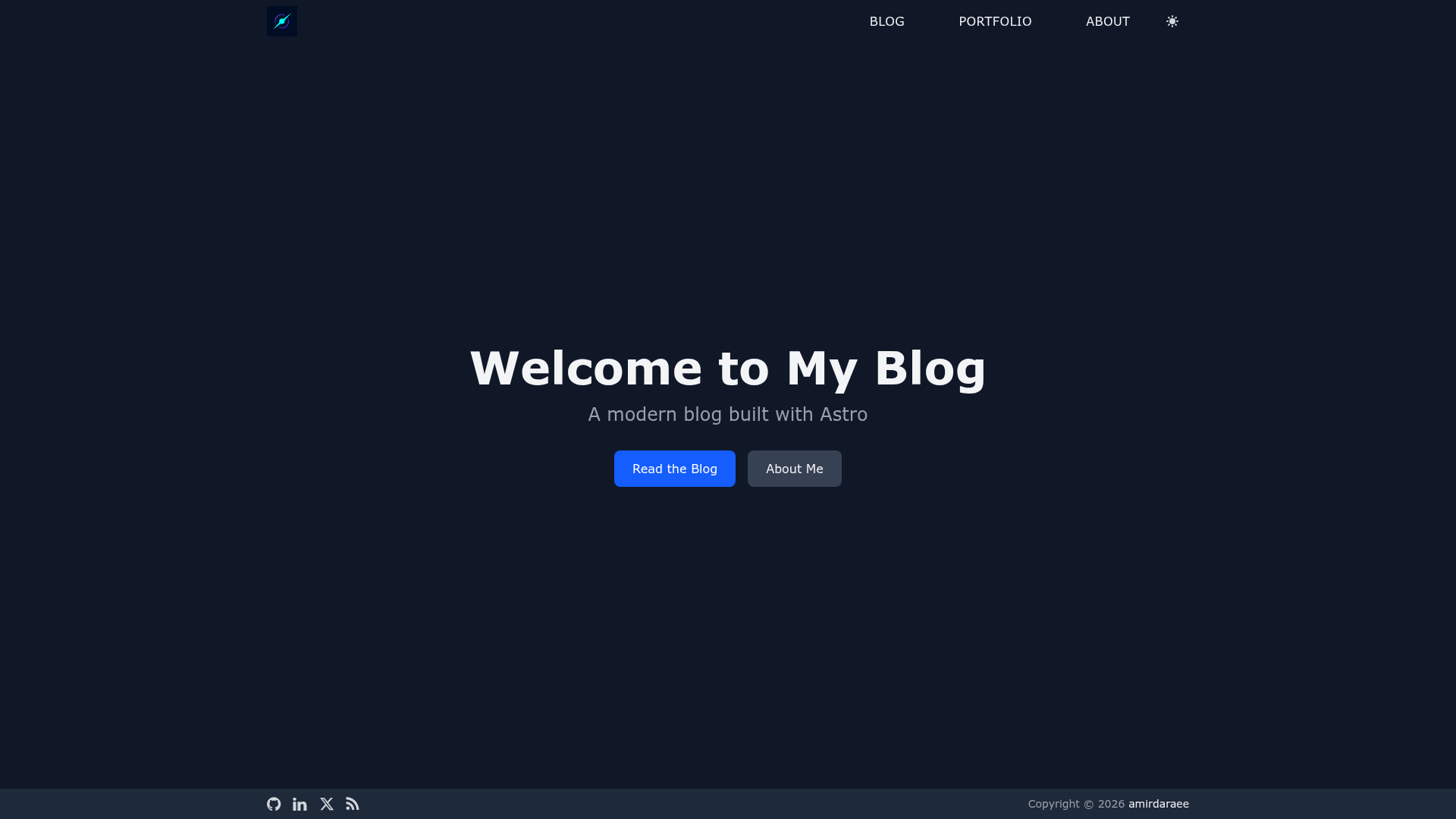
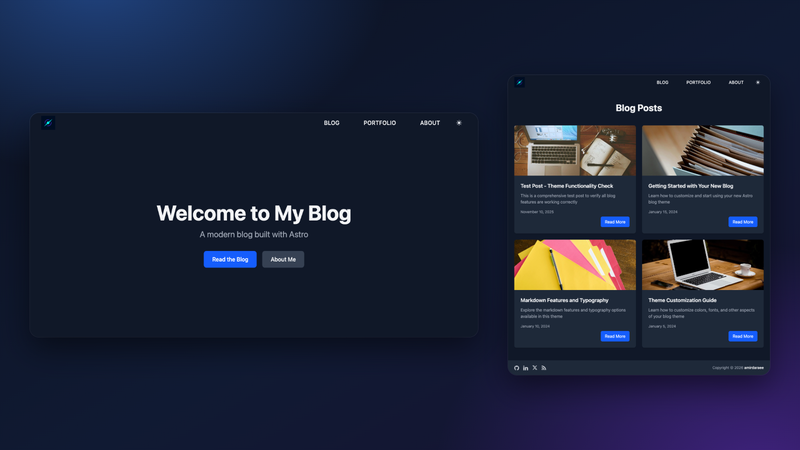
Pulsar is a free, open-source Astro blog theme built with Tailwind CSS that turns Markdown posts into a static, SEO-ready blog with flash-free dark mode, an RSS feed, tag pages, and per-post reading time.
Pulsar is a production-ready blog starter theme for the Astro static site framework, created by developer amirdaraee. It takes Markdown blog posts placed in a content collection and outputs a static site with built-in SEO meta tags, Open Graph and Twitter Card support, a sitemap, and an auto-generated RSS feed. The theme is configured entirely through a single TypeScript file, src/config.ts, which controls site metadata, author info, social links, navigation, and the optional Google Analytics 4 measurement ID.
Pulsar stands out for its combination of a minimal, accessible design with production-grade SEO, analytics, and content tooling packed into a small Astro theme. Here are the features that set it apart:
/rss.xml with autodiscovery.The stack is Astro with Tailwind CSS v4 (config-file-free, themed via @theme in src/styles/global.css), TypeScript, and Font Awesome 4.7 icons. The template includes pages for home, blog, about, and tags, and file-based routing means adding a new page is as simple as dropping an .astro file into src/pages/.
Pulsar is aimed at developers and writers who want a fast, self-hosted blog without assembling many separate integrations. It suits several roles:
npm create astro@latest -- --template amirdaraee/astro-pulsar or by cloning the GitHub repository.npm run build.global.css.npm run build and publishing the dist directory.Pulsar's out-of-the-box features support several concrete use cases:
Layout.astro wrapper.src/styles/global.css, such as --color-primary and --font-sans.Pulsar starts as a GitHub template or a cloned repository. After installing dependencies with npm install, you edit src/config.ts to set your site title, URL, social links, and optional Google Analytics ID, then add Markdown files to src/content/blog/. Run npm run dev to preview at localhost:4321, or npm run build to produce a static site in dist/. Custom pages are added as .astro files under src/pages/.
Pulsar is free and open source under the MIT License, so it can be used for personal or commercial projects without restrictions.
Yes, Pulsar is released under the MIT license, which permits free personal and commercial use, including modification and redistribution.
Pulsar is built on Astro, the content-focused static site framework, with Tailwind CSS v4 for styling and TypeScript for configuration. It uses Shiki for code highlighting and Font Awesome 4.7 for icons.
Since Pulsar uses Tailwind CSS v4, which is config-file-free, you override design tokens in src/styles/global.css inside an @theme block, for example by setting --color-primary or --font-sans. Additional global styles go in the is:global style block in src/layouts/Layout.astro.
Yes, Pulsar includes a dark mode toggle that stores the preference in localStorage, so no flash of incorrect theme occurs. The built-in Shiki syntax highlighting theme also switches between GitHub light and dark based on the active site theme.
Yes, put your GA4 measurement ID in src/config.ts and the Analytics component renders automatically in the main layout. Tracking loads only in production builds and reports content groups, post author and tags, theme preference, and read-completion events.