Newsletter
Join the Community
Subscribe to our newsletter for the latest news and updates

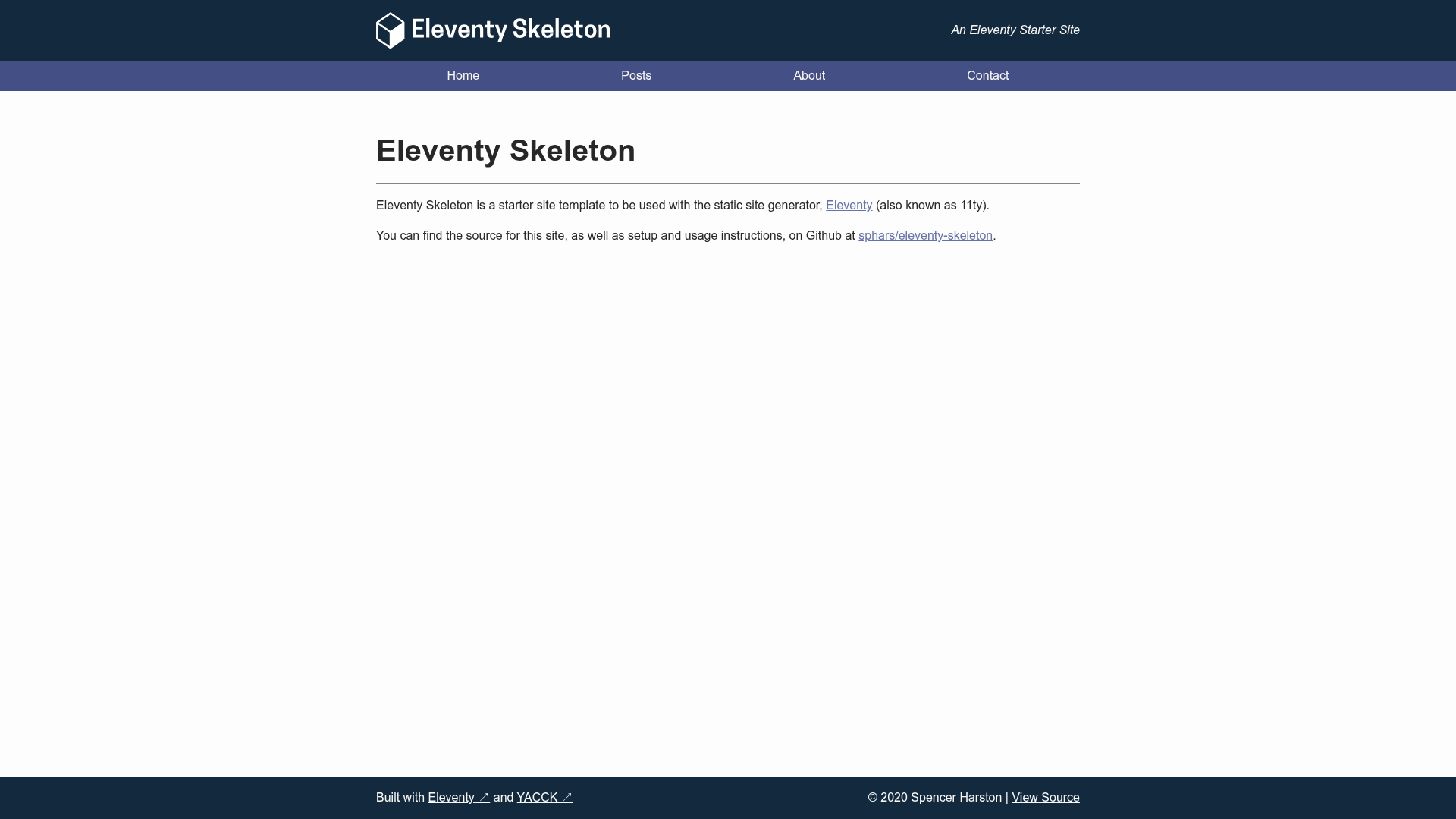
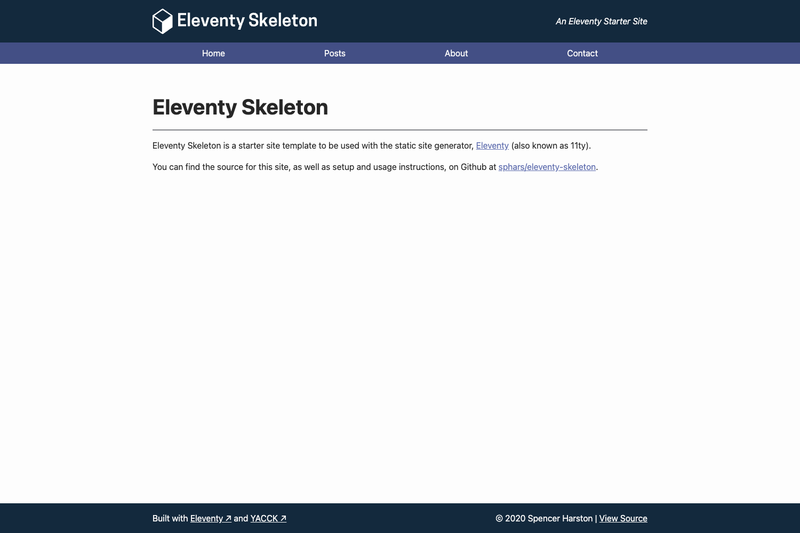
A simple, basic site template built using Eleventy

A template for building scrollable landing pages with GSAP, ScrollTrigger, and the WEBGi engine in TypeScript using Parcel bundler.
Starter for a generic CRUD app with Apollo GraphQL Server, Next.js API routes, and MongoDB.
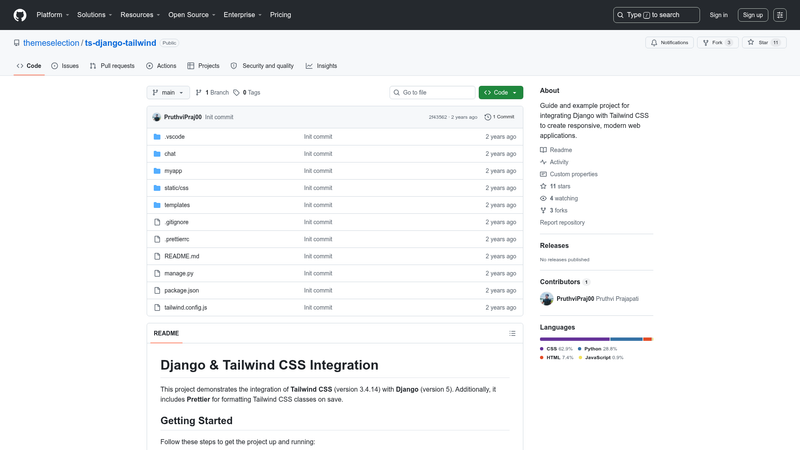
Guide and example project for integrating Django with Tailwind CSS to create responsive, modern web applications.
A Node.js web server boilerplate for the Lad framework, with Express/Koa middleware and rate limiting.
Eleventy Skeleton is a minimal static site boilerplate built with the Eleventy (11ty) static site generator and the YACCK classless CSS framework, providing a ready-made blog and personal site structure that compiles Markdown and Nunjucks templates into a deployable static site.
Eleventy Skeleton is a simple, basic site template created by sphars that produces a static website from source files in src/ into a dist/ output folder. It takes site metadata from src/_data/metadata.json and blog posts written in Markdown as inputs, and generates a complete static HTML site that can be hosted on GitHub Pages, Netlify, or Vercel. The project is marked as a work-in-progress on GitHub but is described as usable in its current state.
Eleventy Skeleton is for developers and content creators who want a small, understandable static site without adopting a full-featured framework. It fits personal blogs, portfolio sites, and project documentation pages that benefit from simple Markdown-based authoring.
Generate a fork from the GitHub template, clone it, run npm install, edit metadata.json, and run npm run build to produce the static site in dist/. For development, npm run serve starts a live-reload server.
You need Node.js and NPM installed on your machine. The template has no other runtime dependencies, and after running npm install you can build the project with npm run build.
Yes. Remove the YACCK references in src/_includes/partials/_head.njk and update the CSS links. The generated HTML follows standard HTML5 conventions so it will work with any stylesheet.
Yes, there is an example blog post at src/posts/example-post.md that shows the expected front matter structure and Markdown formatting for new posts.
The built static site is placed in the dist/ directory. Deploy that folder to a static host such as GitHub Pages, Netlify, or Vercel.