Newsletter
Join the Community
Subscribe to our newsletter for the latest news and updates

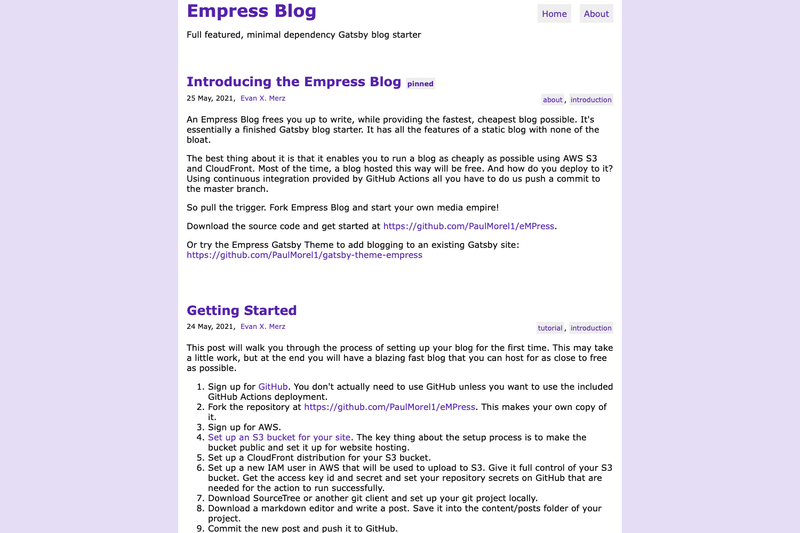
Empress is a feature-complete Gatsby blog starter with tags, themes, pinned posts, and AWS deployment.
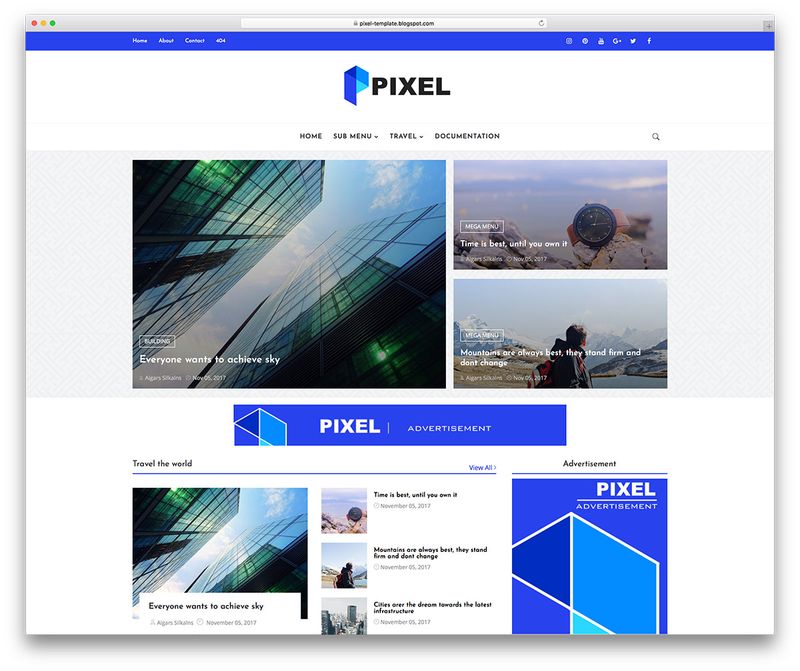
Free news & magazine Blogger template with mega menu, featured post grid, tabbed sidebar and AdSense slots. Zero jQuery, SEO-optimized, vanilla JS. By Colorlib.
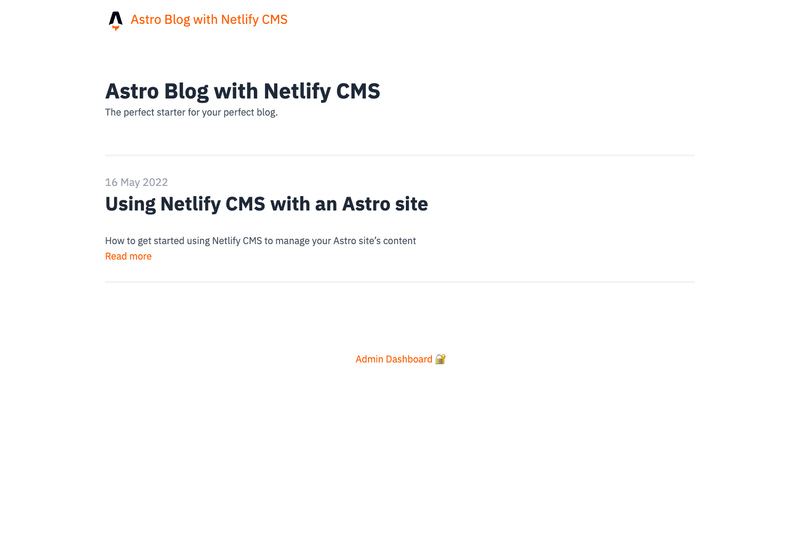
Blog Starter Template for Astro & Netlify CMS
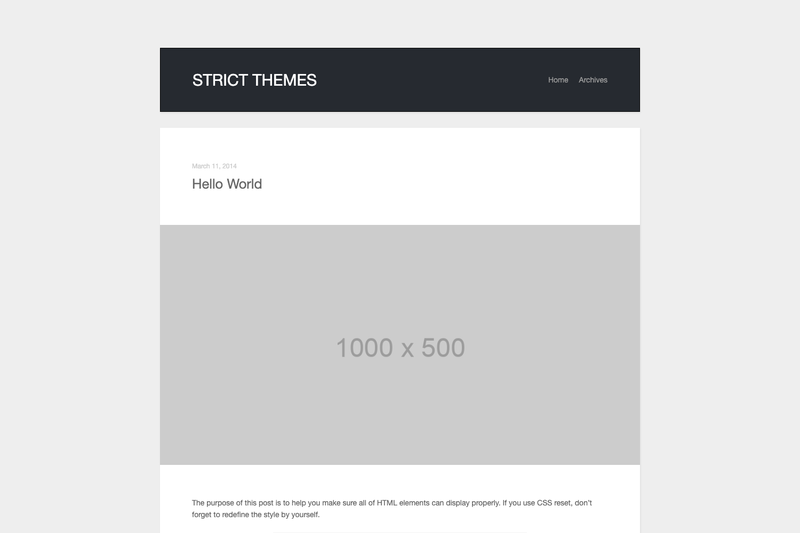
A clean, minimal and responsive theme for Hexo, the static site generator.
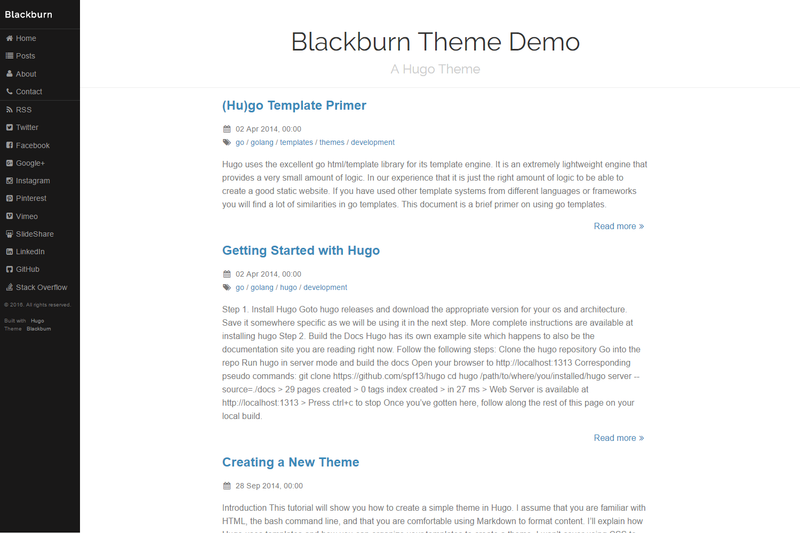
A clear and responsive Hugo theme built on Yahoo's Pure CSS with a fixed social sidebar.
Empress is a feature-complete static blog starter built on Gatsby 4 and React 18, giving you a full-featured blog without re-inventing basic features like tags and menus.
Empress is a Gatsby blog starter that implements the core features of a static blog out of the box. It runs on Gatsby 4 and React 18, and takes markdown content as input to produce a static blog with tags, menus, themes, pinned posts, redirects, a hero banner, Google Analytics, and BlogPosting schema markup for SEO. The starter is created by Paul Morel and is available both as a GitHub repository and as an installable theme called gatsby-theme-empress.
After forking the repository, run npm install and npm run dev to start a local development server. For production builds, use npm run build and npm run serve. To deploy to AWS, you need a public S3 bucket and a CloudFront distribution; store AWS secret keys in your GitHub repository settings and push to master, which triggers the GitHub Actions deployment.
Yes. Empress is open source under the CC BY-NC 3.0 license. It runs on free tiers: you need a free GitHub account and a free AWS account to use it out-of-the-box.
No. Empress deliberately uses plain CSS and vanilla React components to keep dependencies minimal. This avoids the broken dependency chains that can block upgrades to major versions like Gatsby 4.
Yes. Create a new theme by copying src/styles/themes/dark.css, add your own rules, import it into the themes list in themes.js, and set the new theme name in gatsby-config.js.
Set headerType to "hero" in gatsby-config.js, then set desktopHeroImage and mobileHeroImage to filenames of images you place in the static/images directory.
To keep the dependency footprint small, Empress uses npm as its package manager. Yarn would be an additional package, so the author chose npm.