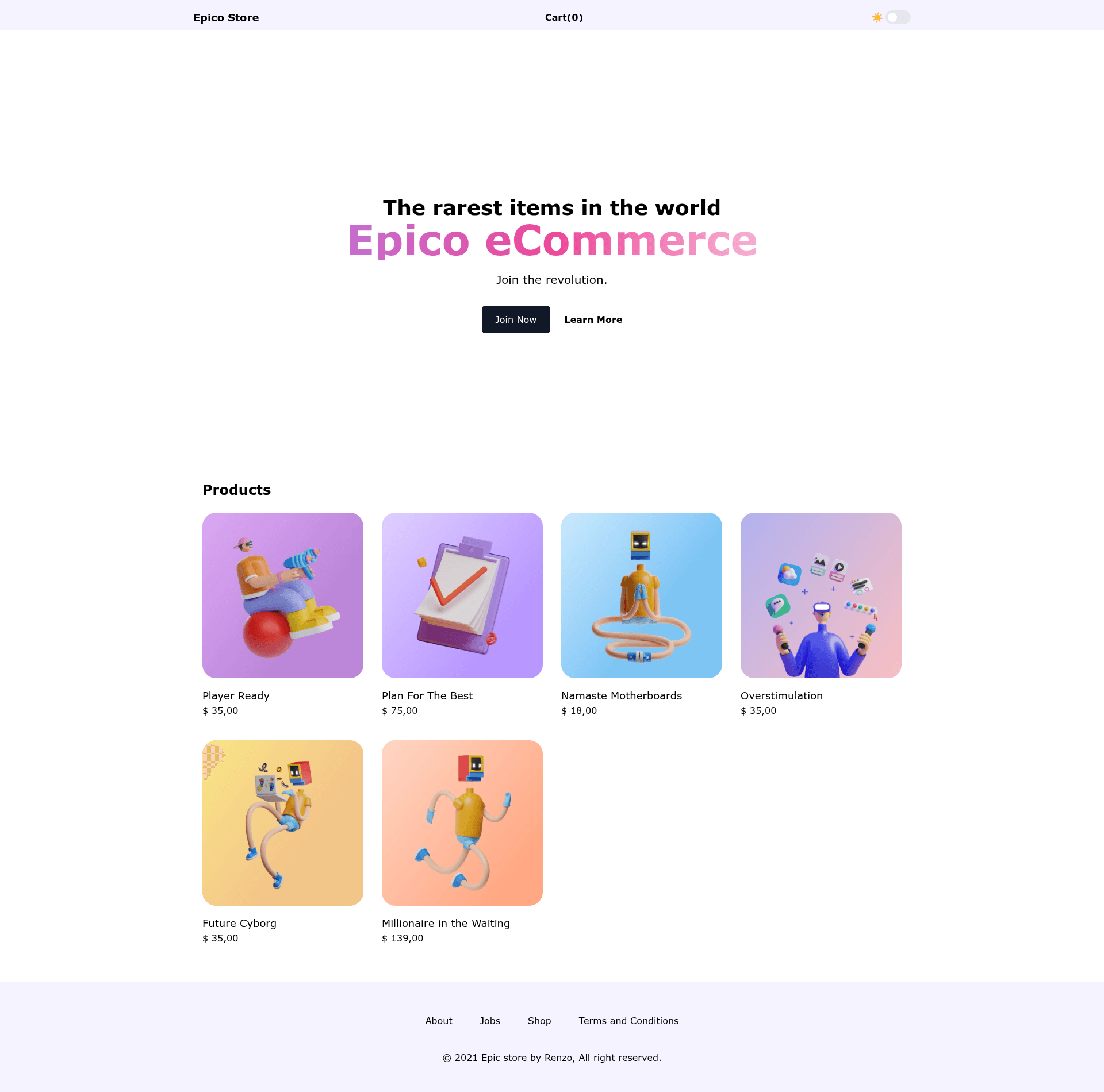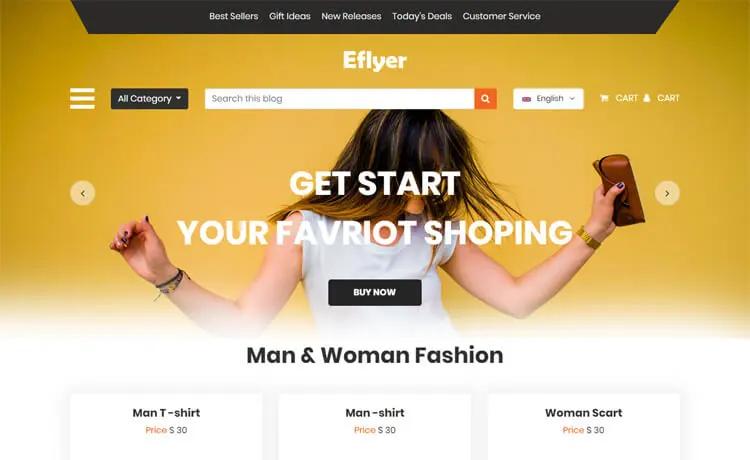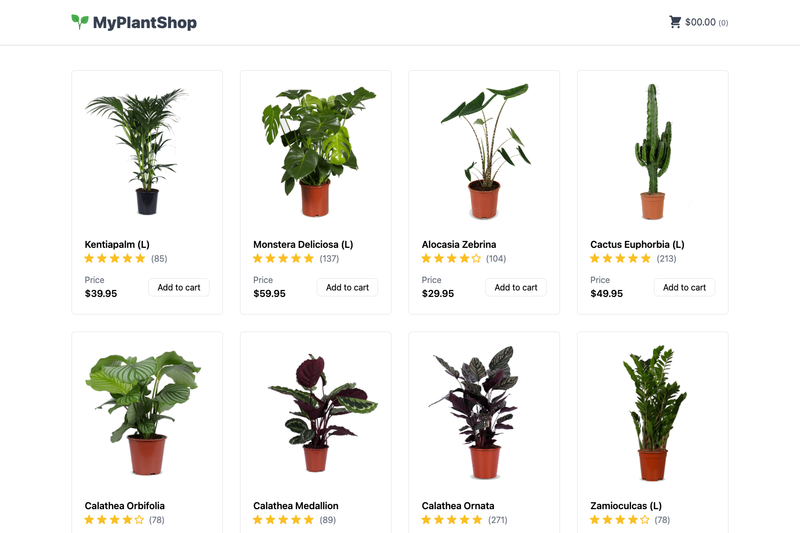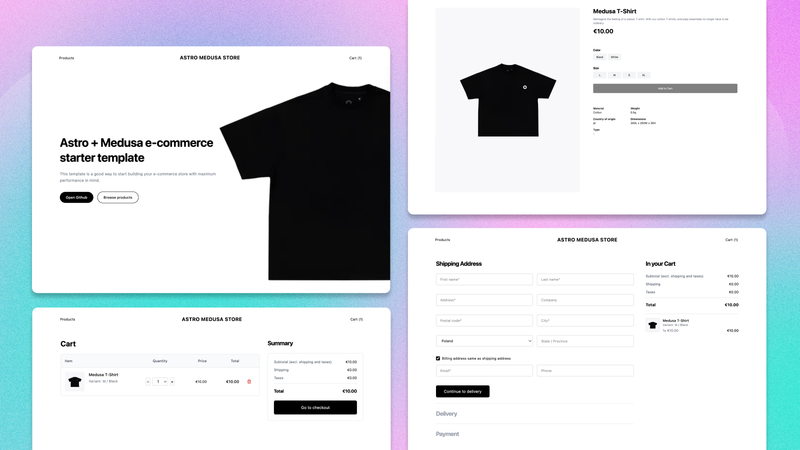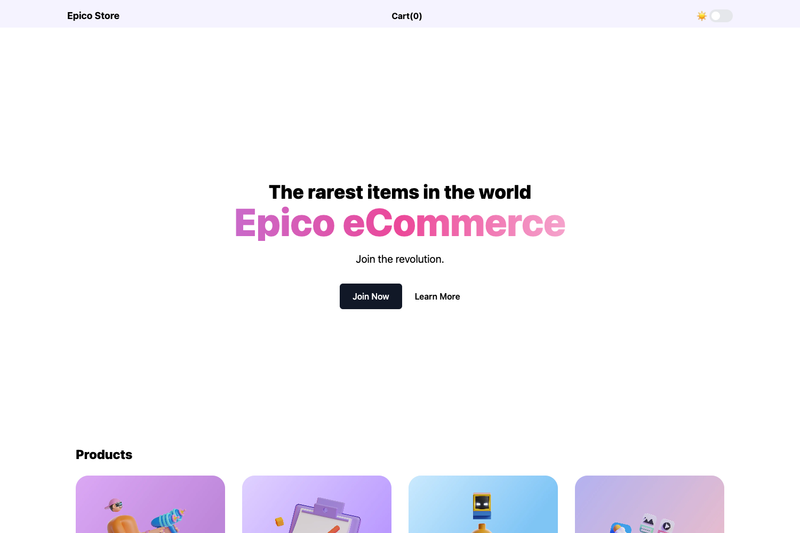
Epic Store is a practice ecommerce storefront built with Next.js, TypeScript, Shopify, and Tailwind CSS, created by Renzo Barrios in 2021 as a starting point for a future web3 marketplace.
What is Epic Store?
Epic Store is a practice ecommerce storefront application that combines Next.js, TypeScript, Shopify, and Tailwind CSS. It connects a Shopify-backed product catalog to a React-based front end and is described by its author as preparation for building a web3 marketplace. The project is available as a public repository on GitHub with a live demo deployed at epic-store.vercel.app. Its author is Renzo Barrios, and the code is copyright 2021 with all rights reserved.
Key Features
- Next.js framework — Provides server-side rendering and static site generation for the storefront, enabling fast page loads and SEO-friendly pages.
- Shopify integration — Uses Shopify as the commerce backend, meaning products, collections, and checkout are managed through Shopify's APIs.
- TypeScript — The codebase is written in TypeScript for static type checking across components, hooks, and API routes.
- Tailwind CSS — The UI is styled with Tailwind's utility-first CSS classes, allowing rapid styling without writing custom stylesheets.
- Live demo — A working deployment is available at epic-store.vercel.app, showcasing the storefront in action.
- Web3 orientation — The project is explicitly intended as practice for a future web3 marketplace, making it a foundation for developers planning decentralized commerce.
Who is it for?
Epic Store is aimed at developers and entrepreneurs who want to learn or prototype an ecommerce front end. Developers learning Next.js can study how a typed, Tailwind-styled storefront is structured. Shopify headless merchants can use it as a reference for building a custom storefront on top of Shopify's APIs. Web3 founders can use the existing storefront code as a baseline before adding blockchain payments and decentralized product data.
What can you do with it?
- Study a real Next.js + Shopify codebase: Explore how product data is fetched from Shopify and rendered with TypeScript.
- Prototype a storefront: Quickly deploy the live demo as a starting point for a new store.
- Plan a web3 upgrade: Use the current traditional commerce features as a migration path toward a decentralized marketplace.
FAQ
Is Epic Store a production-ready template?
No, Epic Store is a practice project, not a polished commercial template. It lacks documentation, tests, and customer support, so it's best used as a learning resource or starting point rather than a turnkey storefront.
What technologies does Epic Store use?
Epic Store uses Next.js as the React framework, TypeScript for static typing, Tailwind CSS for styling, and Shopify as the commerce backend. The live demo is hosted on Vercel.
Can I use Epic Store for a web3 marketplace?
The author built Epic Store specifically as practice for a future web3 marketplace. The current version uses traditional Shopify commerce, so you would need to add blockchain payments and decentralized data handling to turn it into a web3 store.
Who created Epic Store?
Epic Store was created by Renzo Barrios in 2021. The repository copyright states "All rights reserved," so treat the code as proprietary unless you obtain permission.