Template details
fastn
fastn is an open-source full-stack web framework and programming language for building sites from simple .ftd files.
About this template
fastn is an open-source programming language and full-stack web framework from FifthTry for building user interfaces and content-centric websites from simple .ftd text files.
What is fastn?
fastn is a programming language and web framework that takes .ftd source files — a package manifest called FASTN.ftd plus component and page definitions — and produces either a live dev server via fastn serve or a compiled static site of HTML, CSS, and JavaScript. It is installed locally from fastn.com/install or GitHub Releases, written to be approachable for non-programmers, and maintained by the fastn-stack community led by FifthTry. The project is alpha-stage, with version 0.5 planned to add offline-first P2P apps.
Key Features
- Minimal syntax — Two files (FASTN.ftd and index.ftd) are enough to render
Hello Worldwith the kernel componentftd.text. - Custom components — Define typed components with
caption,body, andftd.image-srcarguments, then compose them from kernel UI building blocks likeftd.columnandftd.image. - Markdown everywhere — Component bodies and text arguments support markdown, including links, bold, and multi-line content via special positional arguments.
- File-system routing — Pages serve automatically from the directory structure, and dynamic URLs, sitemaps, and url-mappings are built in.
- Server-side processors — Fetch data from APIs or databases before rendering, e.g.
processors.httppulling JSON from jsonplaceholder.typicode.com. - Static export — Compile to html, css, and js for deployment to GitHub Pages or Vercel.
- Extensibility — Add custom backends via WASM and ft-sdk, inject custom CSS and JS, and use web-components as first-class citizens.
- Design system & theming — Includes an opinionated design system, dark mode support, and responsive UI utilities.
Who is it for?
- Non-programmers — fastn's syntax is designed to be easy to learn, letting content creators build and maintain websites without writing conventional code.
- Full-stack developers — Use processors, WASM backends, and custom code to build dynamic features while keeping the option of static deployment.
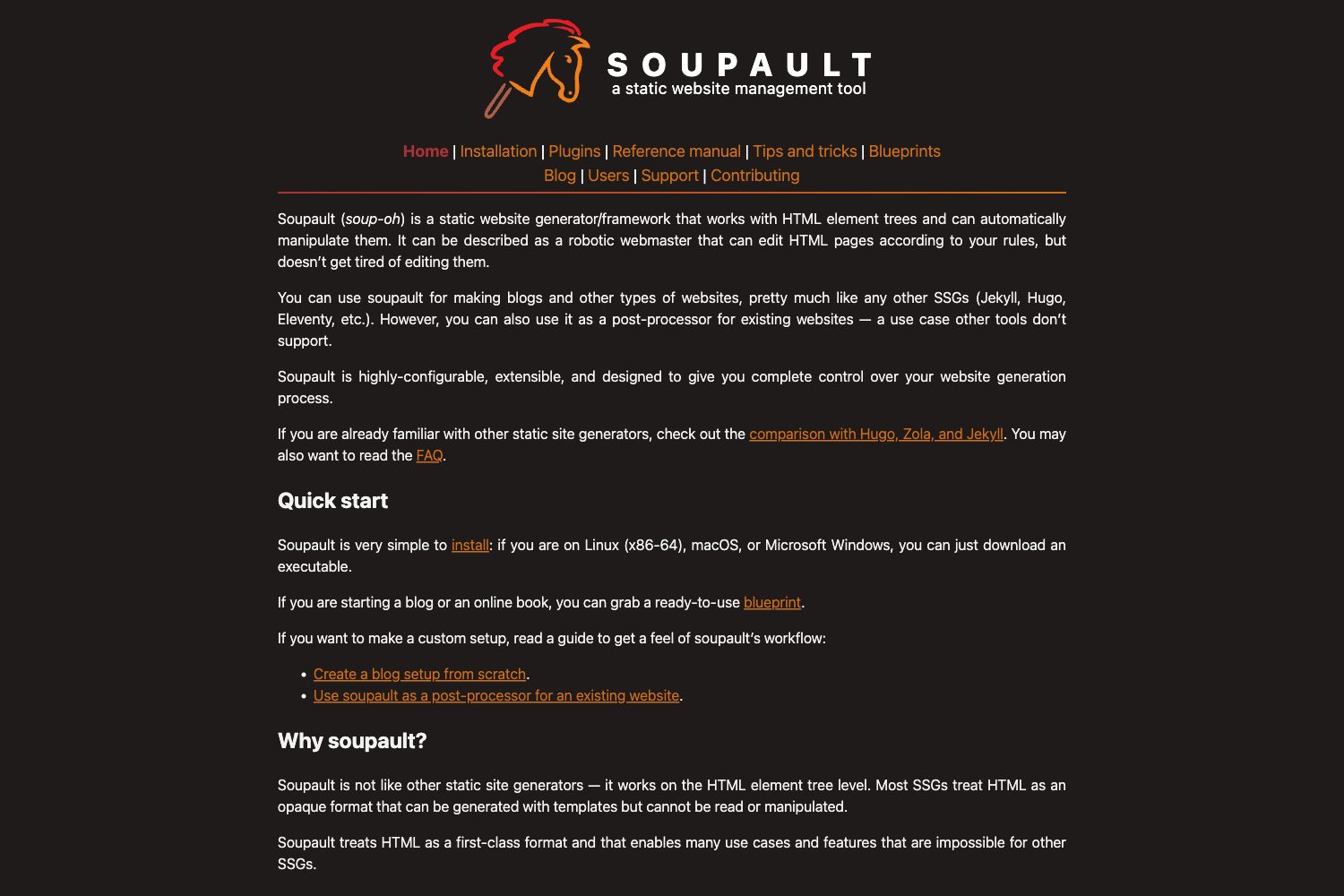
- Static site maintainers — Migrate from existing static site generators like 11ty or Hugo, or start fresh and publish to any static host.
- Product teams — Ship sites with consistent design via the built-in design system and dark mode, and optionally host on FifthTry's managed platform.
What can you do with fastn?
- Publish a content site: Use markdown bodies, file-system routing, and sitemaps to create blogs or documentation that deploy anywhere.
- Render API data: Pull REST API responses with
processors.httpand display them in components rendered server-side. - Build an interactive page: Integrate web-components, custom JS/CSS, and WASM backends for client-side interactivity beyond static HTML.
- Prototype quickly: Run
fastn serveto see changes live, then export to static files when ready.
How does fastn work?
A fastn project starts with a FASTN.ftd package file and .ftd sources. Running fastn serve starts a development server that prints a local URL; the same files can be compiled into static html, css, and js. Processors execute on the server side to collect data before pages render, and the filesystem layout defines the URL structure automatically.
Pros and cons
- Pros: Open-source under UPL-1.0; free to install and use; combines minimal syntax with full-stack features; outputs portable static files.
- Cons: Alpha-stage software with breaking changes planned in 0.5; ecosystem is smaller than mature generators like Hugo.
Alternatives
- Hugo — a static site generator written in Go, known for very fast builds.
- Eleventy (11ty) — a JavaScript-based static site generator that fastn explicitly mentions as easy to migrate from.
FAQ
Is fastn free?
Yes, fastn is open-source and licensed under UPL-1.0. You can install it from fastn.com/install or download it from GitHub Releases.
What is FASTN.ftd?
FASTN.ftd is the package manifest required by every fastn project. It imports the fastn module and declares the package name, as shown in the Hello World example.
Does fastn support dynamic URLs and sitemaps?
Yes, fastn includes built-in support for dynamic-urls, sitemap generation, and url-mappings for redirects, all configured within .ftd files.
Can I deploy a fastn site to GitHub Pages or Vercel?
Yes, fastn websites compile to static html, css, and js, which can be deployed to GitHub Pages or Vercel, among other static hosting providers.
Is there a hosting service for fastn sites?
FifthTry, the company behind fastn, offers its own managed hosting solution for static and dynamic fastn sites, which handles devops and is designed for non-programmers.