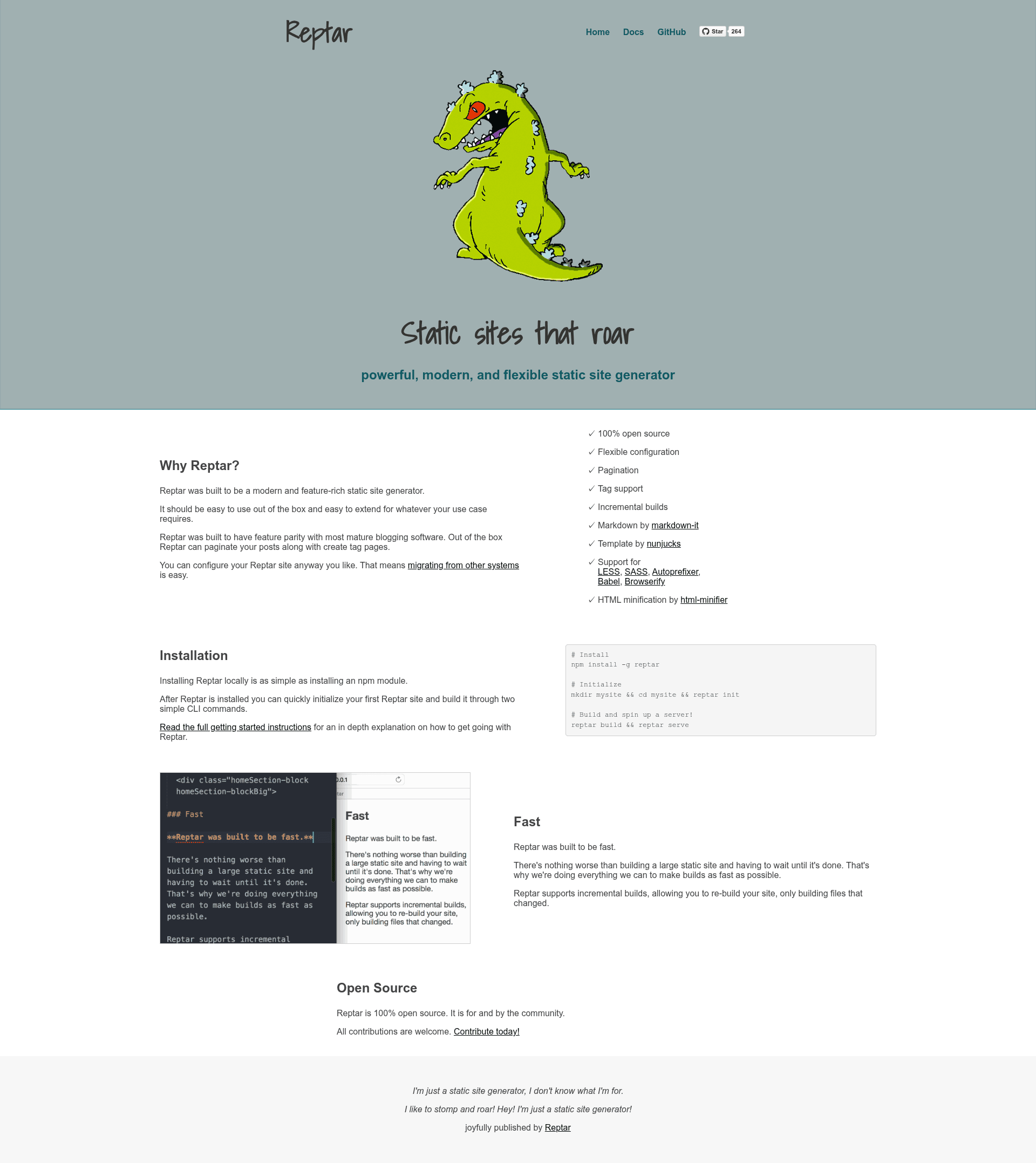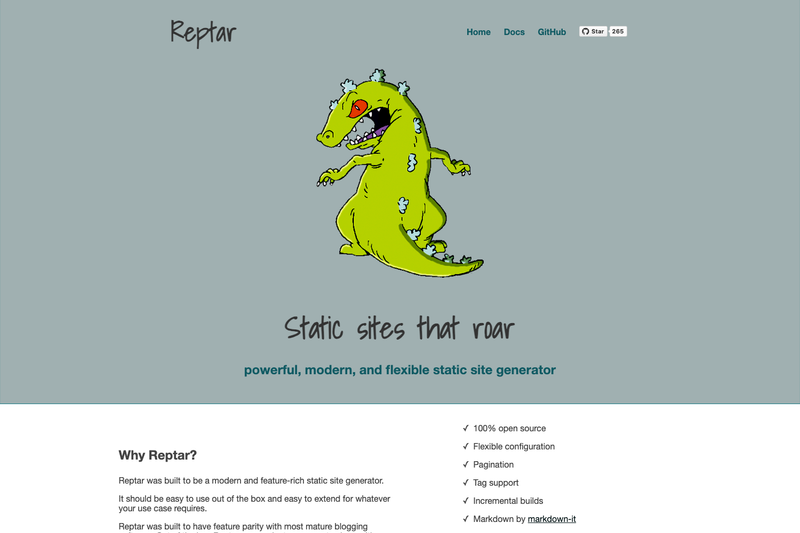
Reptar is a Node.js static site generator that compiles Markdown files into static HTML websites, offering a lightweight, developer-friendly alternative to database-driven publishing platforms. Formerly known as yarn (unrelated to the npm package manager), Reptar is developed in the open on GitHub and distributed through the npm registry.
What is Reptar?
Reptar is a static site generator written for the Node.js runtime, taking Markdown as its primary content input and producing a set of static website files as output. It is designed for users who want a fast, deployable site without managing a server or CMS. The project originates from a codebase formerly called yarn, and its documentation, development guide, and contribution guidelines are all linked from the repository README.
Key Features
- Markdown input — Reptar's repository topic list identifies Markdown as its core content format, so site pages and posts are written as .md files.
- Node.js environment — Built on Node.js, it fits into JavaScript-based tooling and can be installed and run through the npm ecosystem.
- Static site output — The generated output is plain HTML, CSS, and JavaScript, deployable to any static host such as GitHub Pages or Netlify.
- Open-source codebase — The full source is available on GitHub, with Travis CI build badges and Coveralls coverage tracking shown in the README.
- Community chat — A Gitter chatroom is linked, providing a direct channel for questions and discussions among users and contributors.
- Documentation site — A dedicated website at reptar.github.io hosts the user documentation, with separate DEVELOPMENT.md and CONTRIBUTING.md files for contributors.
Who is it for?
- JavaScript developers — Use Reptar when you want a static site generator that leverages Node.js build tools and npm install while keeping output dependency-free.
- Markdown-focused bloggers — Write your blog posts in Markdown and generate a static blog that loads quickly and requires no database.
- Open-source contributors — Dive into a small Node.js codebase with explicit contribution guidelines and a development document, making it approachable for newcomers.
What can you do with Reptar?
- Personal blogs: Author posts in Markdown and compile them into a static blog that can be hosted anywhere.
- Documentation sites: Structure API docs or guides as Markdown files and generate a browsable static site.
- Portfolio or landing pages: Use Markdown sections to run a simple portfolio or project page without a backend.
Alternatives
- Jekyll — A Ruby-based static site generator that is the default engine for GitHub Pages.
- Hugo — A Go-based static site generator known for its very fast build times.
FAQ
Is Reptar free to use?
Reptar is an open-source project hosted on GitHub and published on the npm registry, so you can install and use it without paying a license fee.
What inputs does Reptar accept?
Reptar is built around Markdown for content, as reflected in its repository topics. It runs on Node.js, meaning content is processed through a JavaScript build pipeline.
What was Reptar formerly called?
Reptar was formerly known as yarn. This project is separate from the widely used JavaScript package manager of the same name.
How do I find documentation for Reptar?
The README points to the official documentation site at reptar.github.io, along with DEVELOPMENT.md and CONTRIBUTING.md for people who want to hack on or contribute to the codebase.