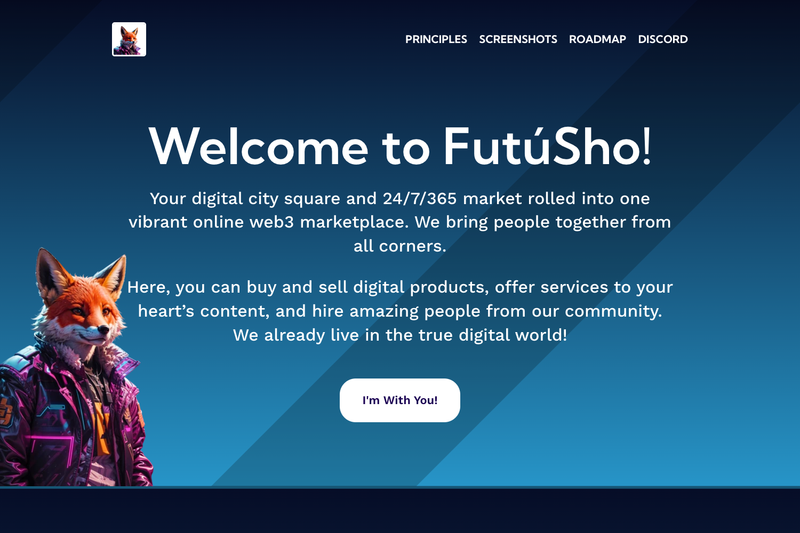
FutúSho Contracts is the smart-contract repository behind FutúSho, a web3 marketplace for buying and selling digital products and services on Ethereum-compatible blockchains.
What is FutúSho Contracts?
FutúSho Contracts contains the Solidity smart contracts that form the on-chain backend of the FutúSho marketplace. It takes transaction inputs — such as product purchases and service agreements — and records them as state changes on the blockchain. The repository is part of the FutúSho project, which also includes a separate frontend repository at github.com/futusho/web. The project is in active development and released under the MIT License for educational and non-commercial use.
Key Features
- Multi-chain targets — Repository topics list Ethereum, Polygon, and Binance Smart Chain, making the contracts deployable across three EVM-compatible networks.
- OpenZeppelin foundation — Uses OpenZeppelin contracts, the standard library for secure token and access-control primitives, with ERC20 support for token operations.
- Web3 frontend stack — The project pairs with a Next.js and React frontend (github.com/futusho/web) that uses wagmi for blockchain interactions.
- Marketplace functionality — Supports core marketplace actions: buying digital products, selling services, and hiring community members through the FutúSho platform.
- Active development — The repository includes a DEVELOPMENT.md file for contributors and is explicitly under active development with new features planned.
- Open licensing — Released under the MIT License, allowing modification and redistribution for educational purposes without commercial restrictions.
- Community and investment — The project provides Discord and email contact channels and is actively seeking investment to accelerate development.
Who is it for?
- Smart contract developers — They can fork the repository, modify the contracts to fit a custom marketplace model, and submit pull requests following the contributing guidelines.
- Web3 entrepreneurs — They can study the contract designs to build their own digital goods platform with on-chain transactions and service hiring.
- Blockchain students — They can use the codebase as a learning example of a real marketplace implementation, given its educational disclaimer and open license.
- FutúSho community members — Buyers and sellers on the marketplace interact with these contracts indirectly through the frontend, and can report issues or suggestions via Discord.
What can you do with FutúSho Contracts?
- Digital product sellers: List and sell downloadable items on the FutúSho marketplace, with purchases recorded on-chain.
- Service providers: Offer services to the community and get hired by other members, with agreements handled through smart contracts.
- Investors: Review the contract code as part of due diligence while the FutúSho team is actively seeking investment.
- Contributors: Fork the repo, implement features or bug fixes, and open pull requests to improve the codebase.
How does FutúSho Contracts work?
The contracts act as the trust layer: marketplace actions like buying, selling, and hiring are encoded as smart contract calls. The separate Next.js/React frontend uses wagmi to connect user wallets and send these calls to the deployed contracts. Because the contracts are not formally audited, the project recommends using them at your own risk.
Pros and cons
- Pros: Open source under MIT; supports multiple EVM chains; uses well-known OpenZeppelin standards; has an active community via Discord.
- Cons: No formal audit; educational-only disclaimer; still in active development which implies API changes.
FAQ
Is FutúSho Contracts free to use?
Yes, the repository is licensed under the MIT License, so you are free to use, modify, and distribute the code for educational and non-commercial purposes without paying fees.
Is the code audited?
No. The project's disclaimer states the codebase has not undergone a formal audit, so it should be used at your own risk, and it is not recommended for production deployment without independent review.
What blockchains does it support?
The repository metadata lists Ethereum, Polygon, and Binance Smart Chain as relevant networks, all of which are EVM-compatible and supported by the OpenZeppelin-based contracts.
How can I contribute?
Fork the repository, create a feature branch, follow the existing coding standards, test your changes, and open a pull request. The DEVELOPMENT.md file provides additional guidance.
What is the difference between this and the web repository?
This repository contains the smart contracts, while the frontend repository at github.com/futusho/web holds the Next.js/React application that interacts with these contracts.