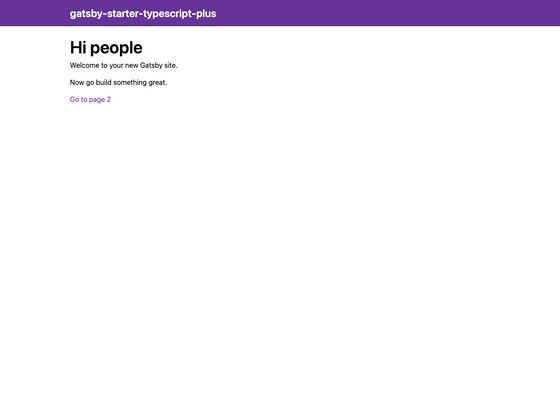
Gatsby Starter TypeScript Plus is a GitHub-hosted starter template for creating Gatsby.js sites written in TypeScript, bundling ESLint, Markdown rendering with Remark, and emotion for styling.
What is Gatsby Starter TypeScript Plus?
Gatsby Starter TypeScript Plus is a boilerplate repository created by resir014 that scaffolds a new Gatsby.js project with TypeScript preconfigured. It takes a Gatsby project name and produces a minimal site structure under a src/ directory, with scripts for development, production builds, and deployment. It runs on Node.js versions 6.0.0 or newer and works with both npm and yarn package managers.
The starter is built on the Gatsby static site generator (the "blazing-fast static site generator for React") and includes a basic component structure so you can start adding pages immediately. It also ships with a Deploy to Netlify button that connects the repository directly to Netlify for hosting.
Key Features
- TypeScript — The project comes with TypeScript already configured, so you can write typed React components without setting up the compiler yourself.
- ESLint with custom rules — An ESLint setup with custom lint rules is included to catch errors and enforce consistent code style during development.
- Markdown rendering with Remark — Uses the Remark transformer to parse Markdown files into content, enabling blog posts, docs, or any Markdown-driven pages.
- Styling with emotion — CSS-in-JS styling is handled by emotion, letting you style components with JavaScript objects or tagged template literals.
- Basic component structure — A minimal
src/directory is provided as a starting point, keeping the toolset light and easy to understand. - Quick start scripts — npm and yarn scripts cover
startfor the development server,buildfor a production bundle, anddeployfor publishing to GitHub Pages. - Netlify deployment — A ready-made Deploy to Netlify button runs the setup and starts continuous deployment from the repository.
Who is it for?
- Gatsby developers who prefer TypeScript: this starter removes the manual wiring of TypeScript into Gatsby, so you can focus on writing typed components immediately.
- Static site builders: use the Markdown and emotion tooling to build content-driven sites such as blogs or documentation with minimal configuration.
- Developers learning Gatsby: the small, readable codebase and sensible defaults make it a convenient playground for understanding Gatsby's data layer and page creation.
What can you do with Gatsby Starter TypeScript Plus?
- Start a blog: use the Remark Markdown integration to write posts in Markdown and have them rendered as static pages.
- Build a portfolio: modify the component structure and emotion styles to create a personal site with your own content.
- Publish a project site: use the GitHub Pages deploy script or the Netlify button to go live with a static site.
How does Gatsby Starter TypeScript Plus work?
Create a site by installing gatsby-cli globally, then run gatsby new project-name https://github.com/resir014/gatsby-starter-typescript-plus to download the template and install dependencies. From there, npm start or yarn start boots the development server, npm run build compiles a production bundle, and npm run deploy publishes the site to GitHub Pages.
FAQ
Is Gatsby Starter TypeScript Plus free?
Yes, it is an open-source starter repository on GitHub with 191 stars at the time of writing. You can clone, modify, and use it for personal or commercial projects without restrictions mentioned in the page.
What Node.js version is required?
The quick start says a Node.js version of 6.0.0 or higher is recommended, alongside either npm or yarn as the package manager.
How do I deploy the site?
There are two options: run npm run deploy to push the built site to GitHub Pages, or click the Deploy to Netlify button in the README to connect the repository to Netlify and set up continuous deployment.
Does the template include a CSS framework?
No, the starter uses emotion for styling instead of a CSS framework, so you bring your own design system or write component-level styles with CSS-in-JS.