Newsletter
Join the Community
Subscribe to our newsletter for the latest news and updates

A declarative website generator designed for high-quality websites, with a focus on easy maintenance and localization.
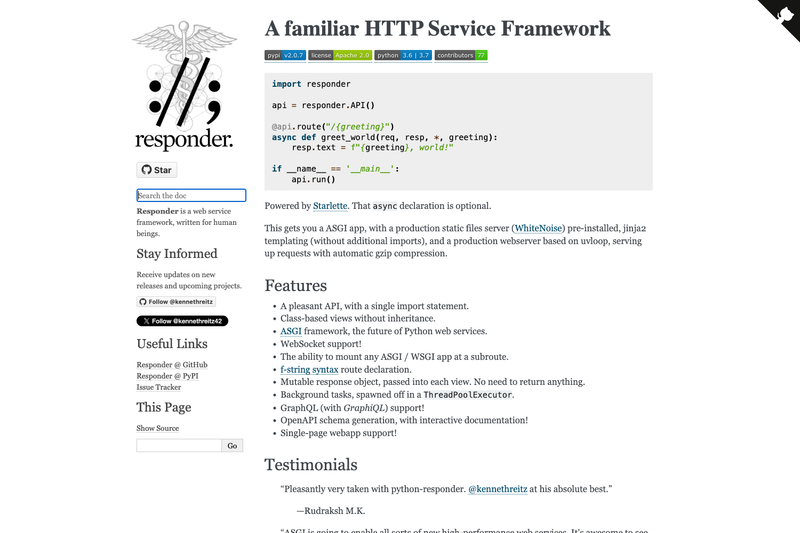
A familiar HTTP Service Framework for Python.
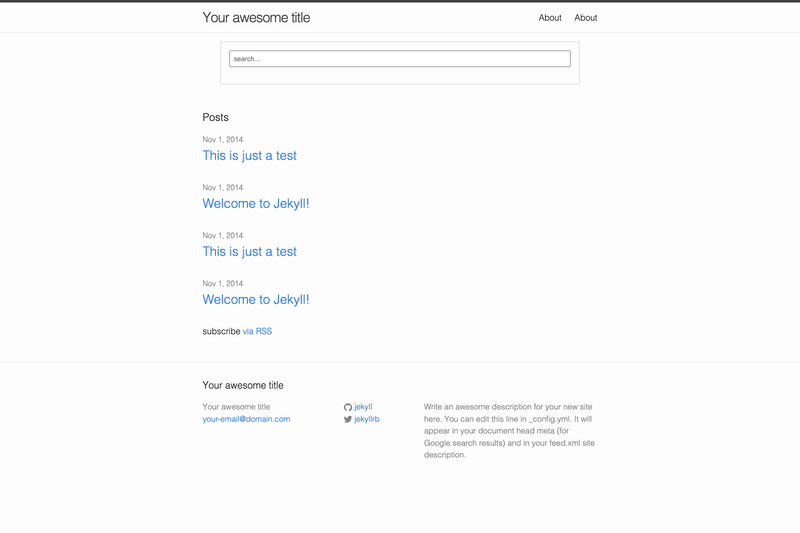
A JavaScript library that adds client-side search to any Jekyll blog with no server setup.

Free HTML5 survey form template with image-based answer choices, built on Bootstrap v4.1.3, for custom data collection.

Automatically generate date, tag, and category archive pages for Jekyll sites.
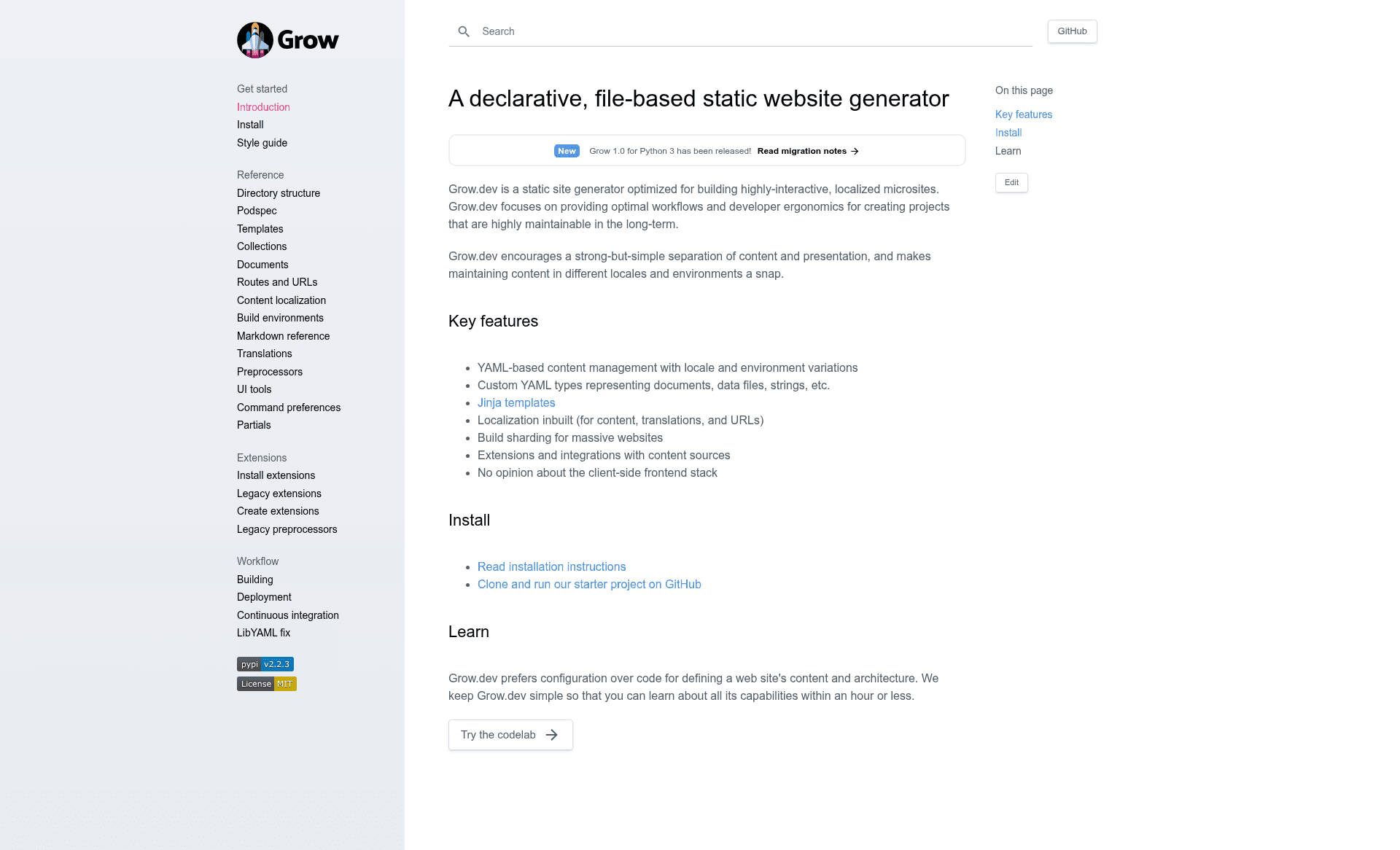
Grow is an open-source, declarative static site generator written in Python that transforms YAML and JSON content plus Jinja templates into high-quality static HTML websites.
Grow is a command-line tool that builds static websites from a configuration-driven project structure. It takes content stored in YAML and JSON files, renders it through Jinja2 templates, and outputs fast static HTML that can be hosted on any static file host. The project is maintained on GitHub and installed via Python's Pipenv package manager, with LibYAML as a system dependency. Its repository description highlights a focus on high-quality websites, easy maintenance, and localization, making it a site generator designed for teams that need structured content and repeatable builds.
{{ title }} with the value from the content file.pipenv install, grow install, and grow run to see a local preview.The quick start on the project page shows a three-step setup: install Pipenv and LibYAML via Homebrew or apt, clone the starter repository from GitHub, then run pipenv install, grow install, and grow run. After that, Grow watches the project files, builds the static site, and serves it locally for development. Production builds use the same command structure.
Grow is an open-source project distributed through GitHub and PyPI, so the tool itself is free. The page lists no paid tiers or commercial licensing.
You need Python, Pipenv, and LibYAML. On macOS, brew install pipenv libyaml sets it up; on Ubuntu, sudo apt install -y pipenv libyaml-dev.
Grow reads content from YAML and JSON files. It also integrates with Google Sheets and external CMSes as alternative content sources.
Yes, Grow has a built-in integration with Google Sheets, allowing content to be imported into the site build directly from a spreadsheet.