Newsletter
Join the Community
Subscribe to our newsletter for the latest news and updates

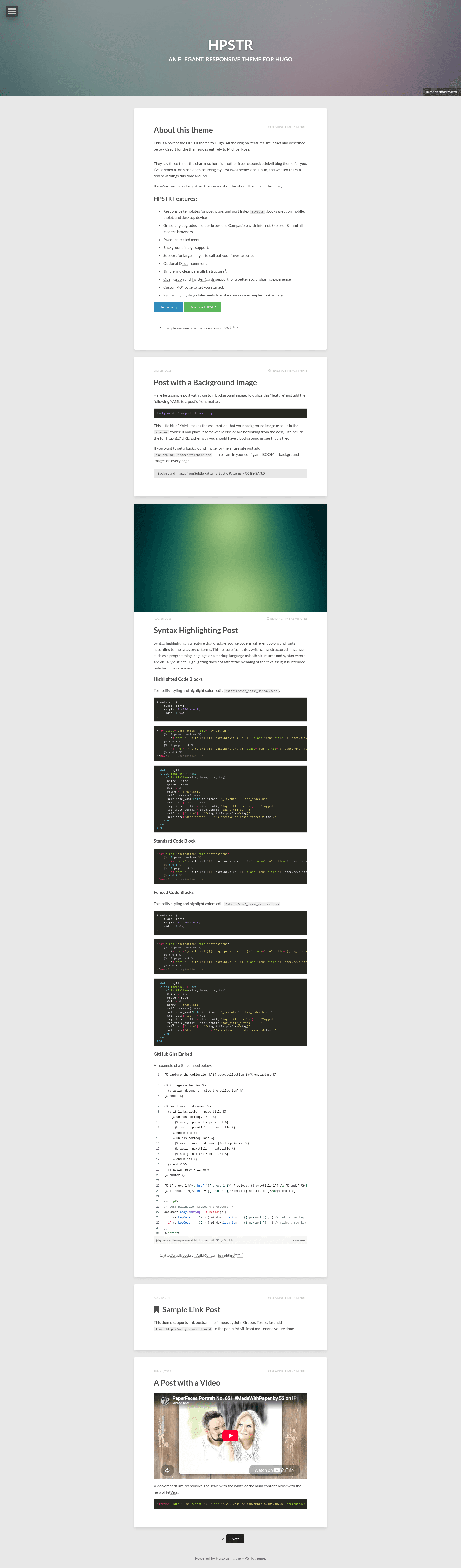
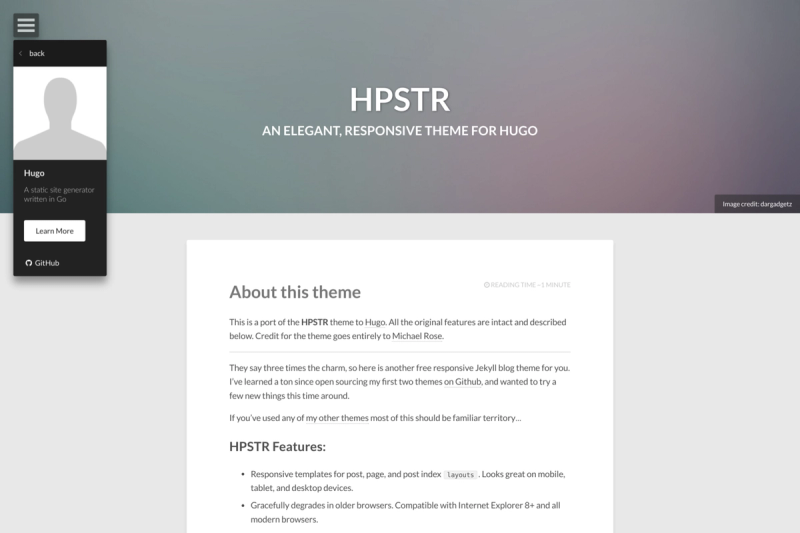
Responsive Hugo blog theme ported from the HPSTR Jekyll theme, with animated menu and social sharing support.
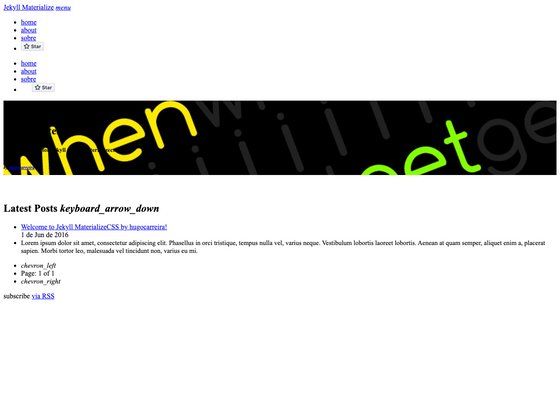
A simple Jekyll blog theme using Materializecss, with post and About Me pages.
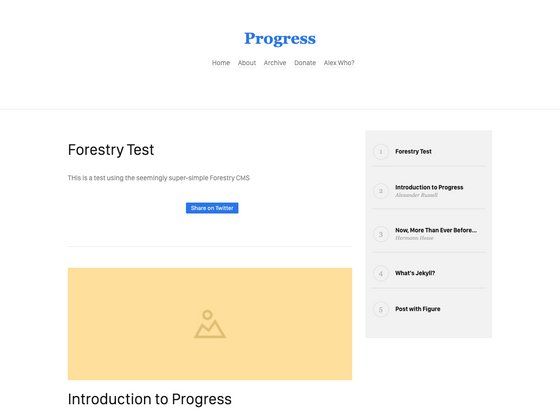
A free long-form blogging theme for Jekyll with a reading progress indicator, responsive layout, and easy YAML configuration.

A clean and elegant theme for Hexo with multi-language support, dark mode, math rendering, and multiple comment systems.
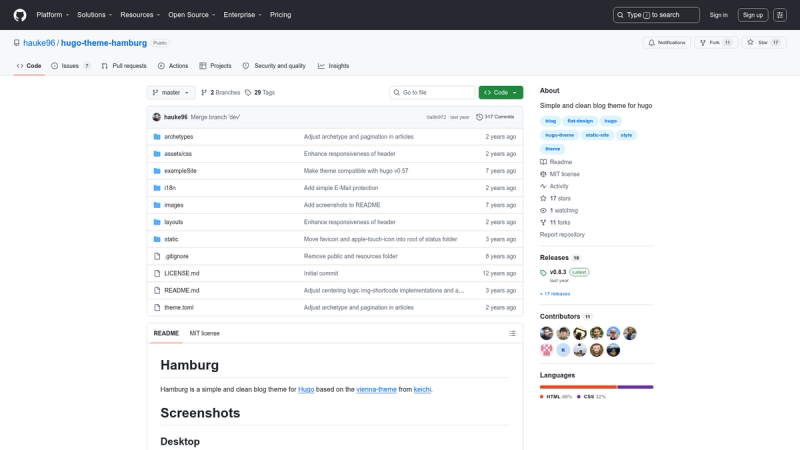
Simple and clean blog theme for Hugo with multilingual support, multiple authors, and responsive flat design.
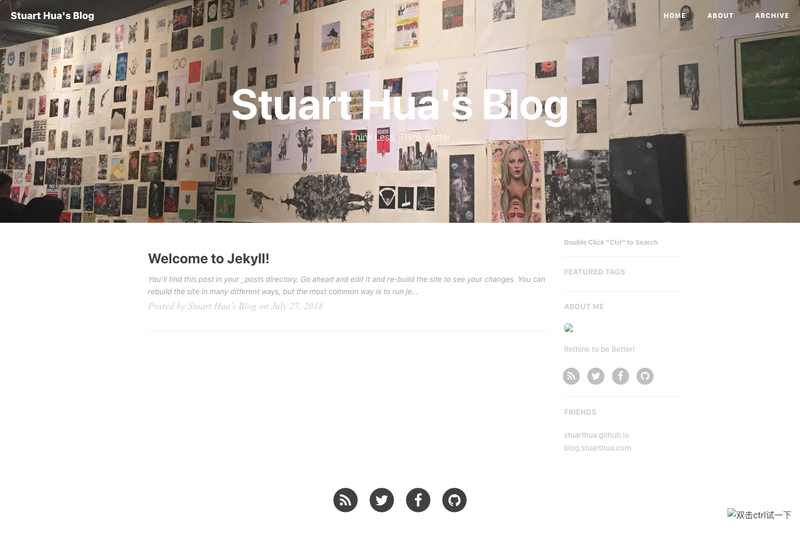
A clean, MIT-licensed Jekyll theme for personal blogs, forked from Huxpro with sidebar, Disqus, analytics, and search support.

A custom Gatsby starter template to start a blog or personal website.
HPSTR is an open-source Hugo theme ported from the Jekyll HPSTR theme by Michael Rose, giving Hugo users a responsive blog layout with animated navigation and social sharing support.
HPSTR is a Hugo blog theme that takes Markdown content files and renders them into a responsive front-end with layouts for posts, pages, and post indexes. It is a direct port of the popular HPSTR Jekyll theme, so it preserves all original features while running on Hugo instead of Jekyll. The port is maintained by dldx on GitHub, and the repository currently has 18 stars. The design and features credit goes to the original author, Michael Rose.
After installing Hugo, create a themes directory, clone the repository with git clone https://github.com/dldx/hpstr-hugo-theme.git hpstr, then set the theme name to "hpstr" in the Hugo site config. The theme's layout files handle the rest, including the post index, single posts, pages, and the 404 page. The demo page also links to a theme setup guide for further configuration.
Yes. HPSTR is an open-source theme and the GitHub repository is publicly available to clone or download for free.
Yes. HPSTR integrates optional Disqus comments. Add a Disqus shortname to the Hugo configuration and comment threads will appear on your posts.
The original HPSTR theme was created by Michael Rose for Jekyll. The Hugo port is maintained by dldx, with all design credit going to the original author.
With Git installed, run mkdir themes, then cd themes, then git clone https://github.com/dldx/hpstr-hugo-theme.git hpstr. Or download the zip from the repository page and extract it into the themes folder.
Yes. The theme is designed to degrade gracefully and is compatible with Internet Explorer 8 and all modern browsers.