Newsletter
Join the Community
Subscribe to our newsletter for the latest news and updates

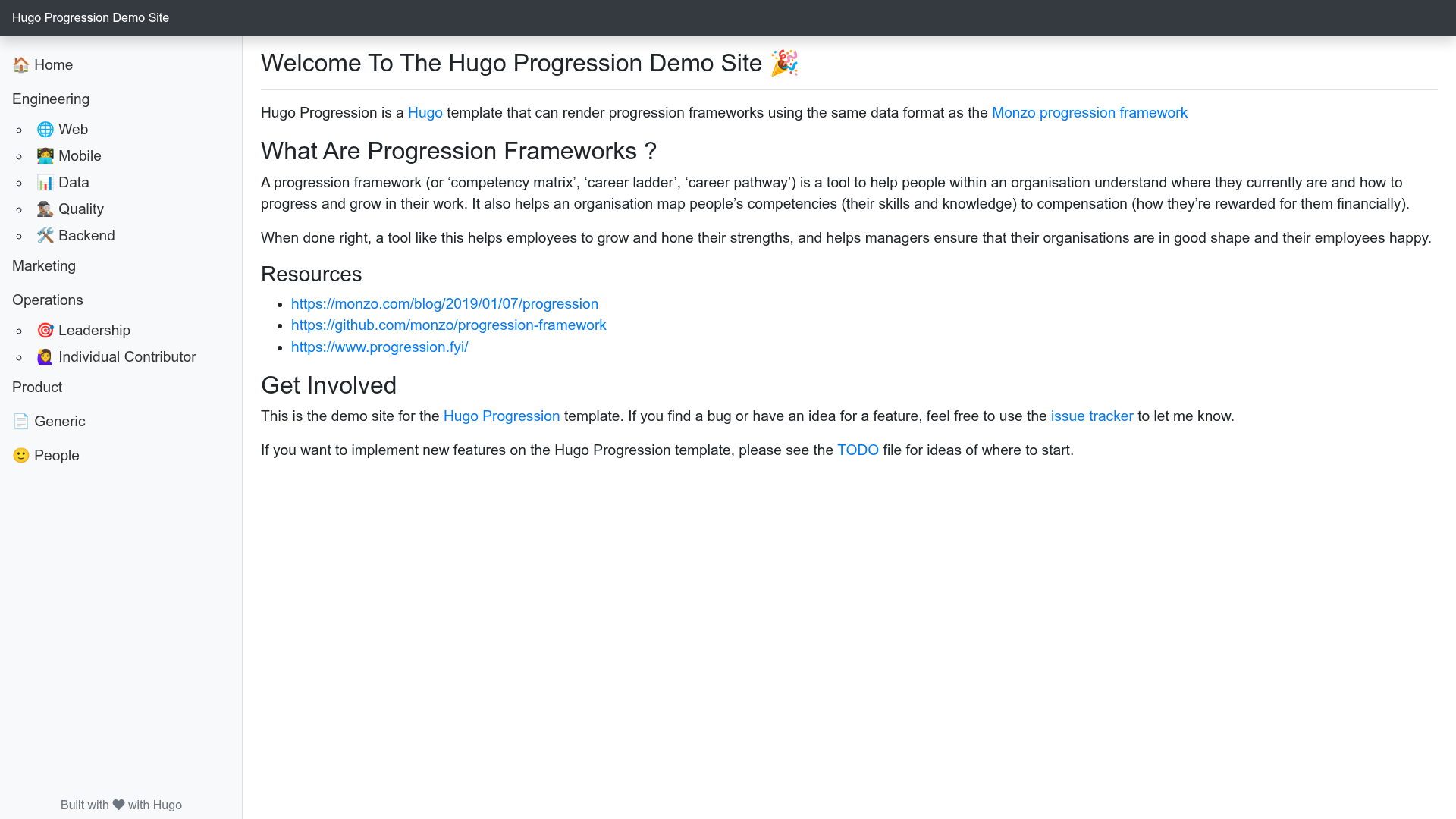
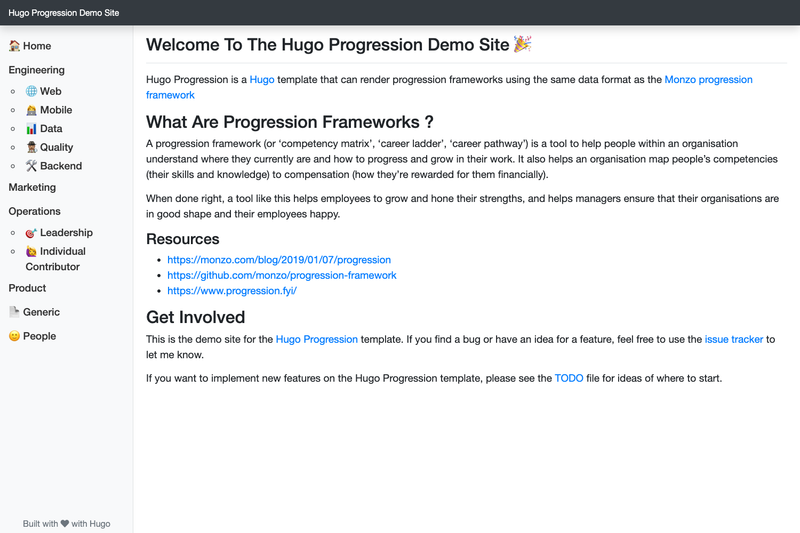
A Hugo template to render progression frameworks (career ladders, competency matrices) using the same YAML data format as the Monzo progression framework.
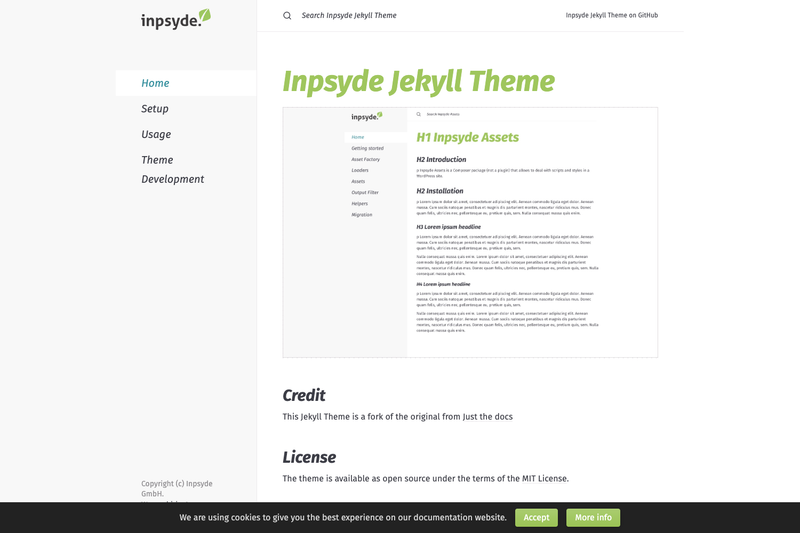
A Jekyll theme for standardized documentation pages on GitHub Pages, forked from Just the Docs.
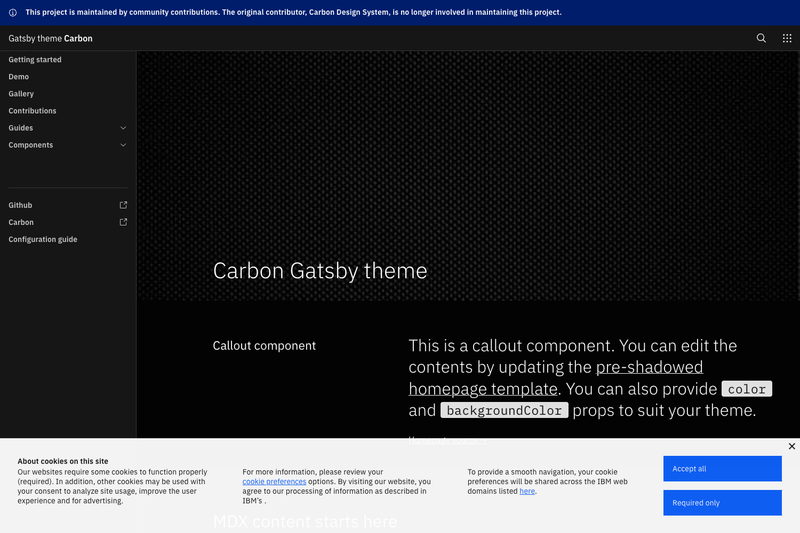
A community-maintained Gatsby theme for building Carbon Design System inspired websites.
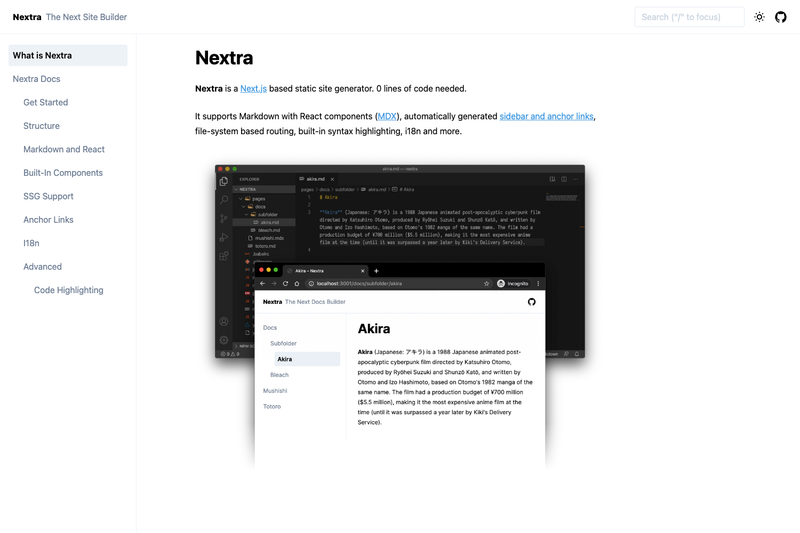
A Next.js and MDX powered no-code site generator for building documentation sites and blogs.
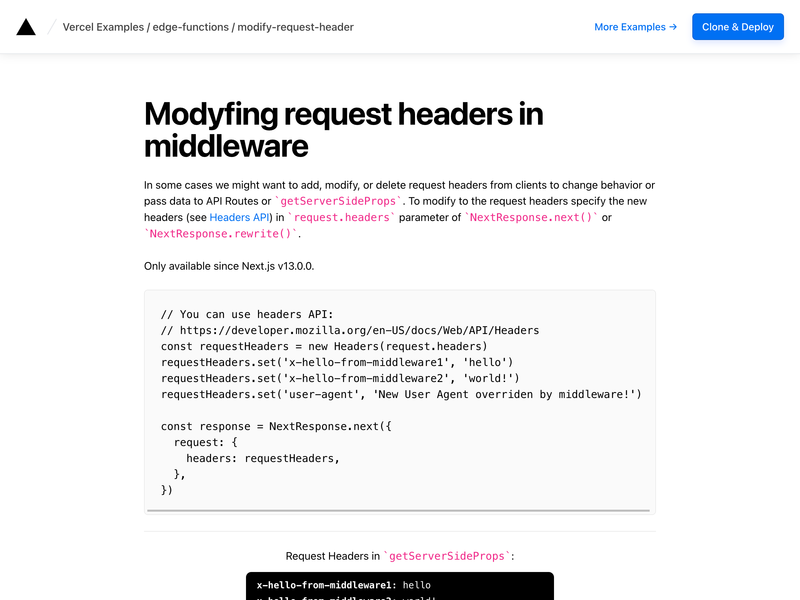
Learn to add response headers at the edge.
Hugo Progression is a Hugo template that renders progression frameworks (career ladders, competency matrices) as a static website, using the same YAML data format as the open-source Monzo progression framework. It produces a site with per-level pages, a menu of levels, and topic-based criteria, so organizations can publish their career pathways without building a custom application.
Hugo Progression is a theme for the Hugo static site generator that converts YAML data files describing a progression framework into a navigable website. Its inputs are YAML files with topics, levels, and criteria (plus optional example criteria) and markdown pages with front matter; its output is a generated site with a homepage and per-level pages for each framework. The template is maintained on GitHub by leeturner and includes a full demo site and an exampleSite folder.
Hugo Progression provides the core features needed to publish a progression framework site with minimal setup. The most notable features are:
levels field controls how many level entries appear in the generated menu.datafilepartial field in front matter points to it.data directory, and partials mirror that structure, supporting multiple frameworks (engineering, operations, product, etc.).HUGO_ENV=production for production builds, with a separate command variant for Windows.themes folder or adding it as a git submodule.Hugo Progression is built for teams that need a simple static site to communicate career progression criteria. It is primarily useful for HR and people-ops teams publishing career ladders, engineering managers documenting role expectations, and any organization adopting Monzo-style progression frameworks.
With Hugo Progression you can turn YAML career framework data into a polished static website. Typical use cases include:
data/frameworks/engineering.Hugo Progression follows a three-step content model: create a YAML data file describing topics and levels, add a markdown page in the content folder that sets the framework title, level count, and partial path, and write a small Hugo partial that ranges over the data. Running hugo server generates the site locally, and HUGO_ENV=production hugo produces the production build.
Hugo Progression uses YAML data files that follow the Monzo progression framework format. Each file defines a list of topics; each topic has a name, a title, and content with one entry per level. Each level includes a list of criteria and may include example criteria with optional examples.
Yes. The template supports multiple frameworks by placing each framework's YAML file in a subfolder of the data directory, creating a matching HTML partial, and adding a markdown page for each framework with a unique datafilepartial value.
Yes. The repository contains an exampleSite folder with complete YAML data files, markdown pages, and HTML partials for several frameworks. A full demo site is also available online at the Hugo Progression Demo Site.
Yes. Set the HUGO_ENV environment variable to production before running Hugo. On Unix-like systems use HUGO_ENV=production hugo; on Windows use set HUGO_ENV=production followed by hugo.