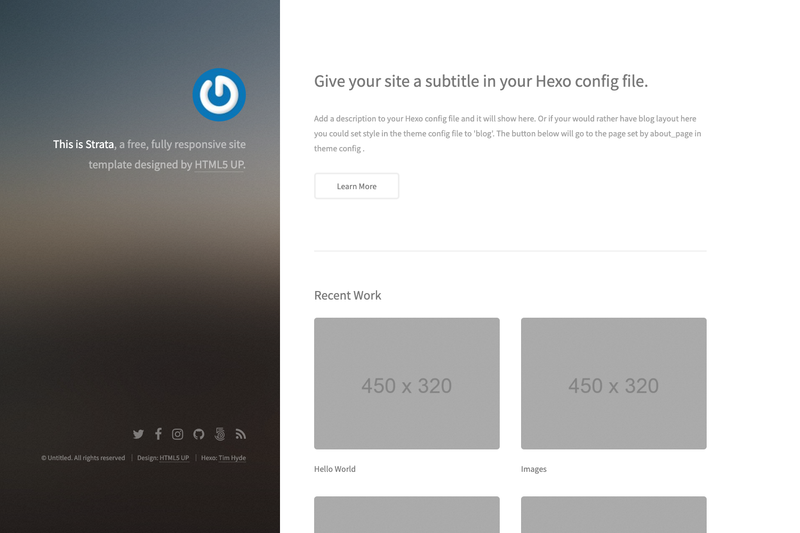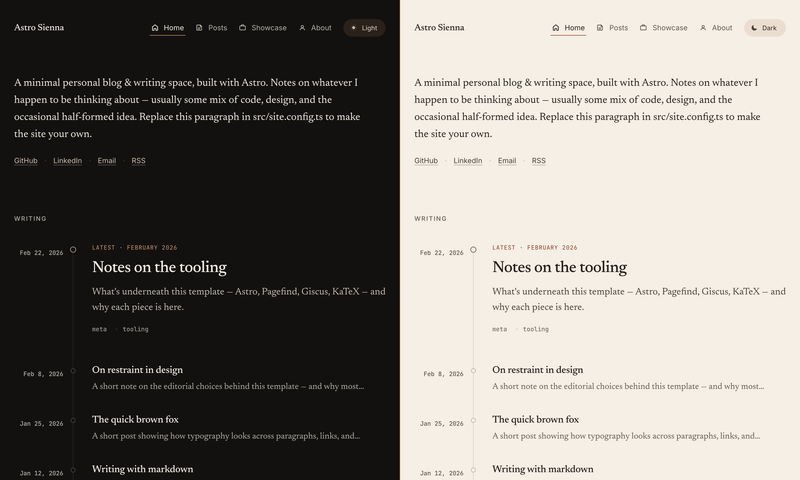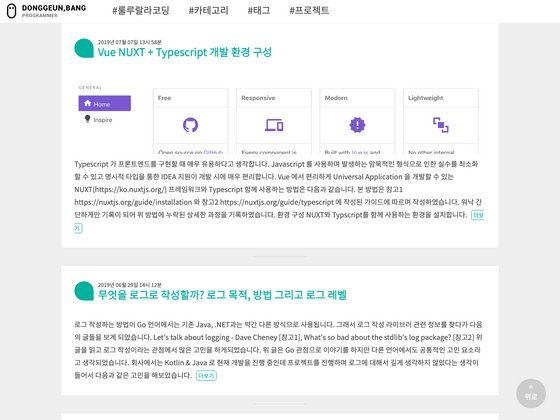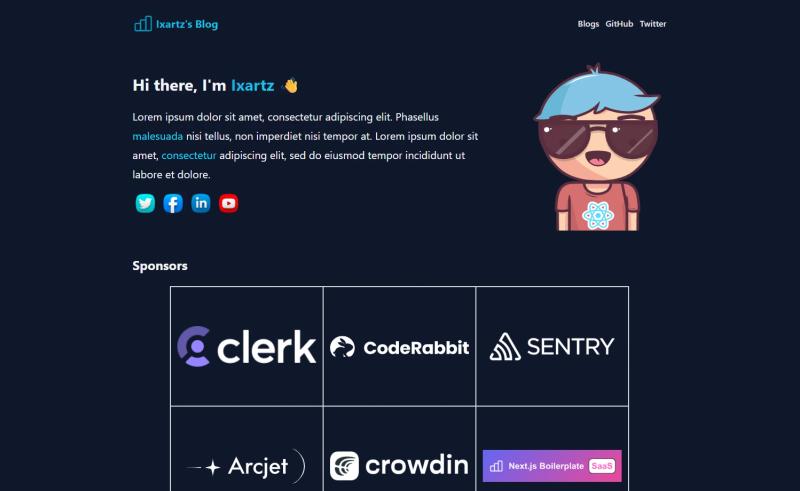
The HugoBlox Data Science Blog template is a free, open-source Hugo theme for building technical blogs that render Jupyter notebooks, LaTeX math, and code-heavy Markdown as fast, SEO-friendly static pages.
What is the Data Science Blog template?
This template is a Hugo theme created by HugoBlox (maintained by Lore Labs, MIT licensed since 2016) for publishing analysis and code as a blog. It takes Markdown files, .ipynb Jupyter notebooks, and RMarkdown as input, and outputs a static website with syntax highlighting, native LaTeX math, Mermaid diagrams, structured metadata, and multi-author support. The template is part of the HugoBlox ecosystem, which claims 150,000+ sites and an official 4.9/5 rating.
Key Features
- Jupyter & RMarkdown publishing — Drop a
.ipynbfile into the content folder and it renders as a blog post with code cells, outputs, and narrative intact; RMarkdown is also supported. - LaTeX math — Native rendering for equations such as
$E=mc^2$without plugins. - Syntax highlighting — Code blocks for 100+ languages, so you don't need screenshots of your IDE.
- Mermaid diagrams — Flowcharts, sequence diagrams, and architecture drawings written as text.
- Structured metadata — Tags, categories, and authors organize posts; multi-author support is included.
- SEO & AI-ready — The site is optimized for search engines and LLMs so your work gets discovered.
- AI page generation — Hugo Chat, an AI assistant trained on Hugo docs, generates structured pages with correct front matter from plain-English descriptions.
- Visual editing — Ownable CMS, a drag-and-drop page builder, works inside VS Code without writing code.
- Plain Markdown ownership — Every file is human-readable Markdown with no database, no lock-in, and portable content.
- Free hosting — Deploy to GitHub Pages, Netlify, Vercel, or Cloudflare Pages, all of which offer free tiers for static sites.
Who is it for?
- Data scientists & ML engineers — publish Jupyter notebooks directly as blog posts with code and outputs intact.
- Technical writers — create code-heavy tutorials with LaTeX equations, Mermaid diagrams, and syntax highlighting.
- Researchers — publish analyses with citations, BibTeX, and reproducible content.
- Developers — build a fast-loading blog that ranks well and costs nothing to host.
What can you do with it?
- Data scientists: convert a Jupyter notebook into a beautiful blog post with all code outputs rendered, instead of pasting screenshots.
- Technical writers: write tutorials with LaTeX math and Mermaid diagrams that render natively in the browser.
- Researchers: share findings with structured metadata and citations that are readable by both humans and LLMs.
- Developers: deploy a free static blog on GitHub Pages or Netlify and keep full ownership of the content as Markdown.
How does it work?
You can deploy a live site in 60 seconds through the browser, or use the CLI command npx hugoblox create site --template data-science-blog (requires Hugo Extended and Node.js). Then customize the site either by describing what you want to Hugo Chat or by editing visually with Ownable CMS. To publish, simply add Markdown files or .ipynb notebooks to the content folder.
Pricing
The base Data Science Blog template is free and MIT licensed. HugoBlox offers a premium Blog Pro tier that adds premium designs, advanced post layouts, series/collections navigation, and priority support; the README compares the tiers but does not list specific prices.
FAQ
Do I need to know Hugo?
No. You can edit visually with Ownable CMS or write Markdown. Hugo is the build engine under the hood, and you don't need to touch it.
Can I publish Jupyter notebooks directly?
Yes. Drop a .ipynb file into your content folder and it renders as a blog post with code cells, outputs, and narrative intact.
Can I host for free?
Yes. GitHub Pages, Netlify, Vercel, and Cloudflare Pages all have free tiers for hosting static sites.
Can I migrate from Medium or WordPress?
Yes. Export your posts as Markdown (tools exist for both platforms) and drop them into the content folder. Your site is just Markdown files, so migration is simple.
What's Hugo Chat?
Hugo Chat is an AI assistant trained on Hugo and HugoBlox documentation. Describe what you want in plain English, and it generates the right pages with correct front matter and shortcodes for this template.