Newsletter
Join the Community
Subscribe to our newsletter for the latest news and updates

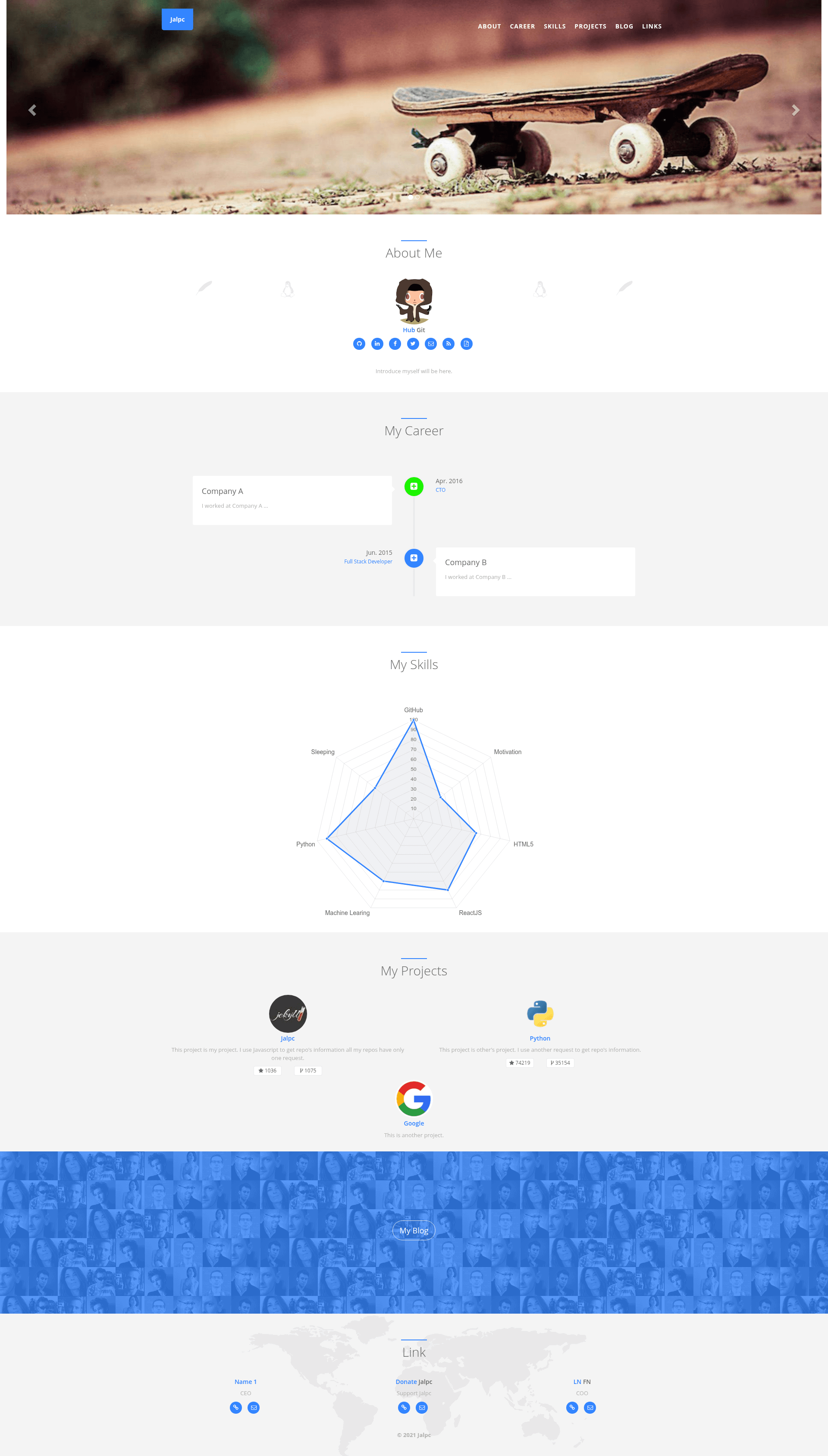
A flexible, free Jekyll theme to build a personal website, blog, or portfolio in three steps.
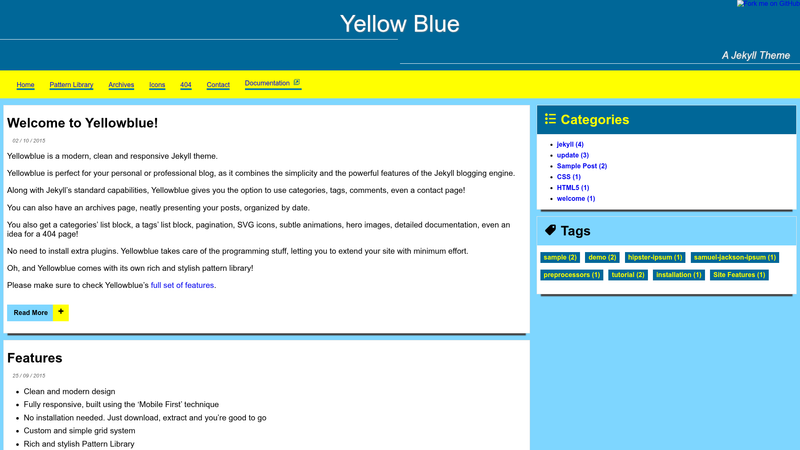
A free, responsive Jekyll blog theme with 451 SVG icons, Prism highlighting, Disqus comments, and GitHub Pages support.
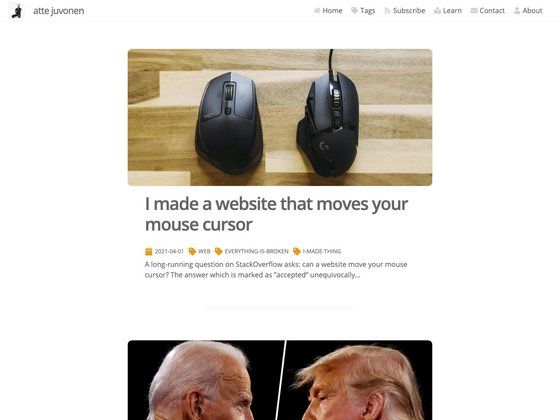
A fast, responsive Gatsby blog template with Markdown posts, tags, infinite scroll, and a contact form.
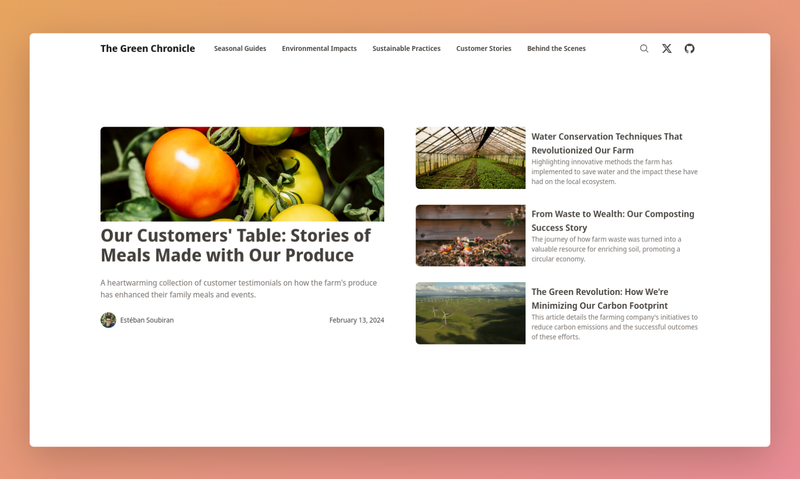
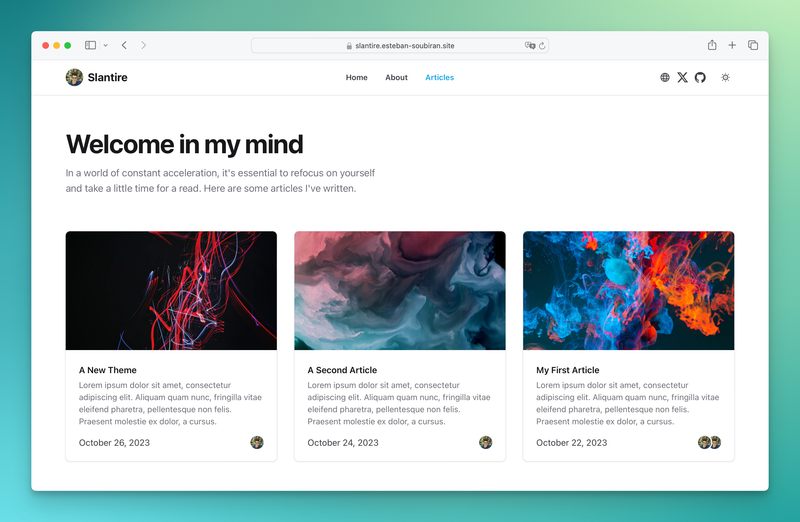
A company blog theme for Nuxt Studio powered by Nuxt Content and Nuxt UI Pro.
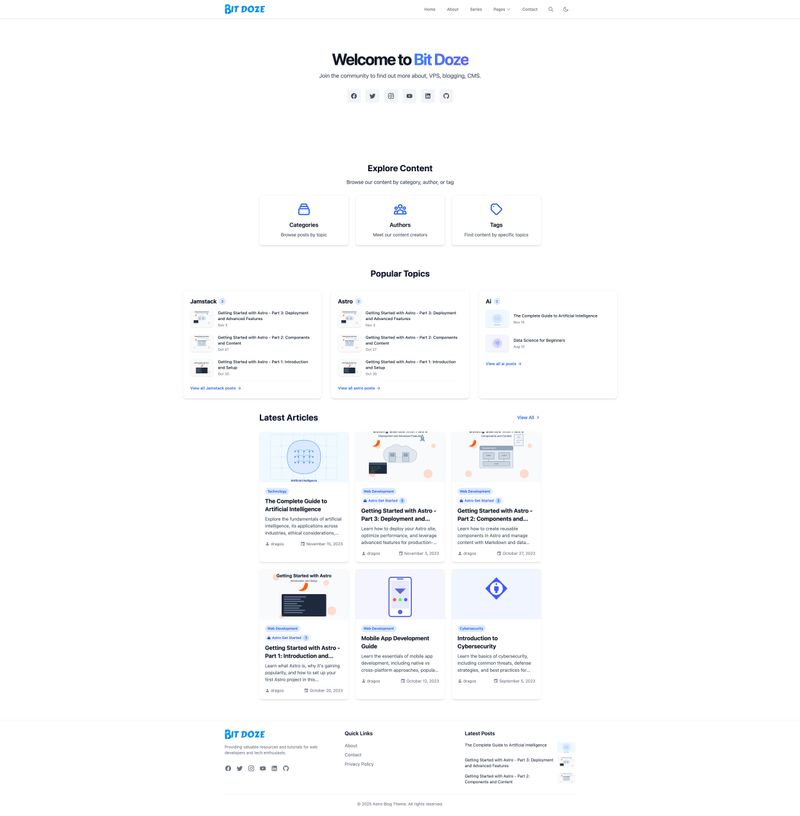
A modern, responsive blog theme for Astro with support for tags, categories, and series. This theme is designed to be fast, SEO-friendly, and easy to customize.
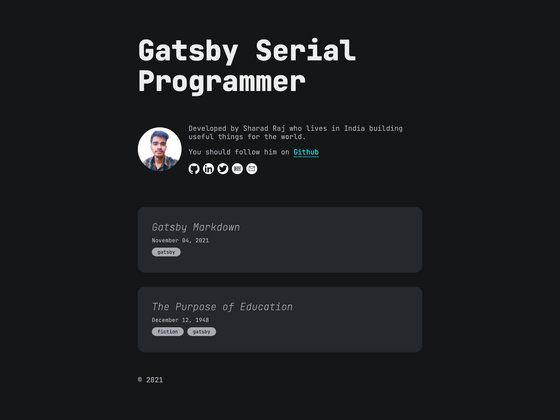
A dark-themed Gatsby blog theme for programmers with post and tag pages.
Jalpc is a free, MIT-licensed Jekyll theme that builds a personal website, blog, or portfolio from YAML configuration files instead of editing HTML directly.
Jalpc is a flexible, mobile-first Jekyll theme created by developer Jarrekk. It runs on Jekyll, the Ruby-based static site generator, and is designed to be set up in three steps. As input it takes YAML data files (for example landing.yml, skills.yml, and projects.yml) and renders a static website with sections for career, skills, projects, links, and a blog. The theme is hosted on GitHub and is free to use under the MIT license.
The README describes a three-step setup and links to a separate document. Once installed, you edit YAML files in _data to change the site content, run jekyll serve to preview locally, and deploy the generated _site to GitHub Pages or your own server. Upgrades are handled by adding the upstream remote and pulling the latest changes from the gh-pages branch.
Jalpc is free and open source under the MIT license. There are no paid tiers; donations are accepted via PayPal.
Yes, Jalpc is released under the MIT license, so you can use, modify, and redistribute it freely. The project also accepts optional donations through PayPal.
Yes. The landing page uses the i18next plugin for multilingual support. Configure languages in _data/index/language.yml and add translation files under static/locales. The feature can be removed entirely by emptying that YAML file.
The project wiki has a guide titled "How to add posts" that explains the process. Posts are created as Markdown files with YAML front matter in the standard Jekyll way.
Jalpc integrates both Google Analytics and GrowingIO. To use either, register an account and replace the corresponding ID in _config.yml.
Almost entirely. The index page and its sections are rendered from YAML files (landing.yml, skills.yml, projects.yml, etc.), so you can change text and structure without touching HTML. For deeper styling changes, edit the Sass files in _sass or rebuild compressed assets with npm run build.