Newsletter
Join the Community
Subscribe to our newsletter for the latest news and updates

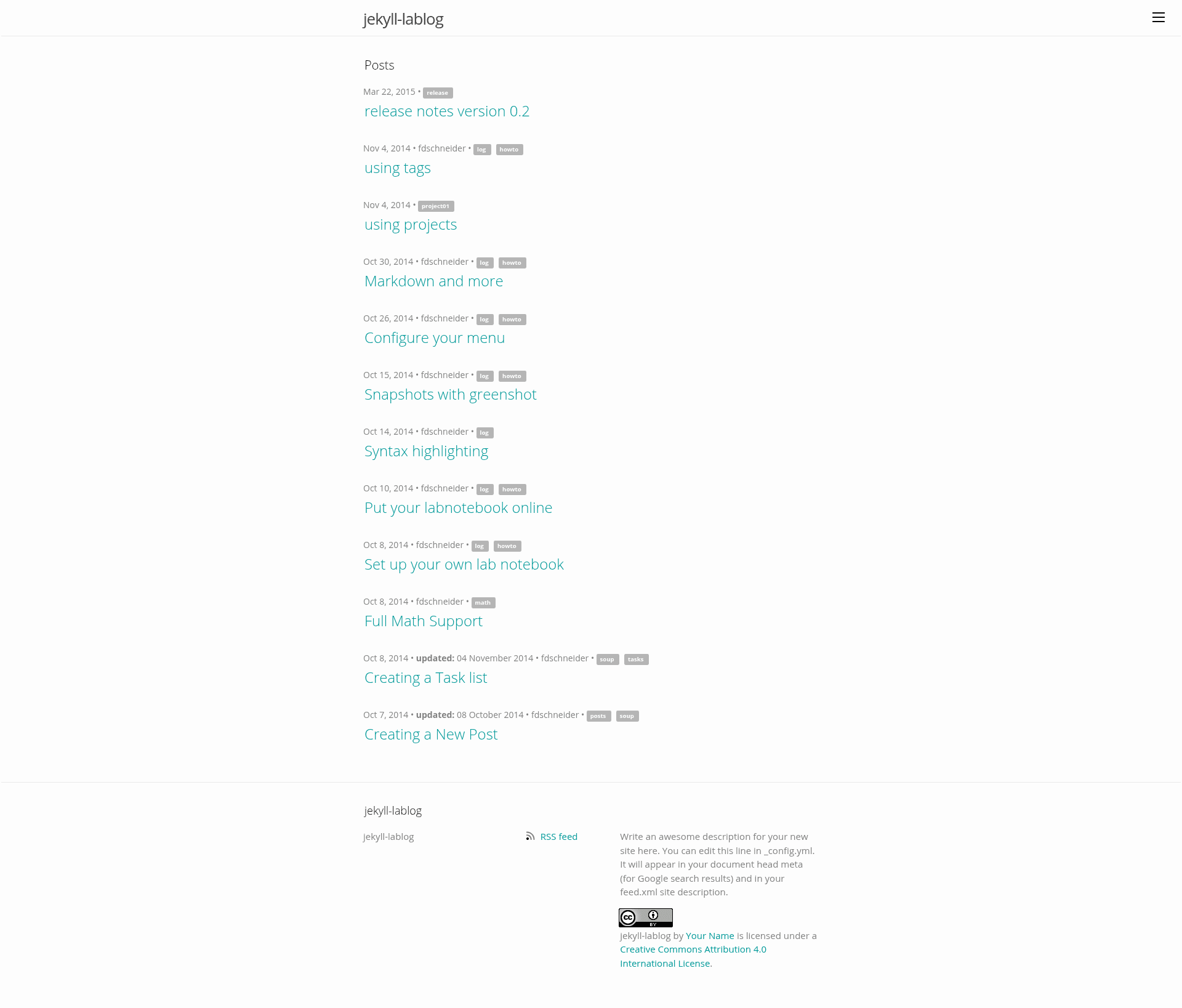
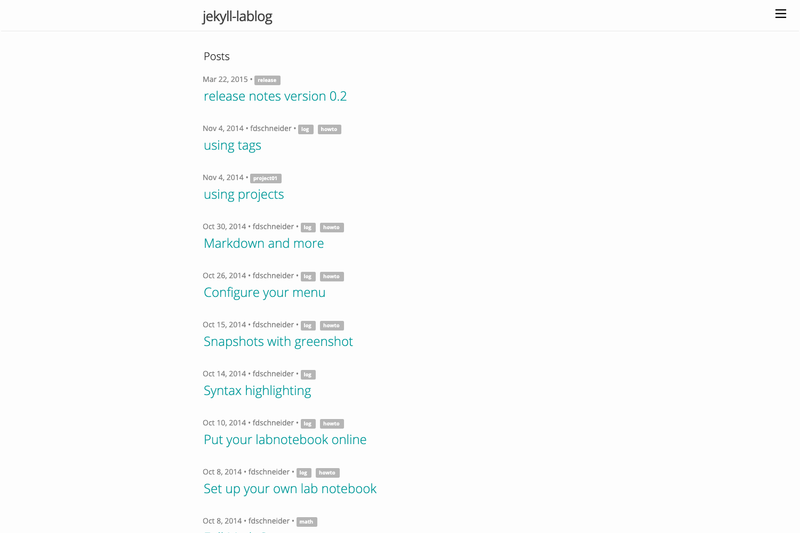
A Jekyll template based on the default theme that adds features for using the static site as a research lab notebook and knowledge base.
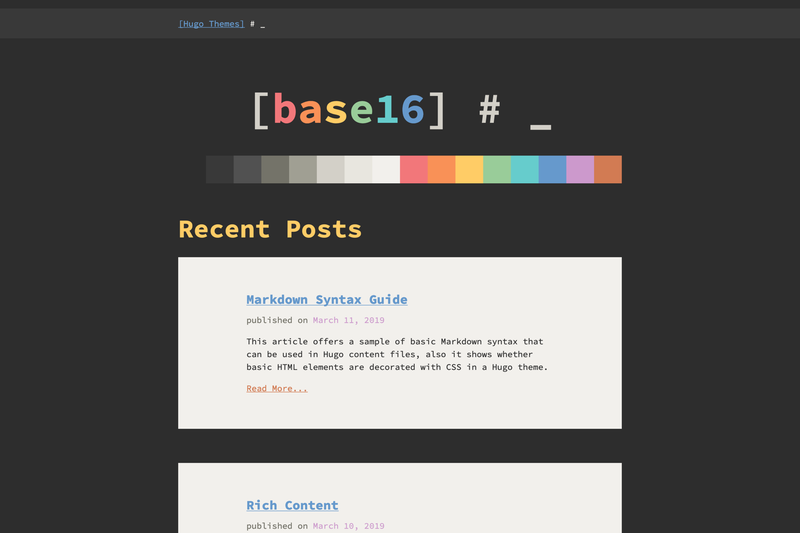
Hugo theme with Base16 Eighties colorscheme, Pygments syntax highlighting, and figure shortcode support.

A CollectionBuilder-based static web project for publishing a blog and digital collection of archive materials.

Minimalistic light-on-dark Jekyll blog theme with featured images, MathJax, and Font Awesome support.
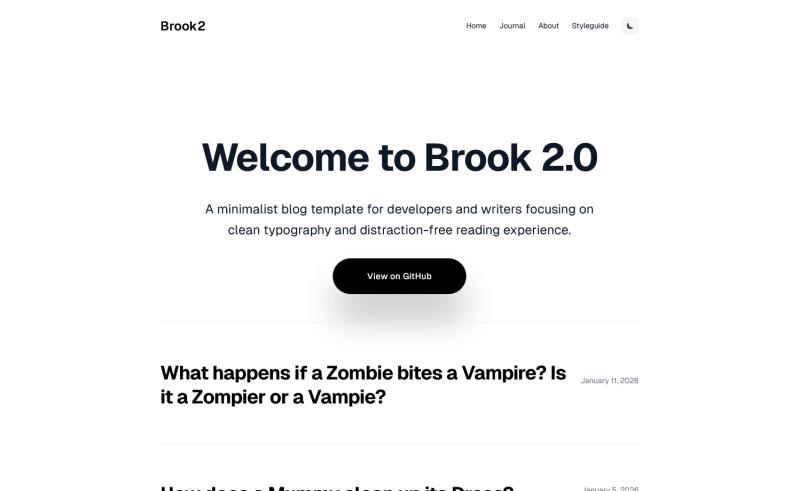
Free multipage blogging website template built with Tailwind CSS v4.2.2 and Astro v6.1.5, featuring light/dark modes and 4+ prebuilt pages.
Jekyll Lablog is an open-source Jekyll template by Florian D. Schneider for turning a static site into a lab notebook, research log, and knowledge base. It builds on Jekyll's default theme by jglovier and adds features such as todo lists, tags, related posts, and math rendering.
Jekyll Lablog is a template for the static site generator Jekyll that transforms a collection of Markdown text files into a static website designed for research documentation. It takes posts, pages, and configuration files as input and outputs a browsable static site with archive, tags, and task-list pages. The template is maintained by Florian D. Schneider and is distributed under the MIT License. It is specifically designed to support lab notebook practices: documenting hypotheses, experiments, and initial analyses.
- [ ]), including nested task lists for project management via a dedicated tasks layout.author field in the YAML front matter of each post.place front matter parameter.$brand-color in css/main.scss, and add personal info via _config.yml.author tag._posts with the YYYY-MM-DD-title.md naming convention and front matter; the archive page organizes entries chronologically.layout: tasks and use nested checkboxes to track milestones and pending work, with links to posts or external resources.gh-pages branch and get automatic deployment, though plugins are not supported on GitHub Pages.destination: ../../Public/lablog and sync to a Public folder for a semi-private deployment.git clone [email protected]:fdschneider/jekyll-lablog.git).jekyll serve to preview locally at localhost:4000._posts as Markdown files with optional YAML front matter._config.yml with title, author, and deployment URL/baseurl.jekyll build and deploy to Dropbox, GitHub Pages, or another webserver.Jekyll Lablog is free and open source under the MIT License. There are no paid tiers.
Yes, GitHub Pages automatically deploys Jekyll sites. Create a gh-pages branch and push content; set url and baseurl in _config.yml. However, GitHub Pages does not allow Jekyll plugins, so you must rely on the built-in parsing.
Posts are Markdown files (typically .md) with a filename like YYYY-MM-DD-title.md. Jekyll uses kramdown by default, but the parser can be configured.
Yes, the template supports multi-authoring. Each post can include an author field in front matter, making it suitable for research groups.
Edit the $brand-color variable in css/main.scss to change the color of links and the menu.
Yes, it is released under the MIT License, which permits free use, modification, and distribution, including commercial use, with attribution.