Newsletter
Join the Community
Subscribe to our newsletter for the latest news and updates

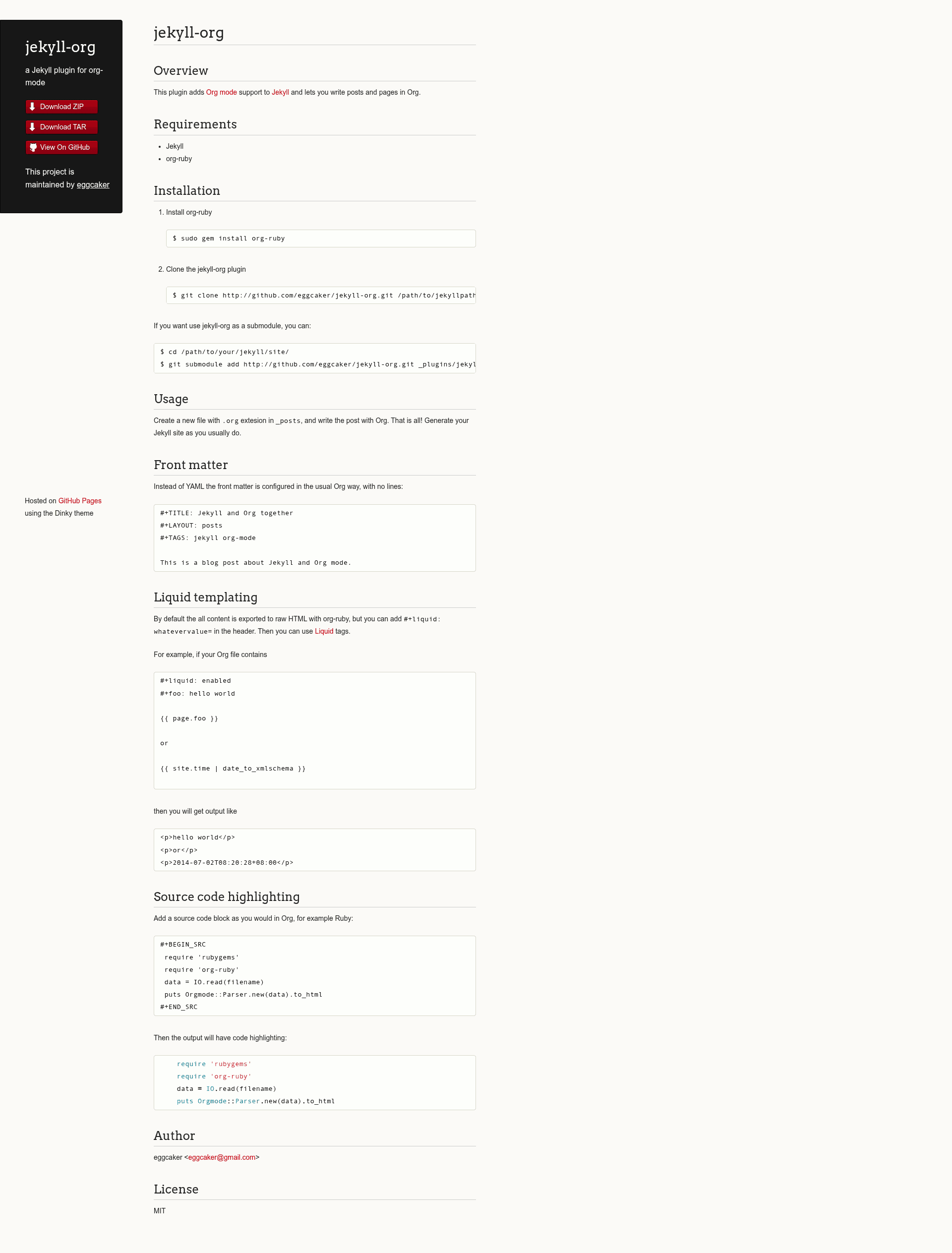
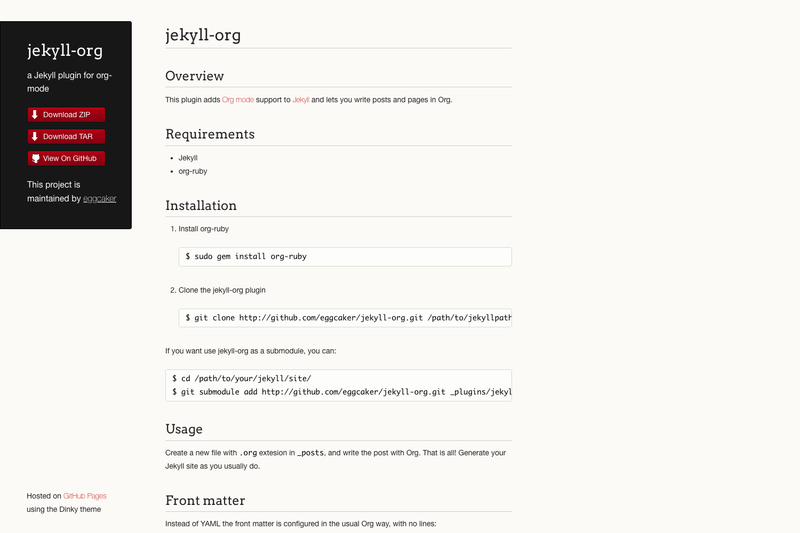
Org-mode converter for Jekyll — write posts and pages in Org syntax.

Dynamically generate `_headers` and `_redirects` files for Netlify in your Nuxt.js projects.

A pure CSS library written in Stylus, with Arco-inspired colors, icons, and base styles for Astro and MDX projects.
A GitHub Pages compatible Table of Contents generator without a plugin or JavaScript :octocat:

Maraho is an open source static site generator for blogs, built with Next.js, Tailwind CSS, and daisyUI.
Jekyll Org is a Jekyll plugin that converts Org-mode files into static HTML posts and pages, letting you author your site in Emacs Org syntax instead of Markdown or YAML front matter.
Jekyll Org is a Ruby gem created by eggcaker that adds Org mode support to Jekyll (version 3.0.0 and newer). It takes .org files placed in Jekyll's content directories (such as _posts) and converts them to HTML using the org-ruby library during the normal site build. The plugin is distributed under the MIT license and is currently looking for a new maintainer.
#+TITLE, #+LAYOUT, and #+TAGS instead of YAML; tags are parsed by splitting on spaces, and tags with spaces can be wrapped in quotes.#+liquid: enabled, or site-wide by setting org: liquid: true in _config.yml, allowing dynamic output like the site date.pygments.rb; add a pygments-compatible CSS file to /assets/css/ and use #+BEGIN_SRC blocks for highlighted code.gem 'jekyll-org', '>= 1.1.0' to your Gemfile, run bundle install, and list jekyll-org under plugins in _config.yml (or gems for Jekyll versions before 3.5.0)..org file in _posts; the plugin converts it to HTML during jekyll build.#+liquid: enabled and use variables like the current site time or custom header values for personalized output.pygments.rb and a CSS theme, then use #+BEGIN_SRC blocks to get syntax-highlighted output in your posts.To use it, first add the gem to your Gemfile and run bundle install. Then register the plugin by adding plugins: [jekyll-org] to _config.yml (older Jekyll uses gems:). Finally, create a .org file in a content directory with Org headers for metadata, and the plugin will convert it automatically when you build the site.
Pros:
Cons:
org-ruby gem and is tied to Jekyll's Ruby ecosystem.The README compares Jekyll Org with three similar projects: org2jekyll, which requires you to configure an org-publish-project-alist before writing posts; org-jekyll, which expects YAML front matter in Org files; and happyblogger, which uses an external Ruby script for conversion. Jekyll Org avoids these extra requirements by being a native Jekyll converter.
Yes, Jekyll Org is open source under the MIT license, so you can use, modify, and redistribute it freely.
You need Jekyll (version 3.0.0 or newer) and the org-ruby gem. Add jekyll-org to your Gemfile and plugins in _config.yml.
Add #+liquid: enabled to an Org file's header, or set org: liquid: true in _config.yml to enable it for all Org files.
Run bundle add pygments.rb, add a pygments-compatible CSS file to /assets/css/, and use #+BEGIN_SRC blocks in your Org files.
As of the README, the original author is looking for someone to take over maintenance because they are no longer actively using Ruby and Jekyll.