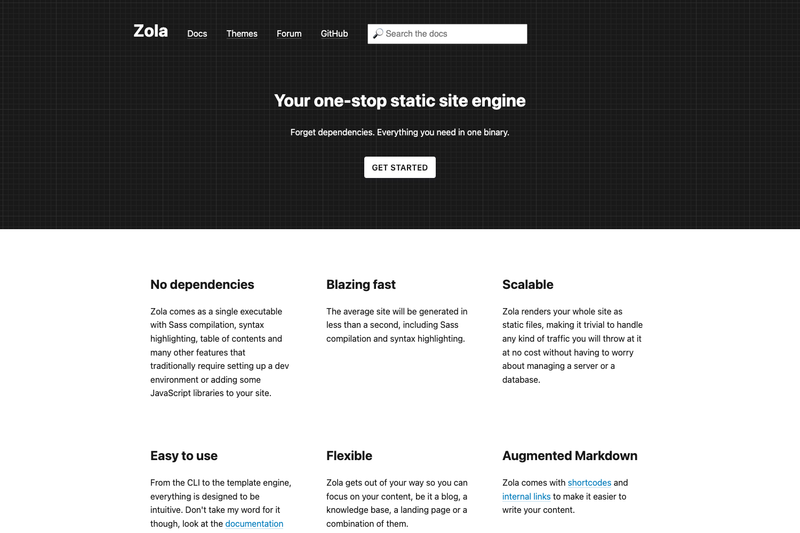
Zola is a fast static site generator written in Rust that builds a complete website from Markdown content and Tera templates, packaged as a single executable binary with no external runtime dependencies.
What is Zola?
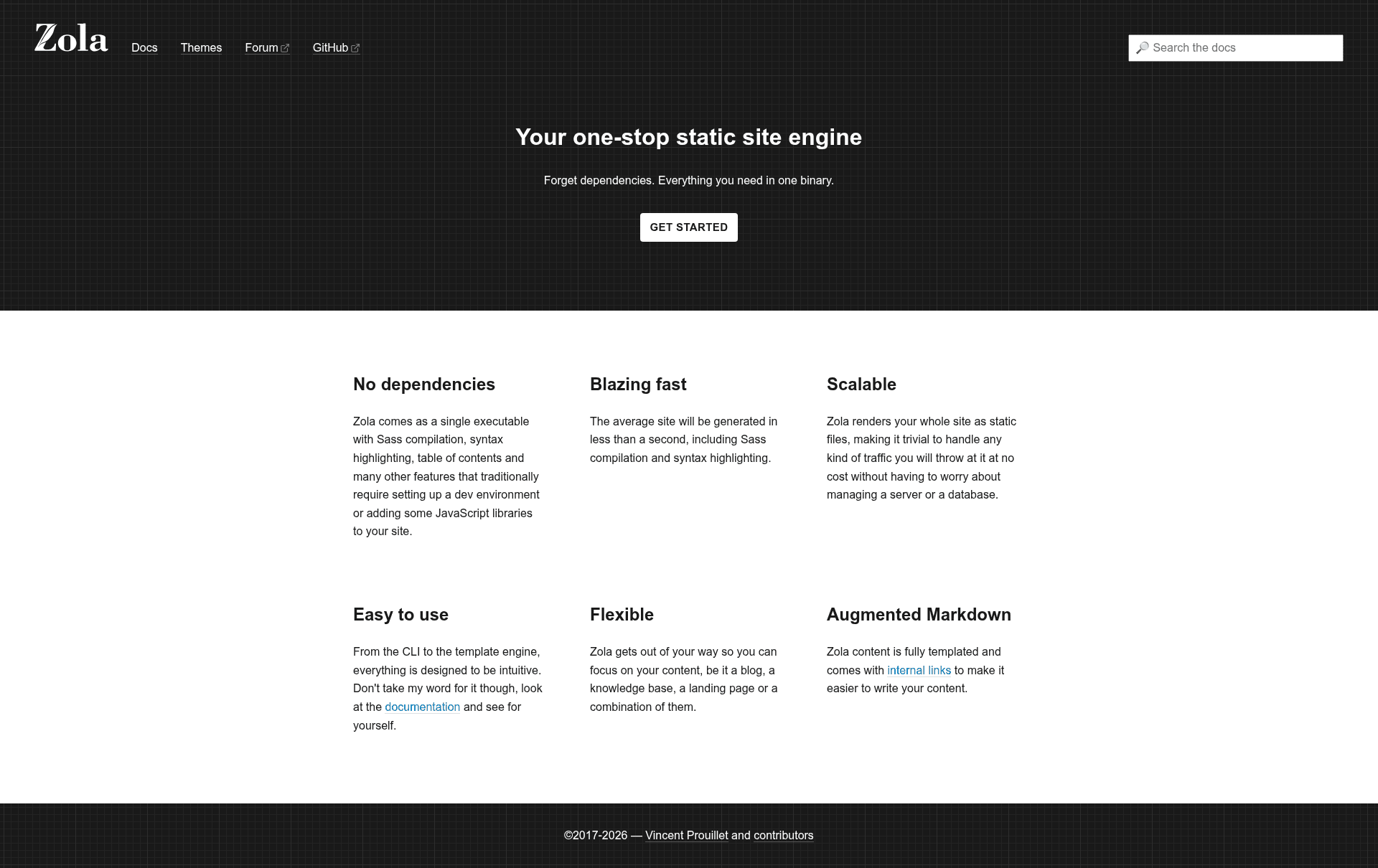
Zola (formerly named Gutenberg) is an open-source static site generator that takes Markdown files as input and produces a static HTML site as output. Everything—including the template engine, Sass compiler, syntax highlighter, and image processing—is compiled into one binary, so deploying a site only requires copying files to any static host. The project is developed on GitHub and has amassed over 17,000 stars since its release.
The tool was created by the same developer who built the Tera template engine, which is the default templating language used in Zola. Unlike dynamic content management systems, Zola generates all pages at build time, which makes it fast and secure since there is no server-side processing at request time.
Key Features
- Single binary — Zola compiles all its functionality into one executable, so there is no need to install a language runtime or separate tools on your server or local machine.
- Syntax highlighting — Code blocks are highlighted at build time, with support for many programming languages and configurable themes.
- Sass compilation — SASS and SCSS stylesheets are compiled to CSS automatically as part of the build process.
- Image processing — Images can be resized, cropped, and optimized using shortcodes and the built-in image processing engine.
- Multilingual site support — Content can be organized into multiple languages, with language-aware URLs and basic i18n features.
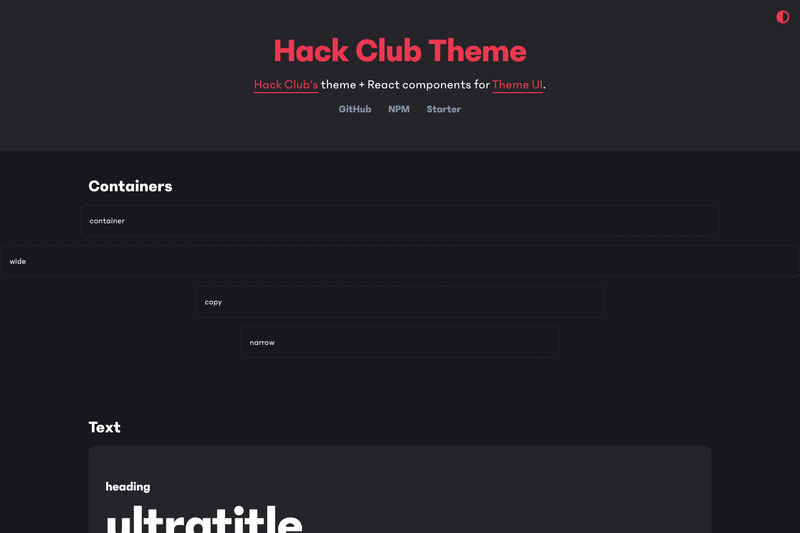
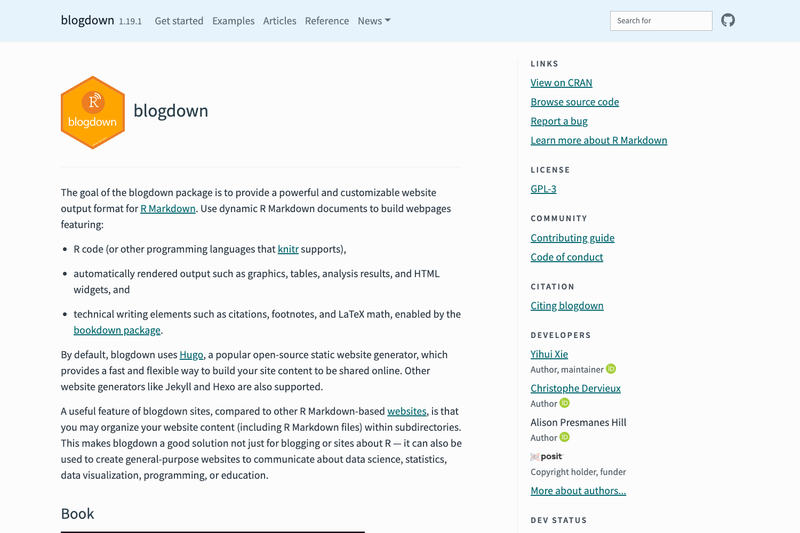
- Themes — A theme system lets you install and switch between different site designs without changing your content.
- Shortcodes — Reusable HTML or Markdown snippets can be embedded in pages to add videos, code blocks, or custom components.
- Search — Zola can generate a client-side search index, so visitors can search your site without a server or third-party search service.
- Live reload — The development server automatically reloads the browser when you edit files, speeding up local preview.
- Deployment integrations — Sites can be deployed to Netlify, Vercel, Cloudflare Pages, and other static hosting platforms with minimal configuration.
Who is it for?
- Bloggers and content writers who want to publish Markdown-based posts with tags, pagination, and syntax-highlighted code without managing a database.
- Technical documentation teams that need a fast static docs site with auto-generated table of contents, client-side search, and structured navigation.
- Web developers looking for a lightweight alternative to heavier SSGs like Hugo or Jekyll, especially those who prefer Rust and a simpler templating syntax.
- Site owners who need multilingual content and want a static generator that offers built-in language support.
What can you do with Zola?
- Personal blogs: Write posts in Markdown, organize them with taxonomies and pagination, and get a secure, high-performance site with zero server-side dependencies.
- Documentation portals: Build multi-page guides with automatic TOC, internal link checking, and a built-in search index that works offline.
- Portfolio sites: Use image processing and custom themes to present projects with optimized images and fast page loads.
- Company landing pages: Create a static marketing site, then deploy to Netlify or Vercel with continuous integration from a Git repository.
Alternatives
- Hugo — a popular static site generator written in Go; Zola's author initially used Hugo but moved to Rust and created Zola after disliking Go's template engine.
FAQ
Is Zola free to use?
Yes, Zola is open-source software. Code introduced after version 0.22 is released under the EUPL-1.2 license, while older code remains under the MIT License, so you are free to use and modify it.
Does Zola require a database?
No. Zola works with plain Markdown files and generates static HTML, so there is no database or server-side application needed. This makes the output fast and easy to host anywhere.
Can Zola be used for multilingual sites?
Yes, Zola has basic multilingual support, allowing you to create content in multiple languages and link between translated pages.
How does Zola's search work?
Zola generates a static search index at build time. When a visitor uses the search box, the index is queried entirely in the browser—no server or third-party search service is required.
What makes Zola different from Hugo?
Zola is written in Rust and uses a single binary, while Hugo is written in Go. Zola's template engine, Tera, is based on Jinja2 syntax, which many developers find more familiar than Go's built-in templates.