Newsletter
Join the Community
Subscribe to our newsletter for the latest news and updates

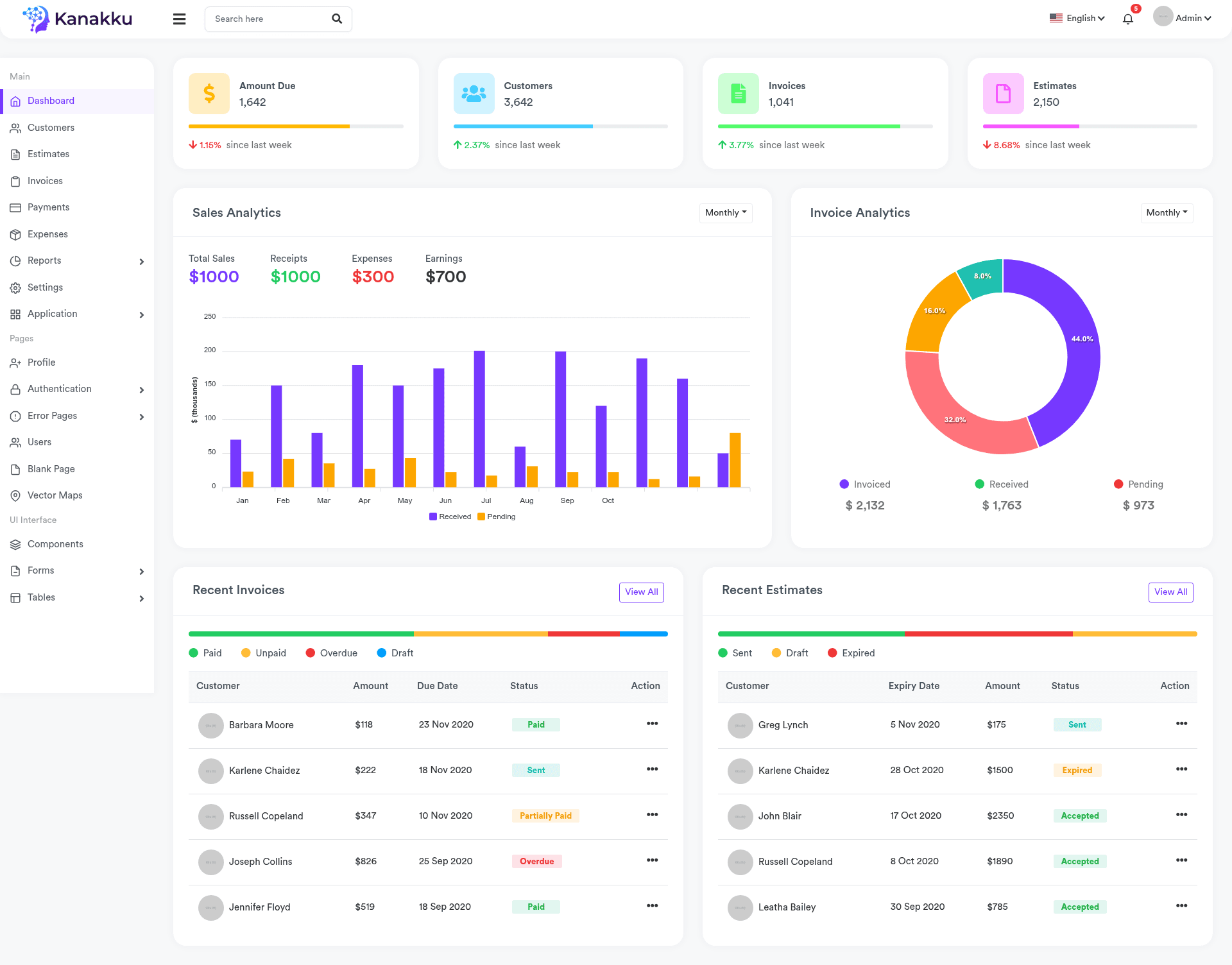
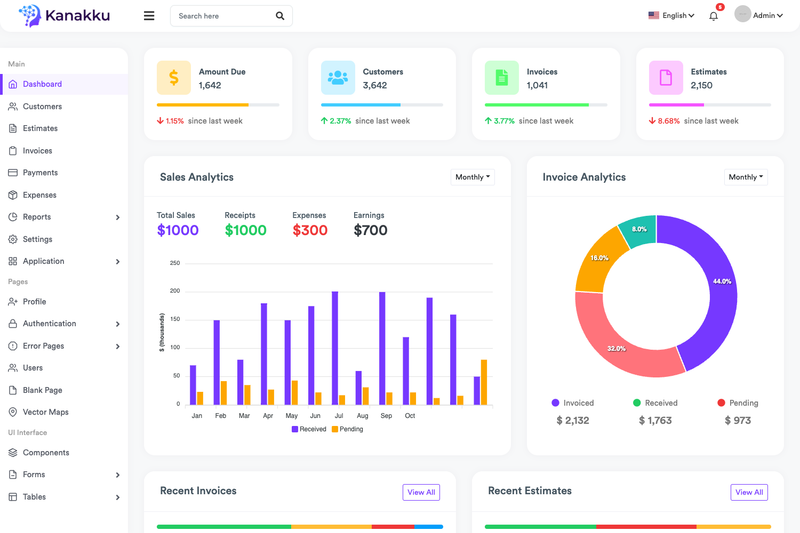
Full-scale Dashboard application written in Next.js
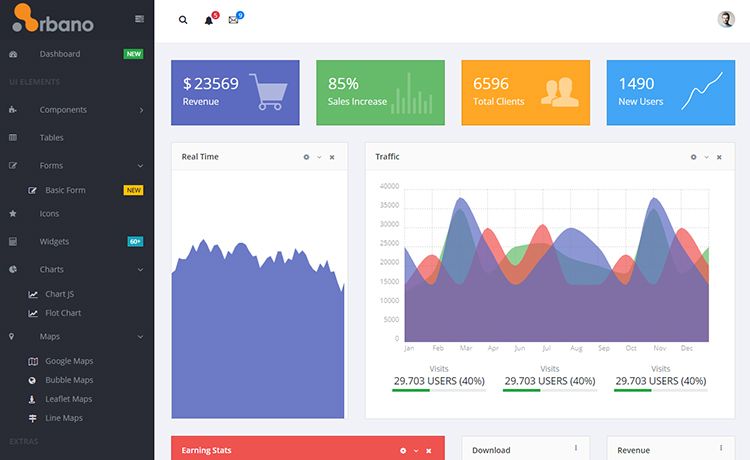
Free Bootstrap 4 & Vue.js admin dashboard template with charts, maps, tables, forms, widgets, and ready pages for backend interfaces.
Star Admin Angular is a free admin dashboard template built on Bootstrap 4 and Angular, generated with Angular CLI 7.2.1.
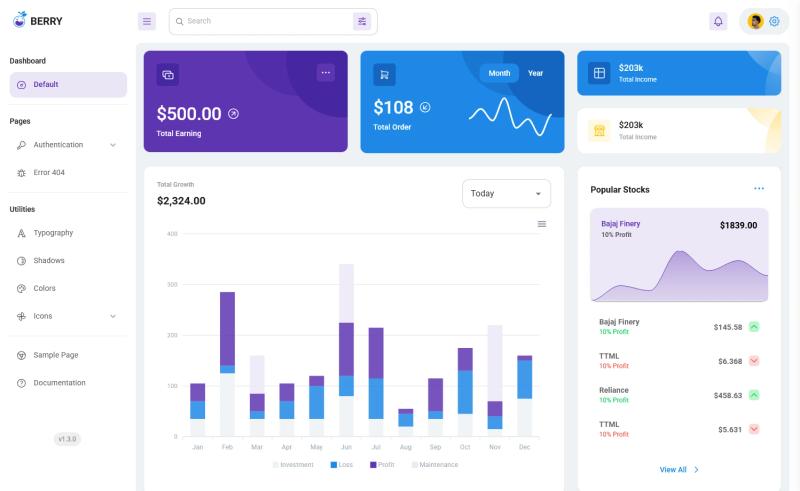
Free responsive Vue.js admin dashboard template with multipage design, live customizer, and ApexCharts, built by CodedThemes.
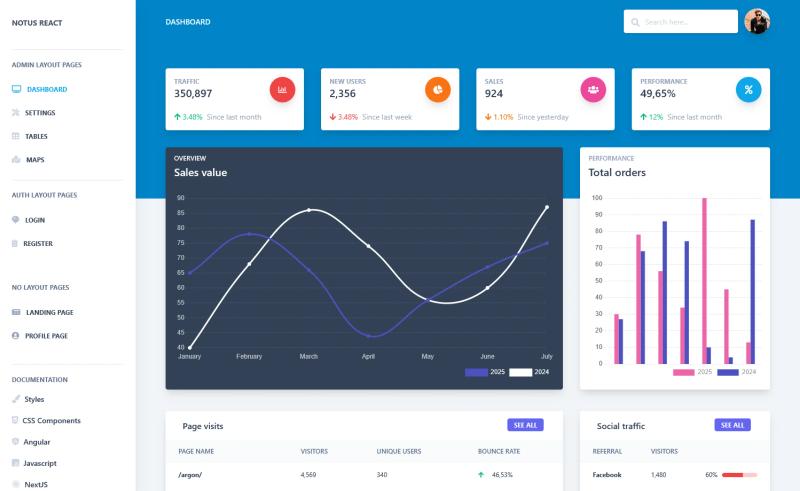
Free Tailwind CSS & Next.js dashboard UI kit with 8+ pre-built pages, charts, and authentication.
Kanakku Next is a full-scale dashboard application template built with Next.js, intended as a starting point for building admin panels and data visualization interfaces. It is a Next.js project bootstrapped with create-next-app, meaning it ships with the standard Next.js file structure, API routes, and a development server. The repository metadata describes it as a "Full scale Dashboard application" and lists charts, maps, dashboard, and nextjs as its topics, signaling that the template is geared toward data-dense, visually rich admin dashboards.
Kanakku Next is a dashboard application written in Next.js, the React-based framework for server-rendered and statically generated web applications. As a create-next-app scaffold, the project includes a pages directory for file-based routing, a pages/api directory where backend API endpoints live, and package.json scripts to run the development server with npm run dev or yarn dev. The template's output is a functional web application that serves both React pages and JSON API endpoints, ready to be customized into a full-scale dashboard. Its repository topics—charts, dashboard, maps, nextjs—indicate that the intended use is data visualization and administrative interfaces.
pages directory where each file maps to a URL route.pages/api directory is mapped to /api/*, so files placed there are exposed as API endpoints. An example endpoint at /api/hello is included and can be edited in pages/api/hello.js.npm run dev or yarn dev to start the dev server at http://localhost:3000. Editing files in pages/.js triggers automatic page updates.pages to shape the dashboard's layout and features.The template follows a standard Next.js workflow: start the development server with npm run dev or yarn dev, open http://localhost:3000, and edit files inside the pages directory to see hot updates. API routes are defined in pages/api and become available at /api/*. For production, the README points to deploying on the Vercel Platform, which integrates with the Next.js framework.
Run npm run dev or yarn dev from the project root. This launches a Next.js development server at http://localhost:3000, and pages auto-update as you edit files in the pages directory.
API routes are located in the pages/api directory. Each file there is treated as an API route rather than a React page; for example, pages/api/hello.js is served at /api/hello.
The template's README recommends the Vercel Platform, which is maintained by the Next.js team and offers one-click deployment for Next.js apps. You can also follow the general Next.js deployment documentation for other hosting options.
Yes. Because the project uses standard Next.js file-based routing, you can edit existing files in pages or create new ones. The page auto-updates during development, and changes to the pages directory define the routes of your dashboard.