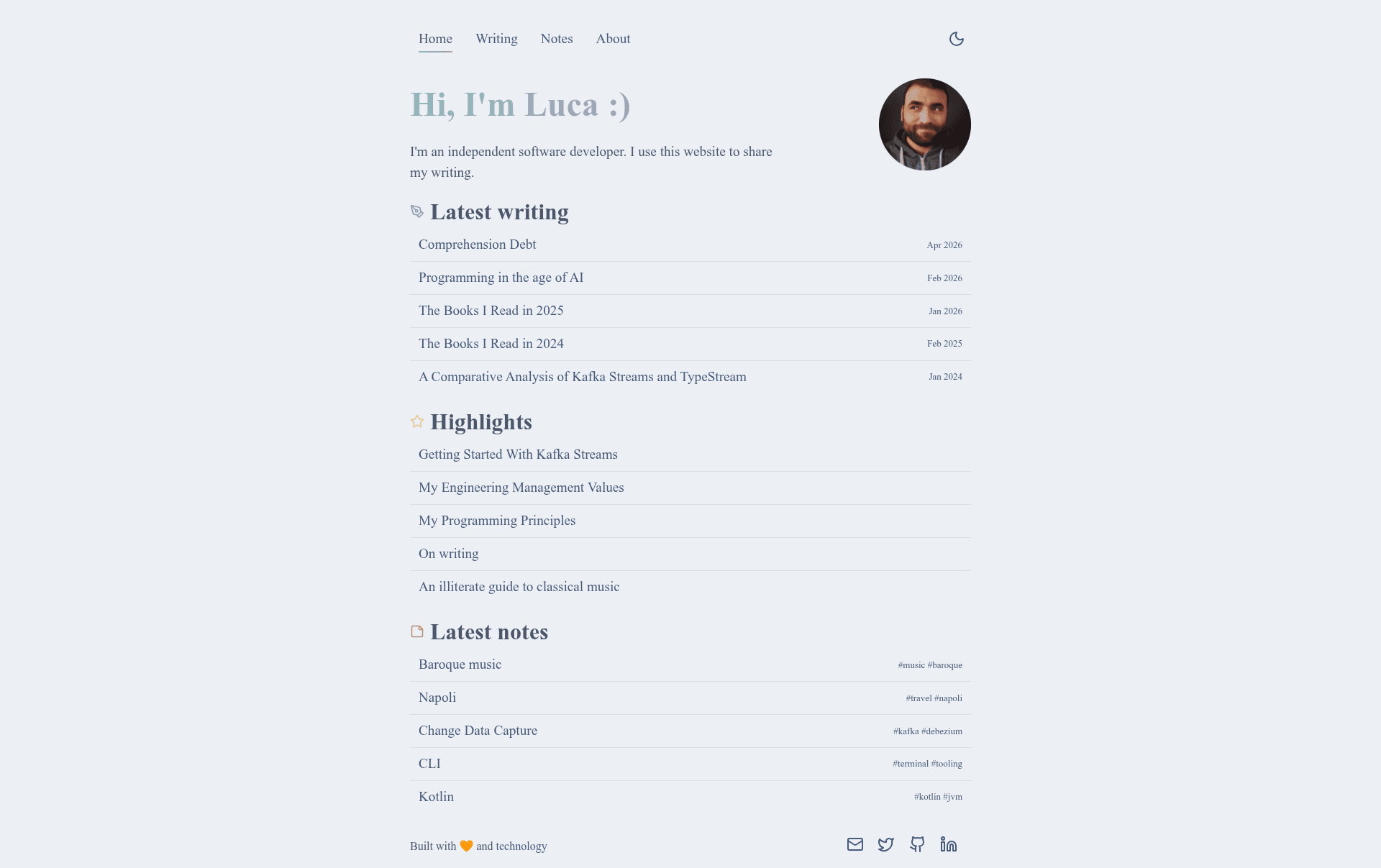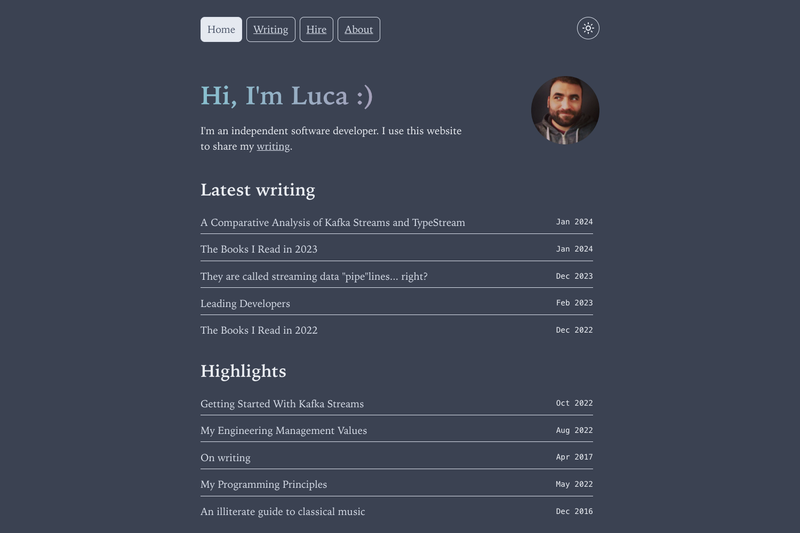
Lucapette.github.com is a personal blog website generated with Jekyll and deployed on GitHub Pages, serving as its owner's home page at the username-based GitHub Pages URL. The repository carries the blog and jekyll topic labels, a description of "My website," and had 4 stars at the time its metadata was captured.
What is Lucapette.github.com?
Lucapette.github.com is a static personal website whose owner describes it simply as "My website." It takes Jekyll-processed content and produces a static HTML site that is hosted and served through GitHub Pages at pages.github.com. The site runs on GitHub's free static hosting platform for public repositories, and it was authored by the GitHub user whose account name matches the repository. Because GitHub Pages builds Jekyll sites natively, publishing is tied to the git workflow of the repository itself.
Key Features
- Jekyll static generation — Content is processed with Jekyll, the Ruby-based static site generator that GitHub Pages supports out of the box, producing a site that is fast to serve and does not require a database or server-side application runtime.
- GitHub Pages deployment — The live site is served from pages.github.com, the GitHub Pages domain, using the account-name repository pattern for a personal user site.
- Blog publishing — The repository is labeled with the blog topic, indicating that the site functions as a blog rather than a bare landing page.
- Personal website purpose — The author's own description, "My website," frames the site as a personal home page rather than a project or documentation site.
- Public open-source repository — The source code is public on GitHub, where the repository had earned 4 stars at the time the metadata was captured, letting anyone read the Jekyll configuration, layouts, and content files.
- Git-based version control — Because the site lives in a GitHub repository, every change is tracked in git history, which the owner can revisit or roll back at any time.
Who should use Lucapette.github.com?
The site's primary audience is its owner, who uses it as a personal blog and online home page. Developers who are learning to publish a Jekyll blog on GitHub Pages can study the public repository as a minimal, real-world example of the account-name user-site pattern. Anyone who wants a zero-cost personal blog can follow the same approach that this site demonstrates: Jekyll for generation and GitHub Pages for free hosting.
What can you do with Lucapette.github.com?
- Personal blogging: Publish blog posts through the Jekyll workflow and have them served from a free GitHub Pages URL that matches your GitHub username.
- Learning reference: Read the repository to see how a small Jekyll site is organized, named, and deployed without any paid hosting or custom infrastructure.
- GitHub presence: Use the account-name subdomain to give yourself a stable, recognizable web address that is directly tied to your GitHub identity.
How does Lucapette.github.com work?
The owner generates the site with Jekyll and deploys the result to pages.github.com. The repository lives on GitHub, and the public, username-named repository address doubles as the live site's location, so pushing changes to the repository is what updates the published website.
Pricing
Jekyll is free, open-source software, and GitHub Pages hosts static sites from public repositories at no charge, so the entire stack this site runs on costs nothing.
Alternatives
For the same job — a blog or personal site generated as static files — Hugo is a Go-based static site generator known for very fast builds, and Astro is a static site generator that ships minimal JavaScript by default.
FAQ
What is Lucapette.github.com built with?
It is built with Jekyll, a Ruby-based static site generator. The owner states that Jekyll is used to generate the site, and the repository is tagged with the jekyll topic.
Where is Lucapette.github.com hosted?
The site is deployed on GitHub Pages, specifically at pages.github.com. GitHub Pages is a free static hosting service that works directly from a GitHub repository.
Is this site a blog?
The repository metadata lists blog as one of its topic labels, and GitHub Pages user sites named after the account are commonly used for personal blogging. The owner describes the project only as "My website."
Does hosting this site cost money?
No. Jekyll is free open-source software and GitHub Pages provides free hosting for public repositories, so the site can be run and maintained with no hosting fees.
How do I get a site like this?
Create a public GitHub repository named after your account using the GitHub Pages user-site pattern, build it with Jekyll, and push your content; GitHub Pages will build and serve the Jekyll site at pages.github.com.