Newsletter
Join the Community
Subscribe to our newsletter for the latest news and updates

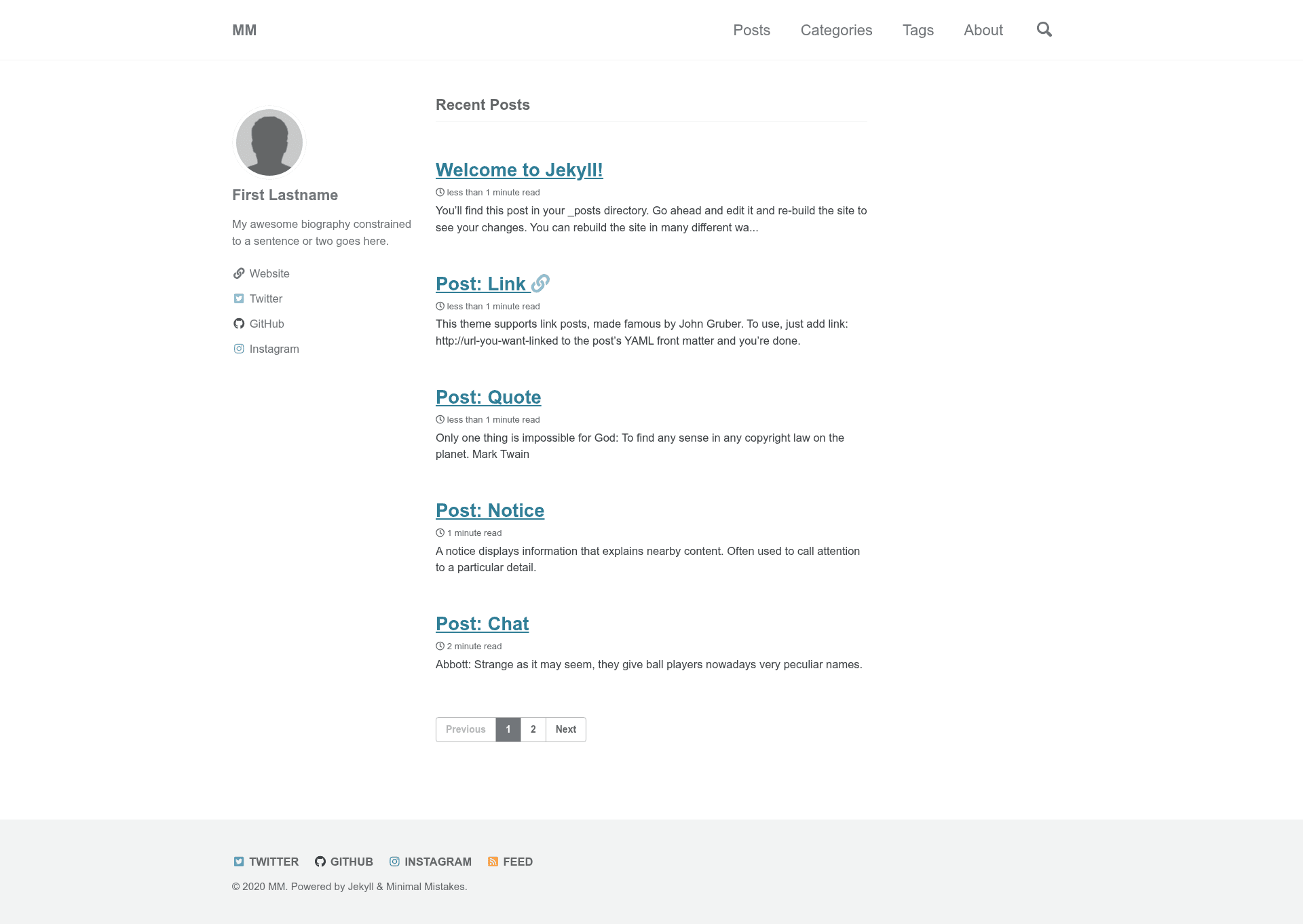
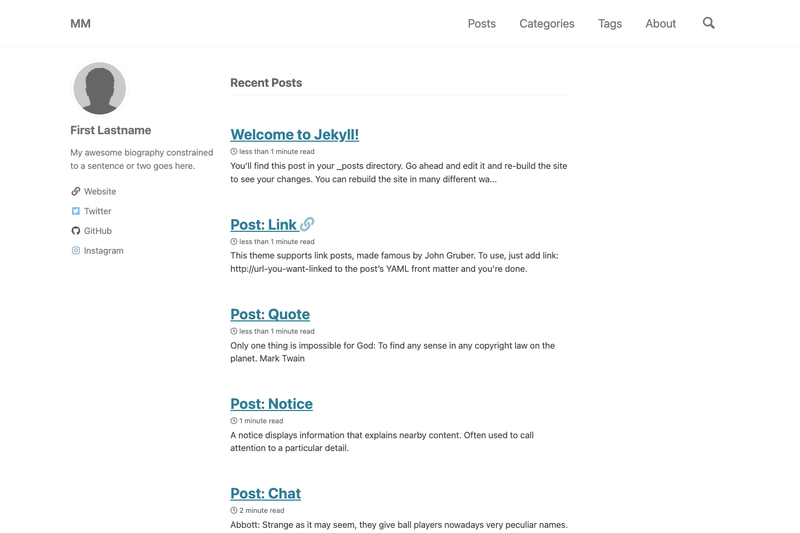
Starter site for Minimal Mistakes Jekyll theme with sample posts, navigation, archives, and search for GitHub Pages.
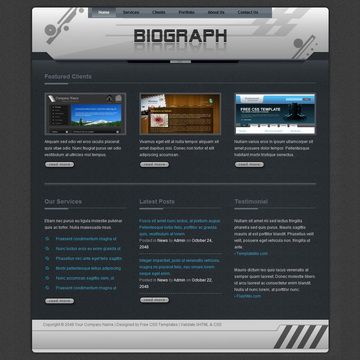
Biograph template is a futuristic website layout in 3-column arrangement for main page and 2-column subpage layout.
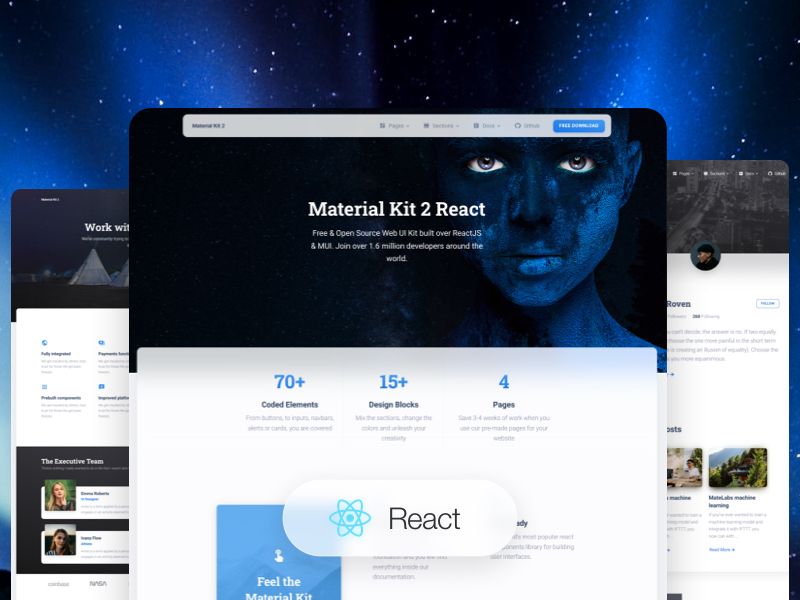
Free React & MUI design system with 40+ components and pre-built landing pages from Creative Tim.
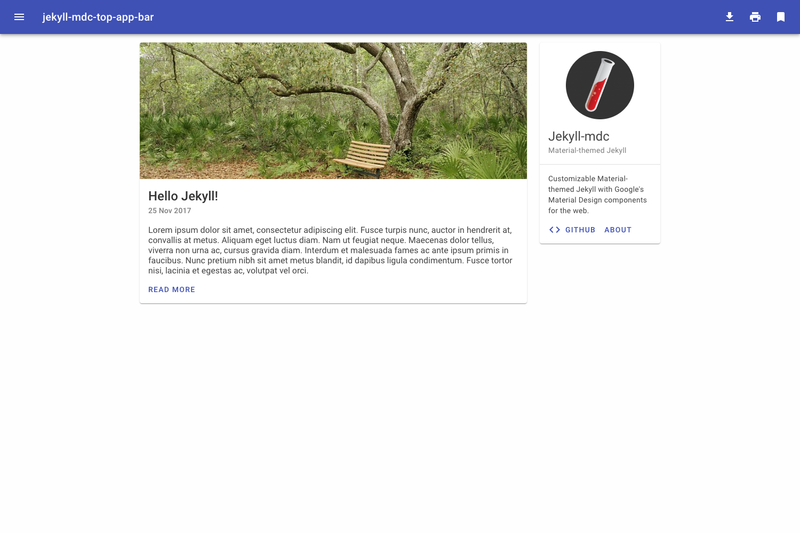
Customizable Material-themed Jekyll with Google's Material Design components for the web.
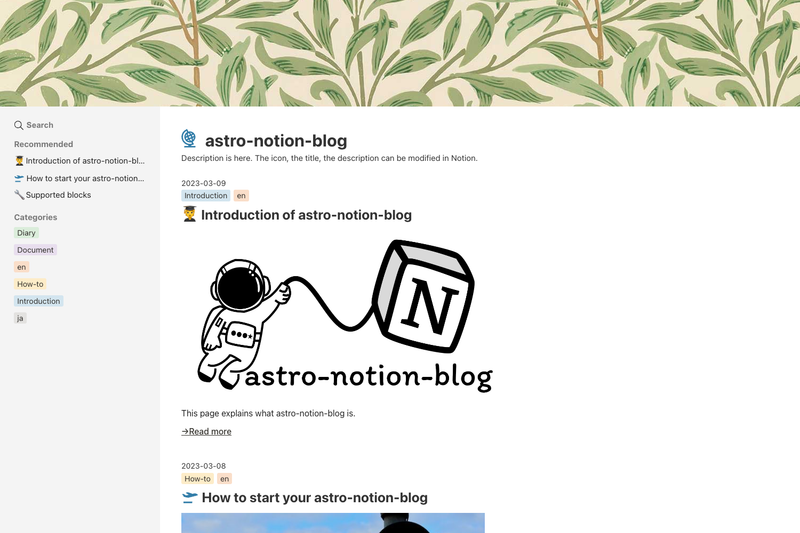
Create a fast static blog by writing content in Notion, built with Astro and deployed on Cloudflare Pages.

Deploy Flask 3 on Vercel using Serverless Functions with the Python runtime.
The Minimal Mistakes GitHub Pages Starter is a boilerplate template that pre-configures a Jekyll site with the Minimal Mistakes theme for automatic publishing on GitHub Pages.
It's a starter repository created by the Minimal Mistakes theme author (mmistakes) that gives you a working Jekyll site in one click via GitHub's "Use this template" feature. The repository contains configuration files and sample content for the Minimal Mistakes remote theme, along with documentation links for setting up Jekyll and GitHub Pages locally. It serves as both a quick-start for new sites and a reference for how to structure a Minimal Mistakes site.
_config.yml, _posts, and _data folders to see exactly how pages, posts, and navigation are declared in a real Jekyll project.Click the "Use this template" button on the repository's GitHub page to create a new repository with all the starter files. Then either edit files directly on GitHub or clone the repository locally, replace the sample content, and push your changes — GitHub Pages builds and serves the site automatically.
Click the "Use this template" button at the top of the repository page, choose a name for your new repository, and GitHub copies all of the starter files into it. After that, you edit the sample content and configuration.
Yes. The starter uses the Minimal Mistakes remote theme and includes configuration for GitHub Pages, so the site builds automatically when you push changes to your repository.
The starter includes sample posts, a sample about page, a custom 404 page, top navigation, footer links, and an author sidebar with social links, plus archive pages organized by year, category, and tag.
You can edit the sample files directly on GitHub and let GitHub Pages build the site for you. If you want to preview locally, you'll need Ruby and Jekyll installed; the troubleshooting section links to a Ruby 101 guide and Jekyll installation docs.