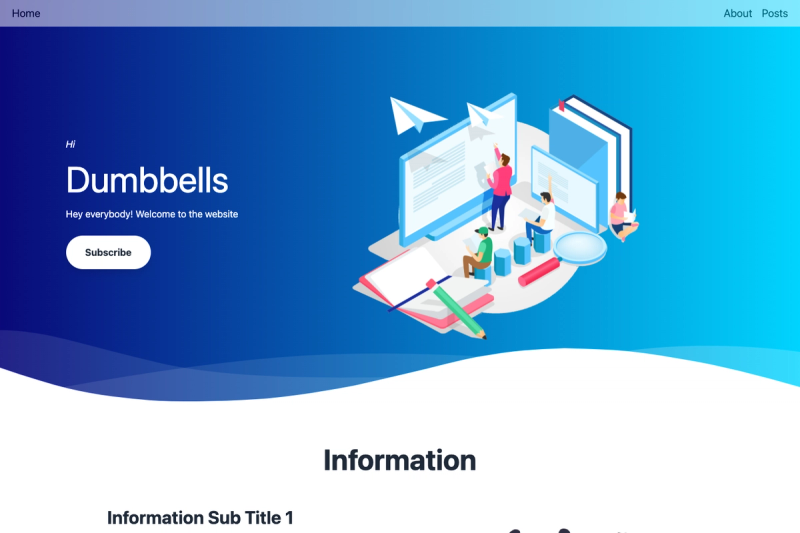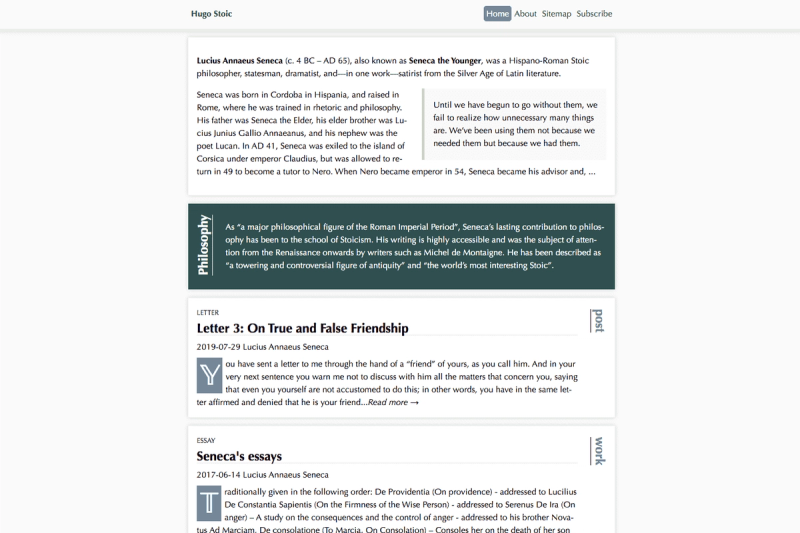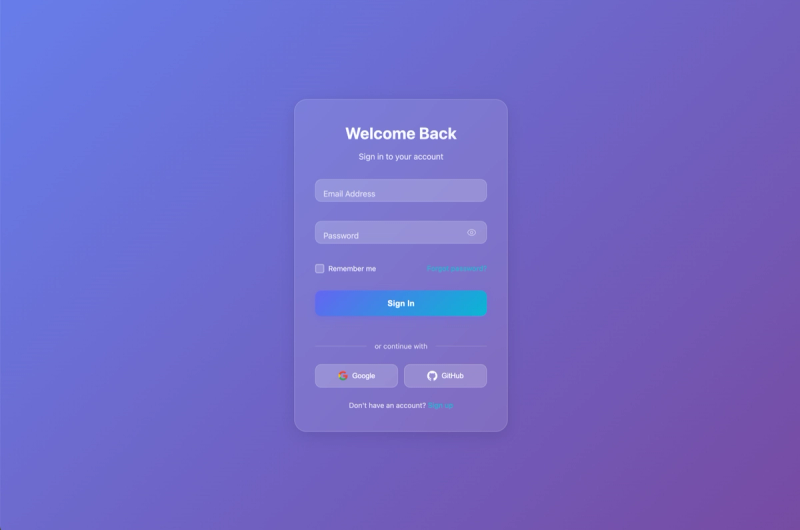
Modern Login Forms is a collection of 20 self-contained HTML, CSS, and JavaScript login page templates built by Aigars Silkalns for Colorlib, designed to be dropped into any web project with zero build tools or dependencies.
What is Modern Login Forms?
Modern Login Forms is a free, open-source set of login page templates that take plain HTML, CSS, and JavaScript as their only ingredients and produce fully styled, responsive login forms with validation, floating labels, password toggles, and success states. The templates run entirely in the browser, require no server or package manager, and are published as a GitHub repository with a live gallery at https://puikinsh.github.io/login-forms/. Aigars Silkalns created the collection for Colorlib, which hosts hundreds of additional login form designs on its own site.
Key Features
- No dependencies — each form is pure HTML, CSS, and JavaScript; no CDN, Google Fonts, or npm packages are needed, so every form works fully offline.
- Shared LoginFormBase class — all 20 forms extend the same base class from shared/js/form-utils.js, which handles submit validation, field-level errors, floating labels, password toggles, success resets, and form-scoped keyboard shortcuts; per-form scripts range from 14 to 115 lines.
- Responsive mobile-first design — every template adapts to phone, tablet, and desktop widths, with a supporting table in the README showing browser support for Chrome 88+, Firefox 103+, Safari 15.4+, and Edge 88+.
- Accessibility built in — visible keyboard focus rings via :focus-visible, global respect for prefers-reduced-motion, ARIA labels on icon controls, semantic markup, role attributes on toasts, and autocomplete hints on all inputs.
- SEO and social readiness — each form folder includes meta description, Open Graph image, Twitter card, and an SVG favicon.
- Security-conscious helpers — the showNotification utility uses textContent instead of innerHTML, and the codebase avoids eval, new Function, and inline event handlers.
Who is it for?
- Front-end developers — grab a ready-made login page and customize the CSS variables and labels in minutes instead of writing markup from scratch.
- Freelancers and agencies — reuse the collection across client projects; the folder-per-form structure makes it easy to copy just the design a client needs.
- Startups and SaaS builders — use the Modern SaaS, Clean Banking, or Corporate Professional forms to match fintech or enterprise aesthetics without pulling in a UI framework.
- Designers learning HTML/CSS — study the 20 separate script.js files to see how a shared base class can shrink repetitive JavaScript from hundreds of lines to under 120.
What can you do with Modern Login Forms?
- Build a production login page: copy the form folder and shared form-utils.js, wire the submit handler to your own auth endpoint, and get validation, error toasts, and success states out of the box.
- Prototype an app's auth flow: use one of the themed forms (AI Assistant, Neon Cyber, Minimal Music) to match a product's visual identity in a demo without committing to a component library.
- Learn form architecture: inspect the LoginFormBase extension pattern in shared/js/form-utils.js, which demonstrates lifecycle methods, event delegation, and animation cleanup via animationend instead of setTimeout.
How does Modern Login Forms work?
Open index.html in a browser to preview all forms. Then copy the specific form folder and the shared/js/form-utils.js file into your project. The form's script.js instantiates a class that extends FormUtils.LoginFormBase, and you can override the decorate() method for entrance animations or onSuccess() for a custom success transition. The included simulateLogin function always succeeds except for the demo credentials [email protected] with password wrongpassword, which intentionally triggers the error state.
FAQ
Are the login forms free to use?
Yes, the repository is open source and the README presents all 20 forms as copy-paste ready for any project. There is no listed payment tier or commercial restriction beyond the original creation credit for Aigars Silkalns and Colorlib.
Do I need a framework or build tool?
No. The forms use only vanilla HTML, CSS, and JavaScript. There is no package.json, no bundler, and no external runtime dependency, so you can paste the files into a static site or any server-rendered app.
What browsers are supported?
The README lists Chrome 88+, Firefox 103+, Safari 15.4+, and Edge 88+. Older browsers will still show the form but may miss the newer CSS features such as backdrop-filter in the Glassmorphism design.
Can I change the colors and text?
Yes, each form's colors, gradients, and borders are defined in its own style.css, and the labels and text live in index.html. The shared base class options in script.js let you adjust validators and which elements hide on success.
How many forms are included?
The project contains 20 self-contained form templates, organized into categories: modern and stylish, corporate and clean, minimal and simple, creative and artistic, and themed and unique variations like Travel Booking and Eco Wellness.