Newsletter
Join the Community
Subscribe to our newsletter for the latest news and updates

Full-stack JavaScript boilerplate combining Next.js, React, Express, Bootstrap, SCSS, and SSR.
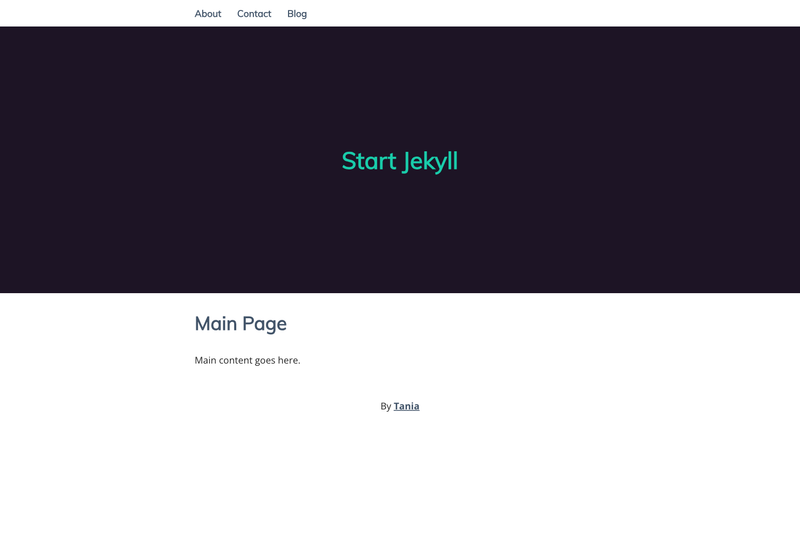
An example and guide to getting started with Jekyll and static site generators.

Fullstack TypeScript blog starter using Next.js, Prisma, NextAuth.js, and PostgreSQL with Vercel deploy support.
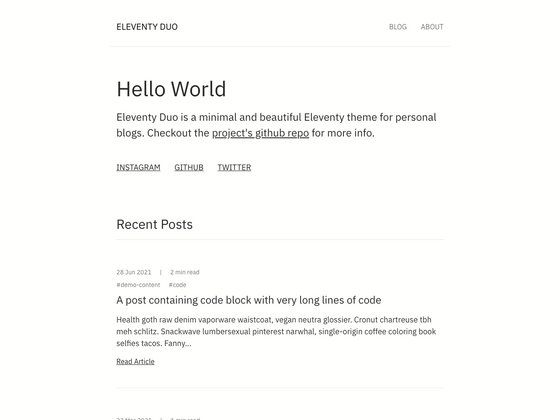
Eleventy Duo is a minimal and beautiful Eleventy theme for personal blogs.
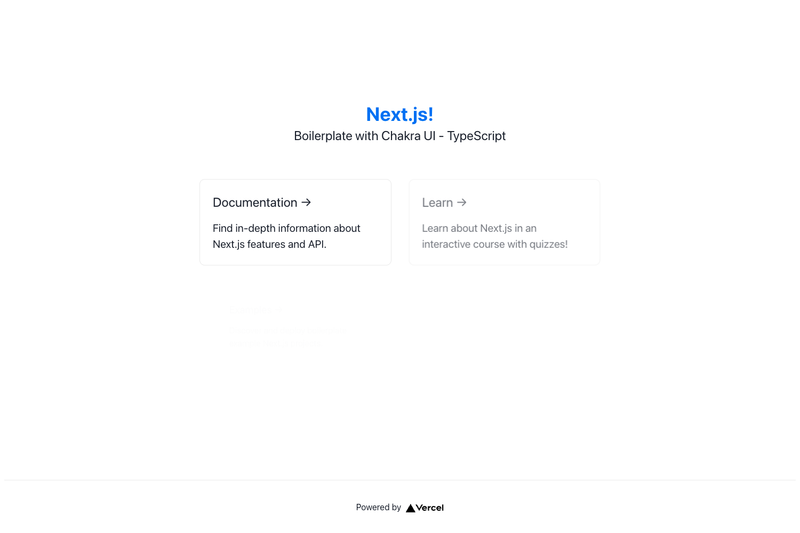
NextJS TypeScript starter with ChakraUI and helpful scripts for shades, components, and animations.
next-express-bootstrap-boilerplate is a JavaScript boilerplate that scaffolds a full-stack application combining a Next.js React frontend with an Express.js backend and full server-side rendering.
This boilerplate, created by Mustansir Zia, provides a starting point for a full-stack JavaScript web application. It pairs a React.js frontend built on Next.js and react-bootstrap with an Express.js backend. The React code is isomorphic, meaning components render on both the server (SSR) and the browser. The project ships with a CLI that initializes the app in a chosen folder; the production build runs on port 9001.
app/ directory holds the Next.js client with pages, components, and styles; the Express server lives in app.js, and static assets like icons are served from public/.app.js couples Next.js to Express via an asynchronous next(app) call, and any route not explicitly defined falls through to Next.js's automatic page handler.Theme HOC that imports bootstrap.min.css from app/styles/vendor; custom CSS/SCSS files are imported directly and transpiled to css-in-js for Next.js.eslintConfig key of package.json.npm i -g next-express-bootstrap-boilerplate, then run next-boilerplate or next-boilerplate my-folder to create a project.transform-runtime plugin.next-boilerplate in an empty directory (or with a folder name) to generate the full stack, then start coding with npm run dev or yarn dev.npm start builds the app and serves the production version at localhost:9001, with static assets reachable under /.app.js; the README shows an example /main route using req.app.render to render the home page, and unhandled paths automatically hit Next.js pages.After installation, the app/ folder holds the Next.js application. app.js initializes Express with body-parser, cookie-parser, and static file serving, then calls next(app) to attach Next.js. The next.js file bootstraps the integration. In development, hot reloading is provided by Next.js for client code and nodemon for server code.
Yes, the project is licensed under the MIT License, and the full source is available on GitHub.
Run sudo npm i -g next-express-bootstrap-boilerplate (the README uses sudo) or clone the repository, remove the .git folder, and run npm i or yarn.
The boilerplate requires Node.js version 8.12.0 or newer because it uses async/await. For older versions, the README suggests building with Babel and the transform-runtime plugin.
No, the boilerplate focuses on the React/Next.js/Express app shell with hot reloading, linting, and static asset handling; it leaves database and auth integration to the developer.
Yes, the Theme HOC is only needed when using react-bootstrap components. Pages that don't use bootstrap can omit it, as the example in app/pages/index.js shows.