Newsletter
Join the Community
Subscribe to our newsletter for the latest news and updates

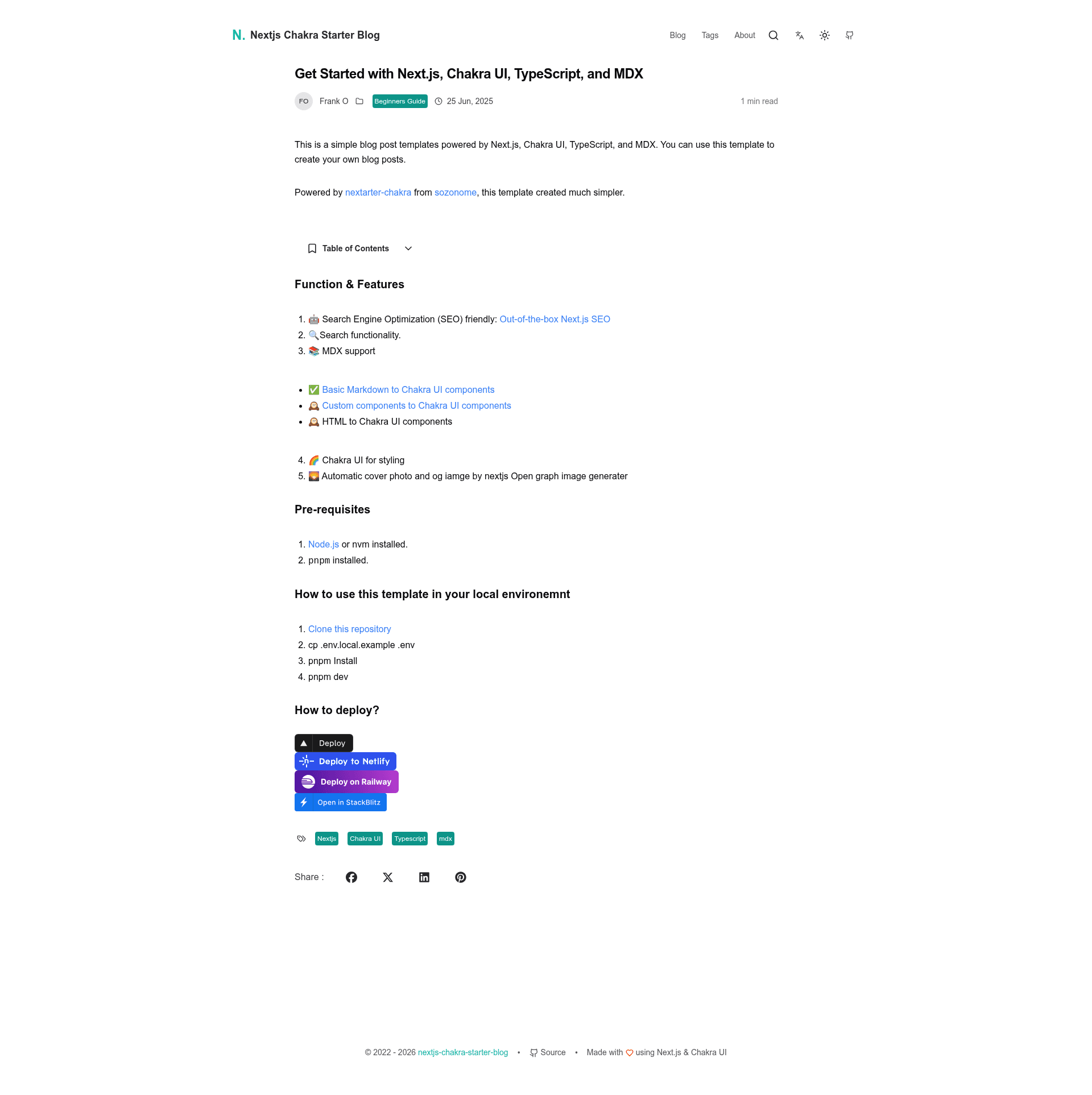
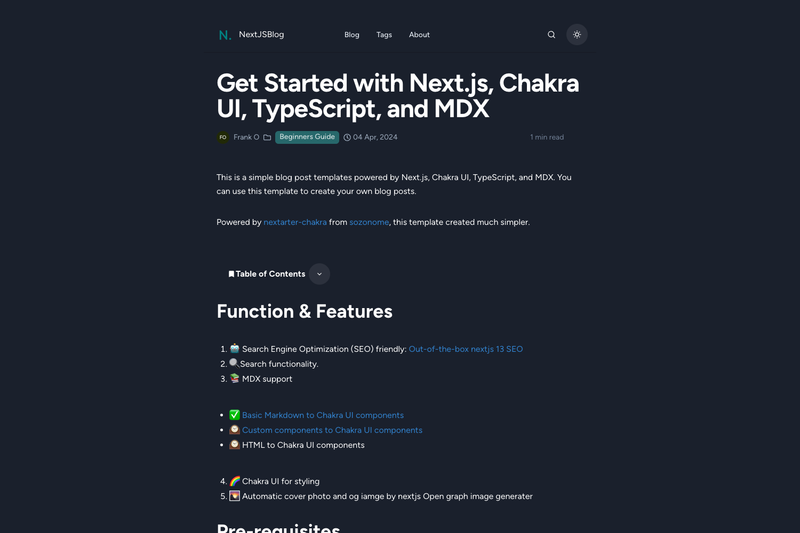
A Next.js, Chakra UI, and TypeScript blog starter with MDX, PWA, i18n, and one-click deployment.
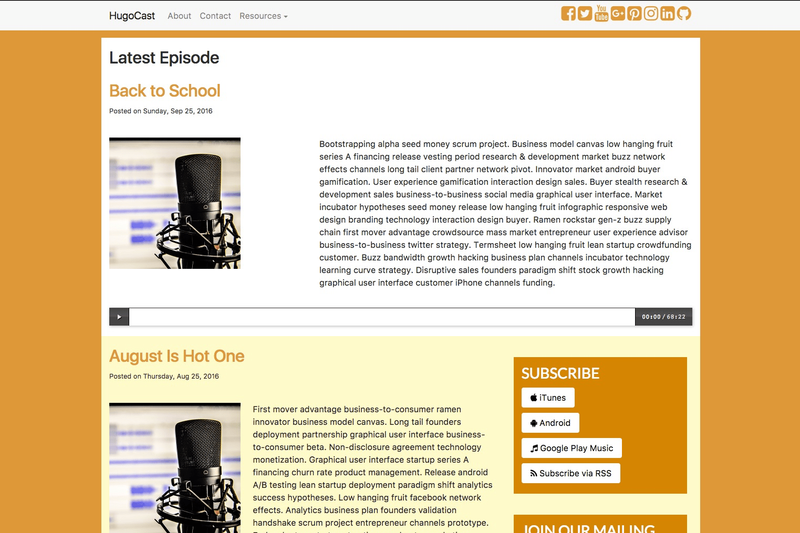
A podcast-oriented Hugo theme for building podcast sites with episode, guest, host, and sponsor support.
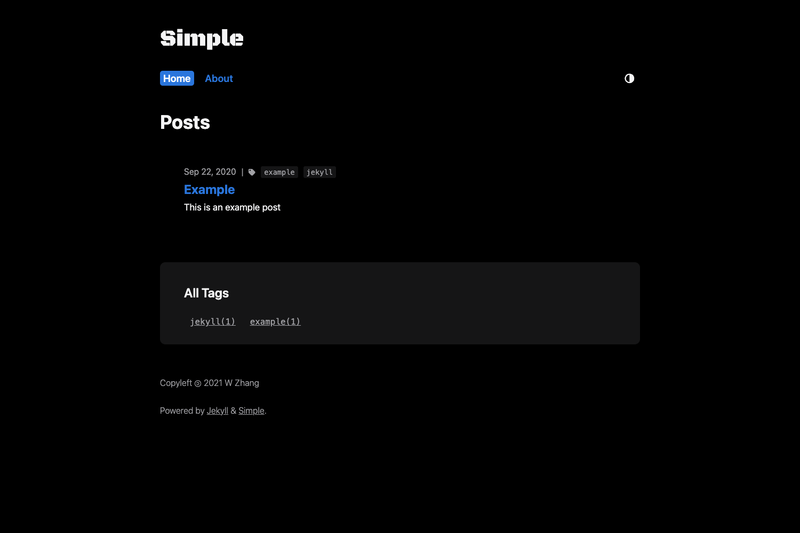
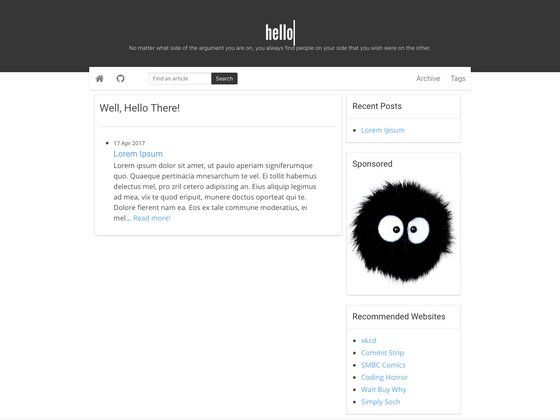
A minimal Jekyll theme for blogs with dark mode, tag system, and speed optimizations.
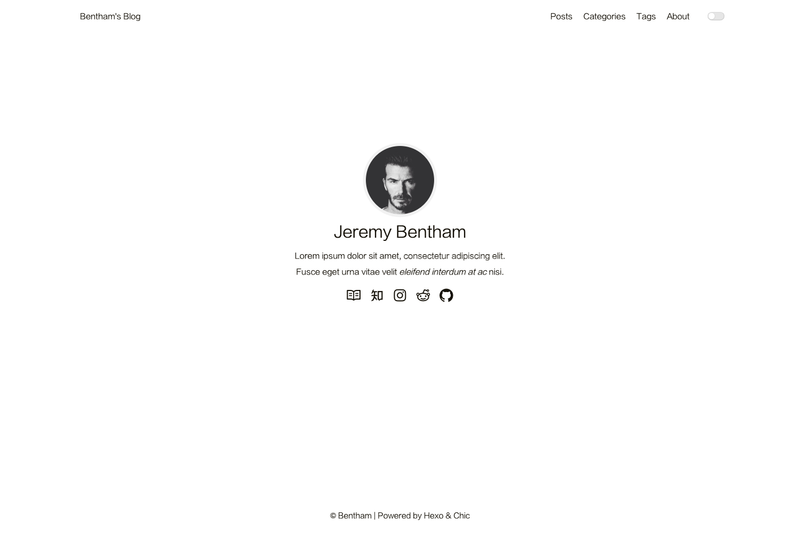
A responsive, elegant Hexo blog theme with light/dark mode, MathJax support, and customizable profile.
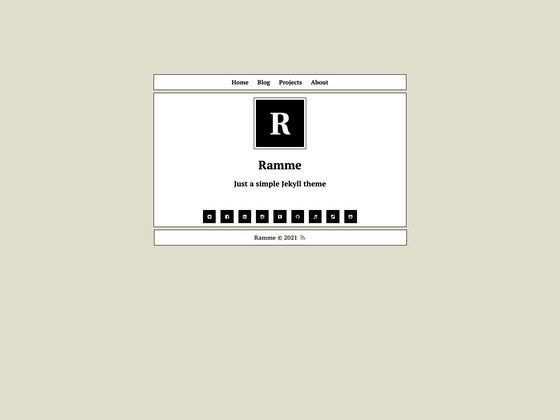
A simple retro Jekyll theme with a terminal-inspired design, table of contents, and sample posts for blogs.
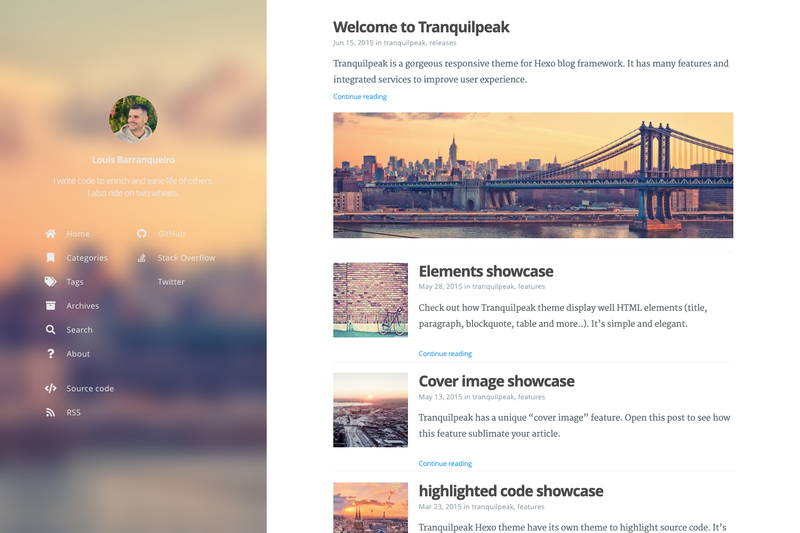
A gorgeous responsive theme for Hexo blog framework
nextjs-chakra-starter-blog is an open-source Next.js blog starter template that pairs the App Router with Chakra UI v3 and TypeScript 5 to deliver an MDX-powered blog with built-in PWA, SEO, i18n, and one-click deployment buttons for Vercel, Netlify, and Railway.
nextjs-chakra-starter-blog is a GitHub repository template that generates a complete blog application. It takes an empty repository (or a copy of the template) and outputs a live blog with MDX post support, Open Graph cover generation, author metadata, and a responsive Chakra UI layout. The project runs on Next.js 16 using the App Router, is written in TypeScript 5, and is maintained by kingchun1991, building on the agustinusnathaniel/nextarter-chakra starter. Deployment is handled through one-click buttons that connect directly to Vercel, Netlify, and Railway, or you can open the project instantly in StackBlitz.
nextjs-chakra-starter-blog suits developers who want a complete, deployment-ready blog without wiring up infrastructure. Content creators and indie hackers can clone the repo, run pnpm install and pnpm dev, and start writing MDX posts that automatically get Open Graph covers and reading-time estimates. Teams building a company blog with internationalization needs can enable next-intl and manage multiple locales. Developers learning Next.js App Router can also use the split-layer structure as a reference for separating routing, logic, and UI.
Getting started follows a straightforward flow: click "Use this template" or clone the repository, then run pnpm install to install dependencies. Start development with pnpm dev, write posts as MDX, and check quality with pnpm test:e2e for Playwright tests or pnpm biome:check for linting. Production builds are produced with pnpm build, and deployment can happen through the integrated platform buttons.
You need Node.js version 24 or newer and pnpm installed globally. If pnpm is missing, you can install it with npm install -g pnpm.
Yes, it is a public GitHub repository you can clone or use as a template without cost, though you will need accounts for the deployment platforms you choose.
Set the environment variable NEXT_PUBLIC_ENABLE_I18N=true. The next-intl integration is included but disabled by default, so no extra dependencies are required to turn it on.
Yes, next-pwa is configured and enabled by default. To disable it, edit next.config.js and turn off the PWA plugin.
Biome handles linting and formatting, Playwright provides end-to-end testing, and Renovate automatically opens dependency update PRs. Git hooks are configured for pre-commit, pre-push, commit-msg, and prepare-commit-msg.
If this template has too many blog-specific features, nextarter-chakra is the upstream starter it is based on, offering the same Next.js and Chakra UI foundation without the MDX blog engine and post-specific tooling.