Newsletter
Join the Community
Subscribe to our newsletter for the latest news and updates

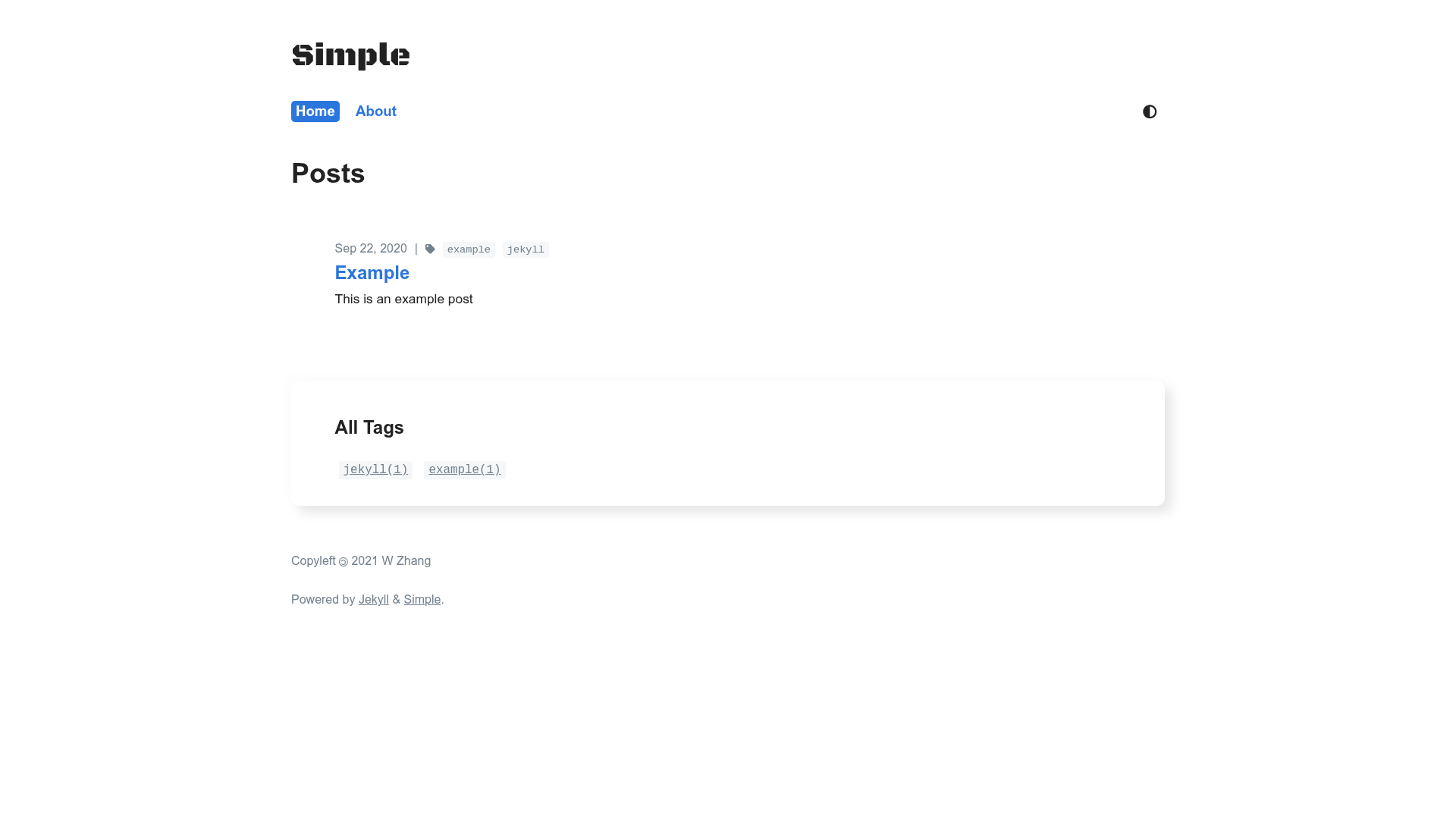
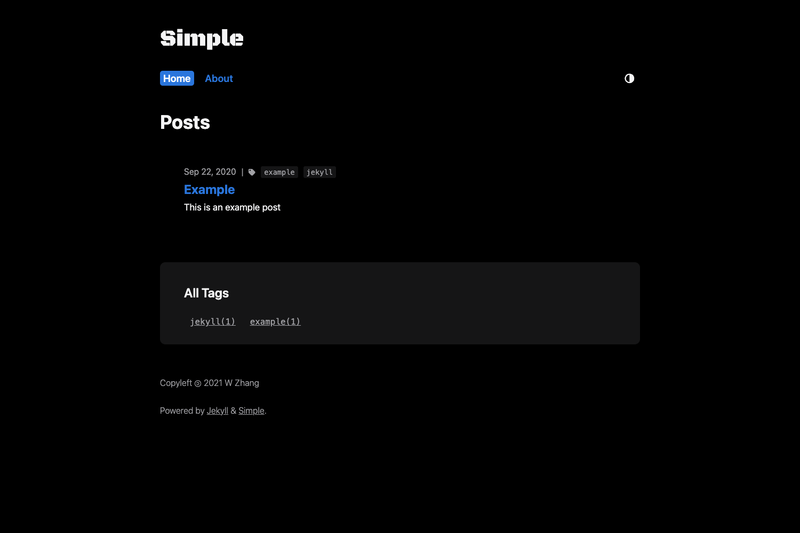
A minimal Jekyll theme for blogs with dark mode, tag system, and speed optimizations.
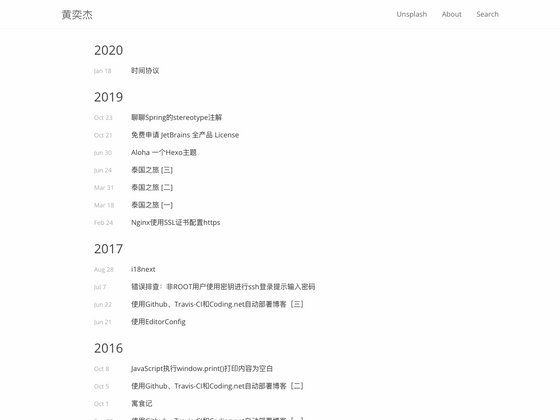
A Hexo blog theme built with Semantic UI, offering clean styling and bilingual documentation.
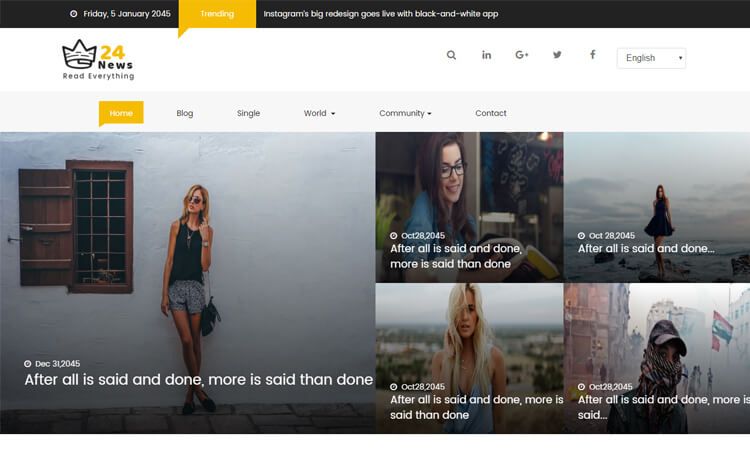
Free Bootstrap 4 HTML5 news website template with responsive layout, video carousel, contact form, and multi-page design.

A podcast-oriented Hugo theme for building podcast sites with episode, guest, host, and sponsor support.
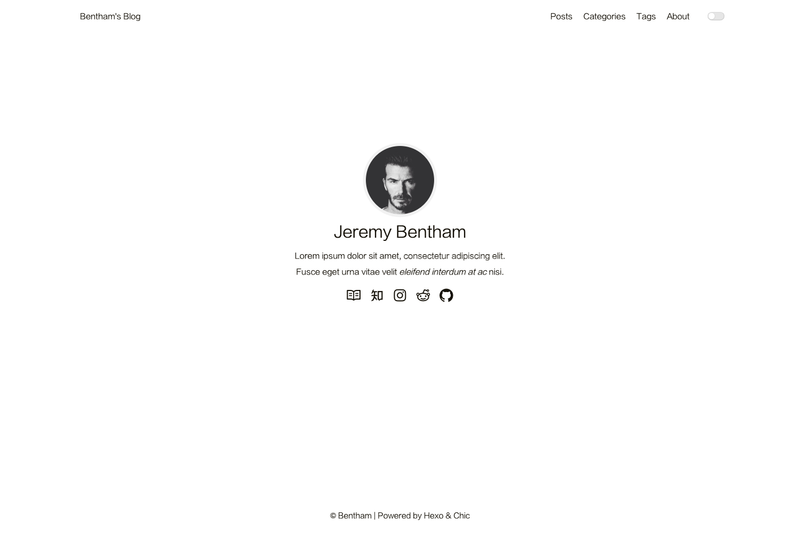
A responsive, elegant Hexo blog theme with light/dark mode, MathJax support, and customizable profile.
Simple Jekyll Theme is a minimal Jekyll theme for personal blogs, distributed as an open-source Ruby gem and designed for GitHub Pages compatibility.
Simple Jekyll Theme is a minimal Jekyll theme built for personal blogs by Weixuan Zhang, originally created for his own site at https://weixuanz.github.io. It accepts standard Jekyll content—Markdown posts in the _posts folder, _config.yml settings, and front matter metadata—and outputs a static blog with a homepage post list, individual post pages, tag pages, and a dynamic table of contents. The theme runs on Jekyll and can be installed as a Ruby gem or used directly on GitHub Pages via the remote_theme mechanism.
tag_generator.py automates tag page creation.toc: true is set in front matter.jekyll-seo-tag, jekyll-sitemap, and jekyll-feed plugins._config.yml.remote_theme: weixuanz/simple-jekyll-theme._sass partials and _includes are laid out for easy overriding.google-tag-manager-id in _config.yml, and optionally use a Font Awesome Kit for more icons._includes, _sass, or assets directories, following Jekyll's standard theme-override mechanism.Installation is straightforward: add gem 'simple-jekyll-theme' to your Gemfile and run bundle (or use remote_theme on GitHub Pages). Set theme: simple-jekyll-theme in _config.yml, then place posts in _posts with names like yyyy-mm-dd-name.md. For tags, run the Python script or create tag/ pages manually; the theme also supports custom .hint and .danger blockquotes and lazy-loaded images via data-src.
remote_theme approach requires copying the entire default _config.yml because key-value pairs only are supported; the commenting system is not included (the author recommends using the separate utterances repo); tag generation needs a Python utility that must be downloaded separately.Simple Jekyll Theme is free to use and modify under the MIT License.
Minimal Mistakes is another popular Jekyll theme with a wider selection of layout options.
Yes, the theme is released under the MIT License, so it is completely free to use, modify, and redistribute. Attribution is requested if you overwrite the default footer.
Yes. You can fork the repository and rename it to your GitHub Pages username, or use remote_theme: weixuanz/simple-jekyll-theme with the whitelisted jekyll-remote-theme plugin. Remember to include the default _config.yml settings.
Add a tag or tags field in the front matter of a post. The theme provides a Python script scripts/tag_generator.py to generate tag pages automatically; alternatively, create .md files under tag/ with a tagpage layout.
No, comments are intentionally not included. The author maintains a separate project, utterances, that can be integrated by editing the _includes/comment.html placeholder.