Newsletter
Join the Community
Subscribe to our newsletter for the latest news and updates

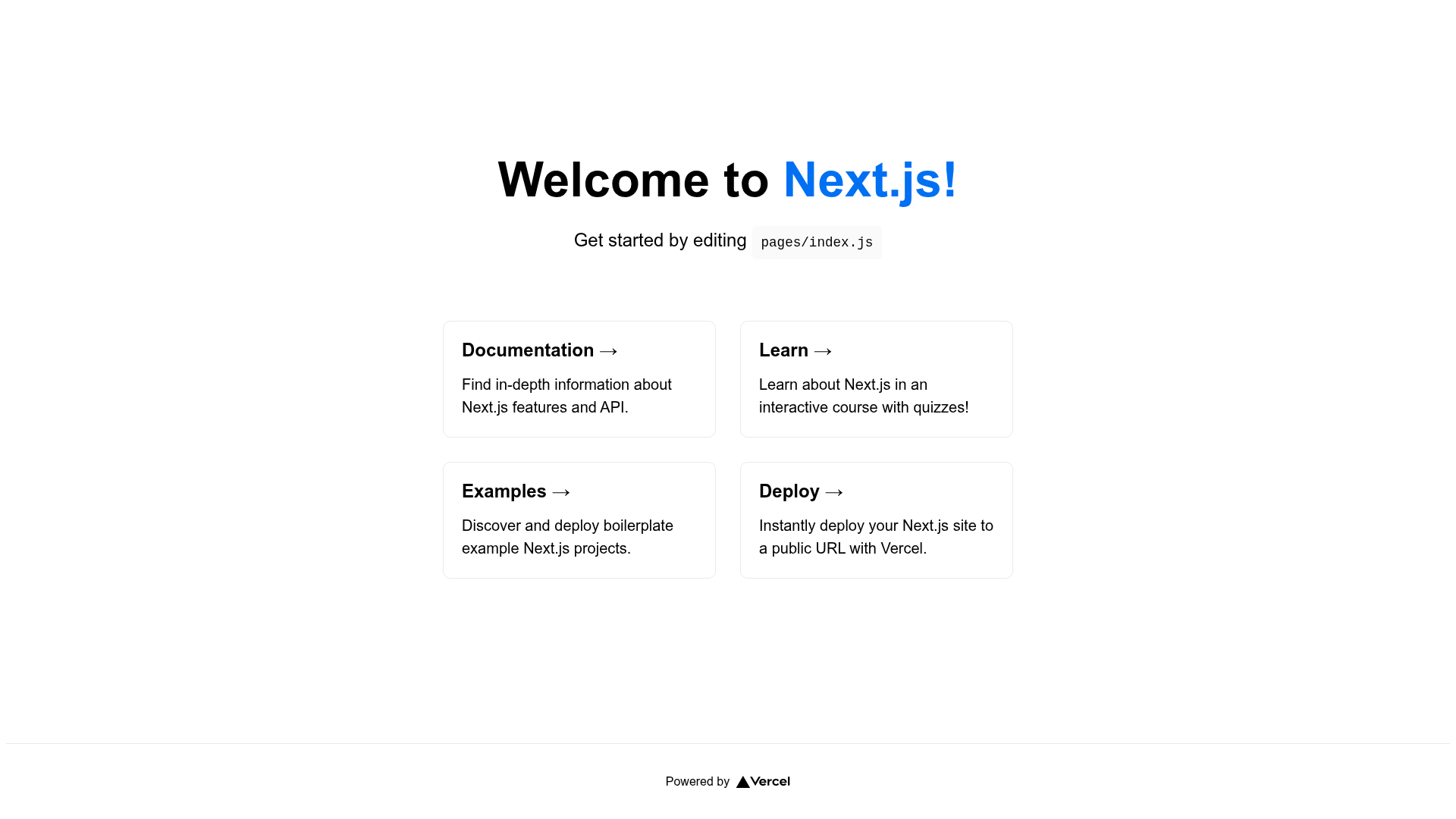
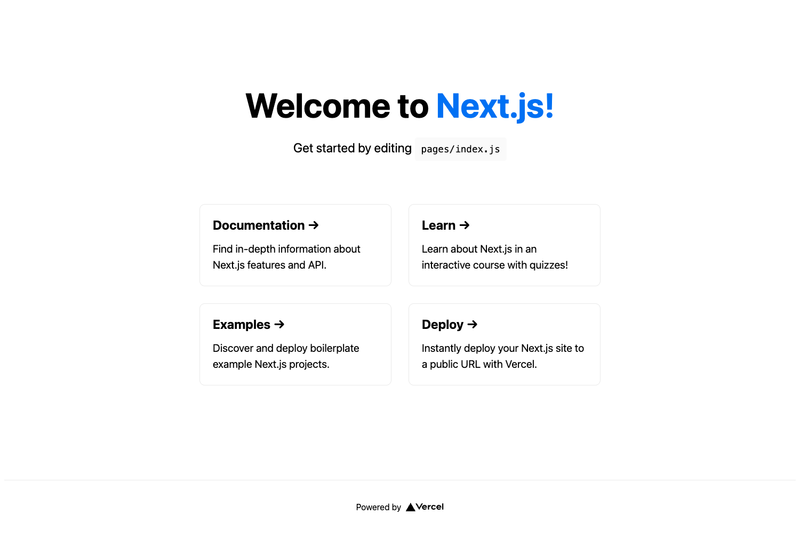
A Next.js starter template intended for deploying to GitHub Pages, created with create-next-app.

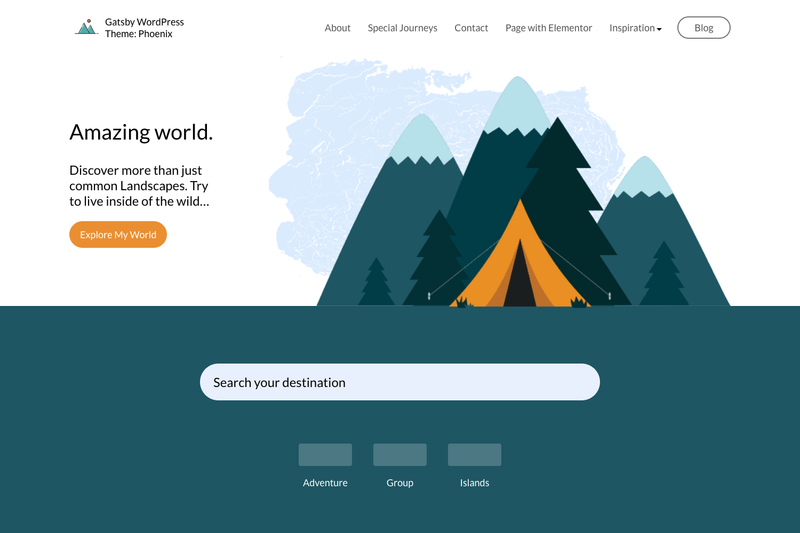
Open-source Gatsby v4 starter pairing Decap CMS with Netlify for a Git-based business site with blog.
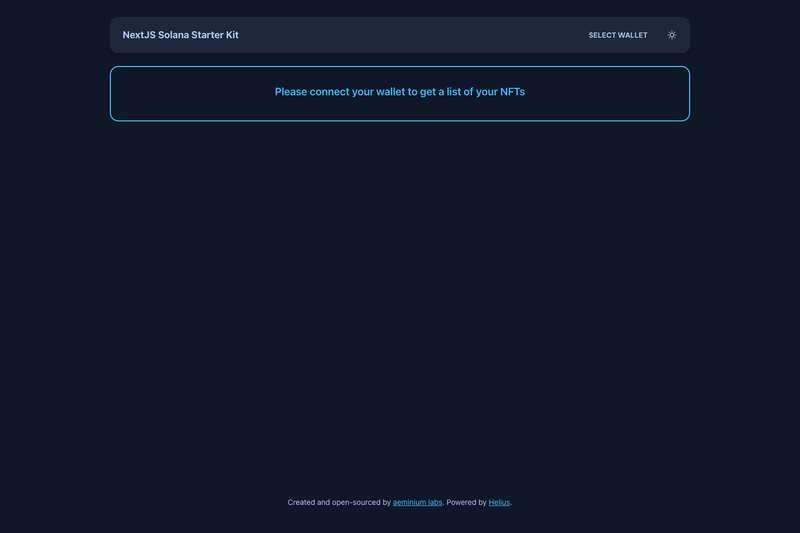
Build your own Solana dApp with NextJS and TypeScript
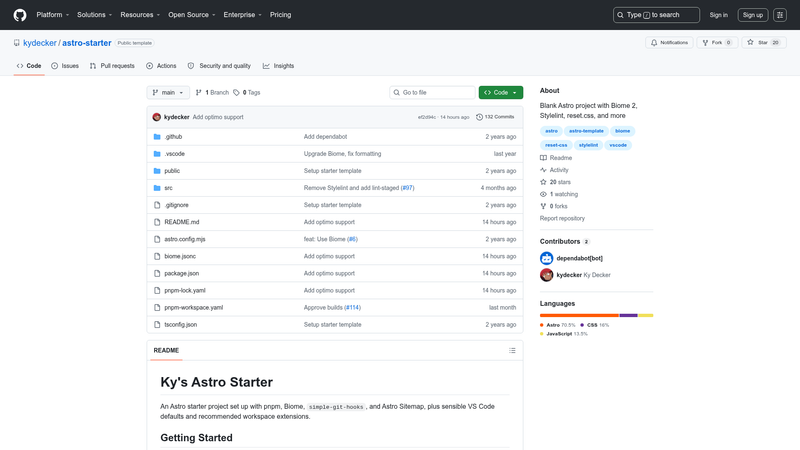
Blank Astro project with Biome, reset.css, pnpm, and pre-commit checks.
A minimal Angular app template that deploys to Vercel with zero configuration.
Next.js GitHub Pages Template is a minimal Next.js application bootstrapped with create-next-app, designed for deploying React-based sites to GitHub Pages. It uses the standard Next.js pages router and includes a working API route example, making it a compact starting point for projects that need both pages and serverless endpoints without a custom server.
Next.js GitHub Pages Template is a starter project built on the Next.js React framework. Its core function is to provide a ready-to-run application skeleton that you can edit and then publish to GitHub Pages, as stated in the repository description. The input is the source code you modify, and the output is a static Next.js site that GitHub Pages can host, along with a local development server for previewing changes. The template is published as a public GitHub repository with a star count of 1 at the time of this analysis, and it is not tied to any commercial vendor.
create-next-app, giving you the default Next.js file structure with pages/index.js as the homepage.npm run dev (or yarn dev) starts a local server at http://localhost:3000; the page updates automatically as you edit files.pages/api are treated as API routes and mapped to the /api/* URL path; the starter includes pages/api/hello.js, which you can access at http://localhost:3000/api/hello.pages/index.js to build a homepage, and deploy the output to GitHub Pages for a zero-cost online presence.pages/api to test serverless endpoints locally; the included hello.js demonstrates the pattern.The template follows the standard create-next-app workflow. After installing dependencies, you run npm run dev to start the development server at http://localhost:3000. The server watches the pages directory, so changes to pages/index.js are reflected immediately. API routes under pages/api are served at the corresponding /api URLs, for example pages/api/hello.js resolves to http://localhost:3000/api/hello. For production deployment, the README points to the Vercel platform, while the template's stated goal implies using GitHub Pages with additional static export configuration.
Install the dependencies, then run npm run dev or yarn dev in the project directory. Open http://localhost:3000 in your browser to see the app, and any edits to files in the pages folder will trigger an automatic reload.
Yes. The pages/api directory is mapped to /api/*, and files there are treated as API routes. The template ships with pages/api/hello.js, which you can visit at http://localhost:3000/api/hello to see a sample JSON response.
The repository is public on GitHub, and the code is the standard MIT-licensed Next.js starter (implied by the create-next-app origin). There is no pricing mentioned anywhere in the README, so you can freely use, modify, and deploy it.
The repository description says it is a template for deploying Next.js to GitHub Pages. However, the README only includes Vercel deployment links. To use GitHub Pages you would generally need to enable Next.js static export (for example, with output: 'export') and adjust the base path, which is not covered in the README.
The README links to the official Next.js documentation at nextjs.org/docs, an interactive tutorial at nextjs.org/learn, and the Next.js GitHub repository for contributions and feedback.