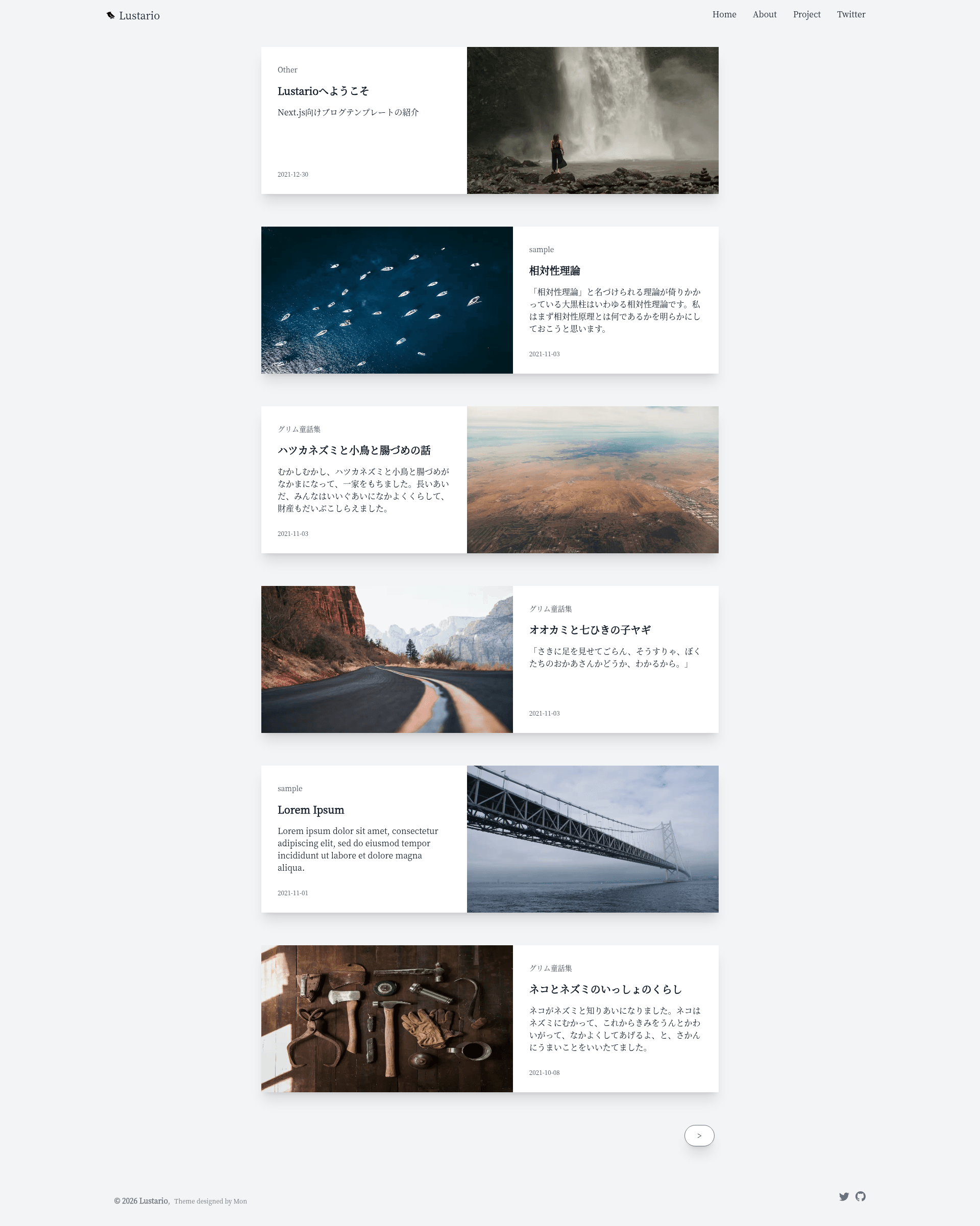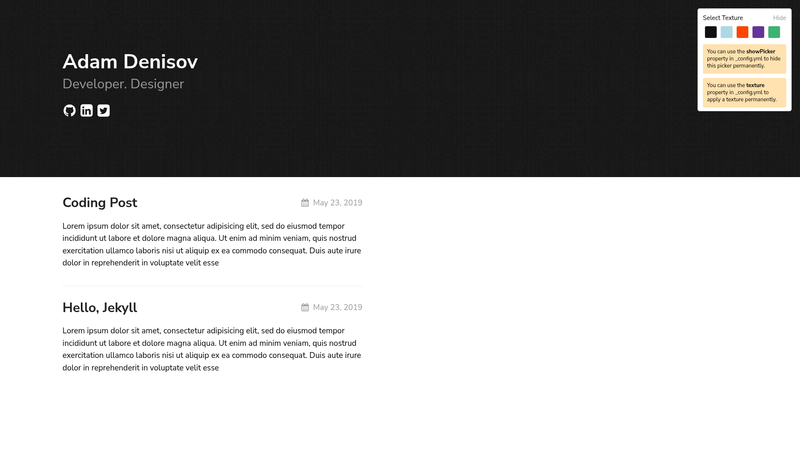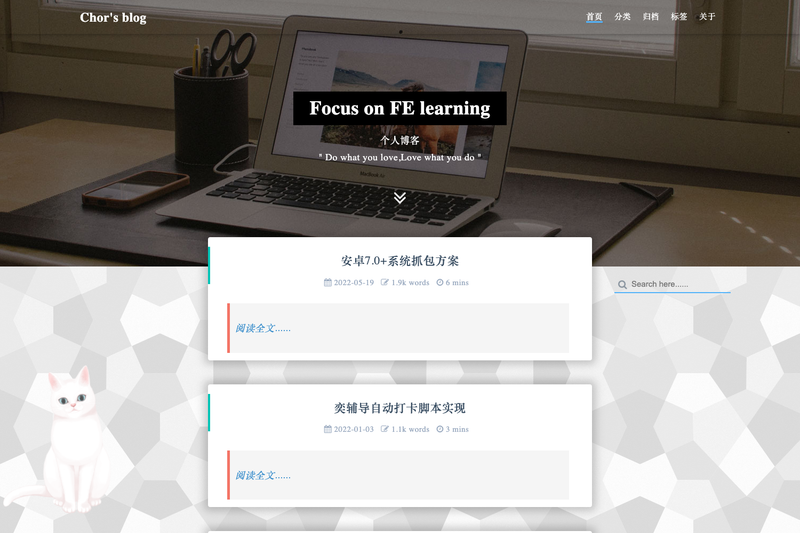
Next.js Lustario is a blog template for the Next.js React framework, written in TypeScript, that renders Markdown (GFM) posts into a responsive blog with categories, tags, SEO, sitemap, and social embeds.
What is Next.js Lustario?
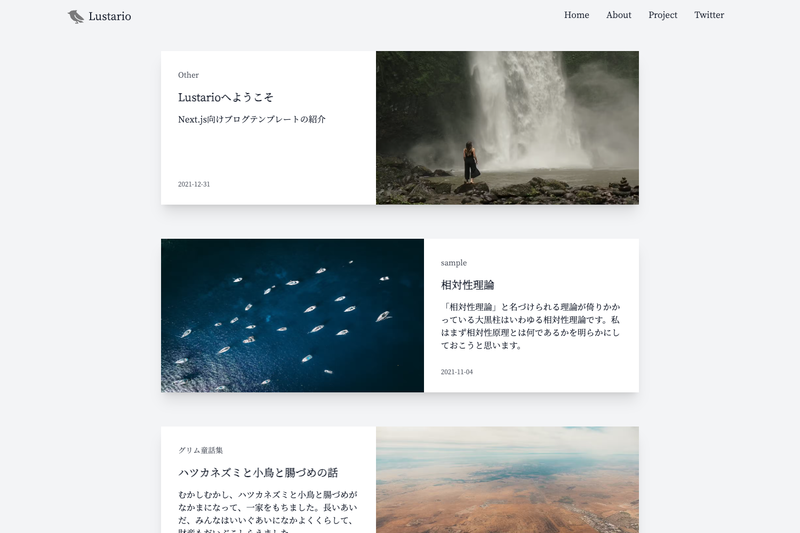
Next.js Lustario is a starter template that converts Markdown files formatted with GitHub-flavored Markdown into a complete blog website on Next.js. It outputs a responsive, static blog with automatically generated category and tag pages, includes SEO meta tags and a sitemap.xml for search engines, and supports embedding YouTube videos and Twitter posts directly into content. The repository is available on GitHub and a live demo is hosted on Vercel. The template is built entirely with TypeScript, so content schemas and components benefit from static type checking.
Key Features
- Markdown (GFM) — Write posts as Markdown files using GitHub-flavored Markdown, which adds tables, task lists, strikethrough, and fenced code blocks.
- Categories and tags — Organize posts into categories and tags; the template automatically creates and links pages for each taxonomy.
- Responsive design — The layout adapts across mobile, tablet, and desktop widths without extra configuration.
- TypeScript — The whole codebase is written in TypeScript, providing component-level type safety and better editor autocomplete.
- YouTube Embed — Insert YouTube videos into blog posts with a dedicated embed component that renders the video player inline.
- Twitter Embed — Embed tweets in Markdown content, letting you quote social posts directly in articles.
- SEO — Each post can carry meta tags and Open Graph data, helping search engines and social platforms display proper titles and descriptions.
- Sitemap — The template generates a sitemap automatically, improving crawlability for sites deployed anywhere that runs Next.js.
Who is it for?
Next.js Lustario is for developers and writers who want a TypeScript-built blog on Next.js without creating the boilerplate from scratch. It suits anyone who prefers writing in Markdown and needs standard blog features like categories, tags, search-engine optimization, and multimedia embeds. The demo shows a Vercel deployment, so it also fits users planning to host on that platform.
What can you do with Next.js Lustario?
- Personal blogs: Write posts in Markdown and publish them as a clean, responsive site with minimal setup.
- Technical documentation: Use categories and tags to group tutorial and reference articles, and embed videos or tweets for examples.
- Media-rich storytelling: Combine YouTube and Twitter embeds with GFM formatting to produce articles that mix written and embedded content.
FAQ
Does Next.js Lustario support Markdown?
Yes, the template accepts Markdown files in GitHub-flavored Markdown (GFM), so you can use tables, task lists, strikethrough, and fenced code blocks in your posts.
Can I embed YouTube videos and tweets?
Yes, the template provides built-in embedding for both YouTube videos and Twitter posts, so you can include multimedia content directly in your Markdown articles.
Does the template include SEO and a sitemap?
Yes, it includes SEO meta tags and an automatically generated sitemap.xml, which helps search engines discover and index your blog posts.
Where can I find the demo?
The README links to a live demo hosted on Vercel, showing the template in action with sample content and images.