Newsletter
Join the Community
Subscribe to our newsletter for the latest news and updates

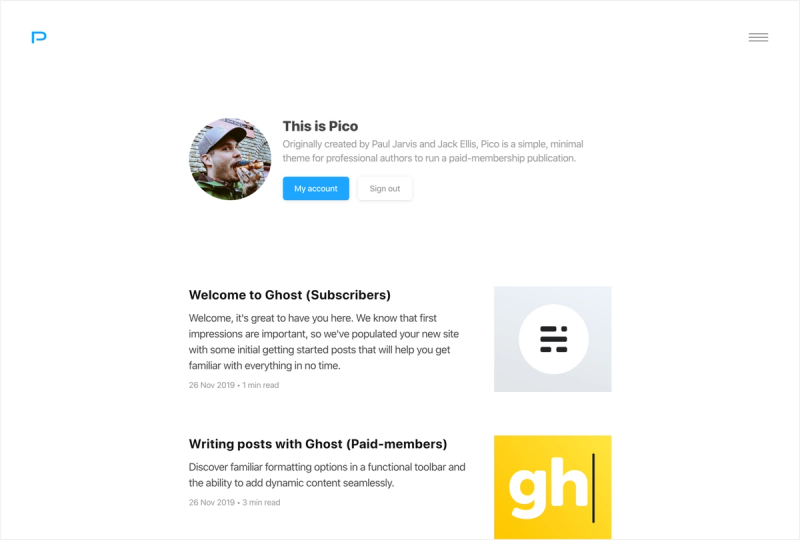
Free, SEO-friendly Next.js 14 blog template with MDX, dark mode, and one-click deployment to Vercel/Netlify.
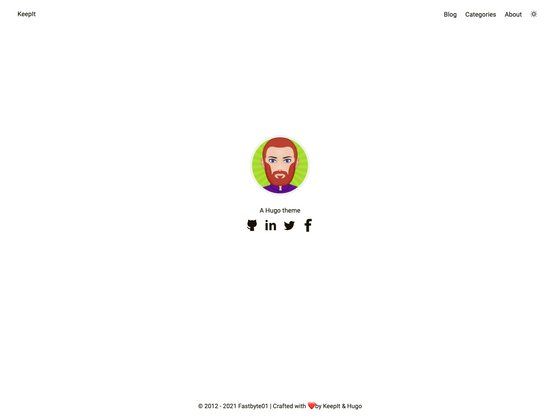
Clean, elegant, and advanced Hugo blog theme featuring dark mode, multilingual support, math/diagram shortcodes, and seven comment systems.
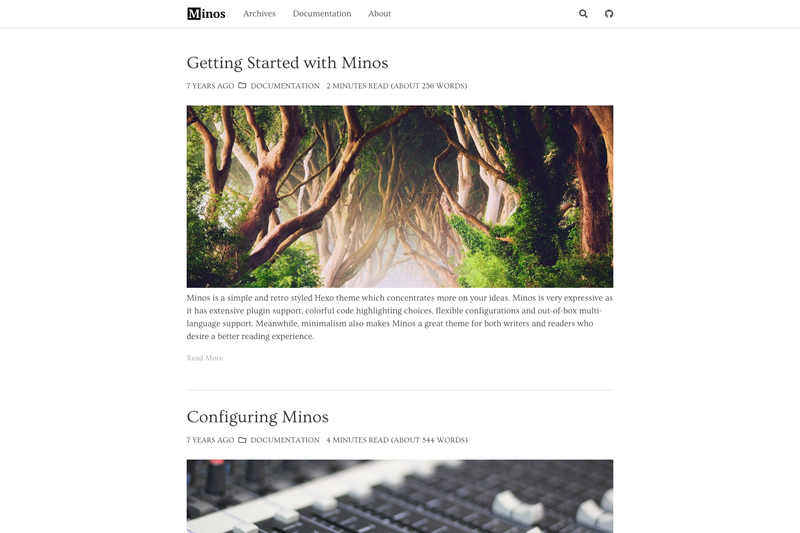
A simple and retro styled Hexo theme, concentrating more on your ideas.
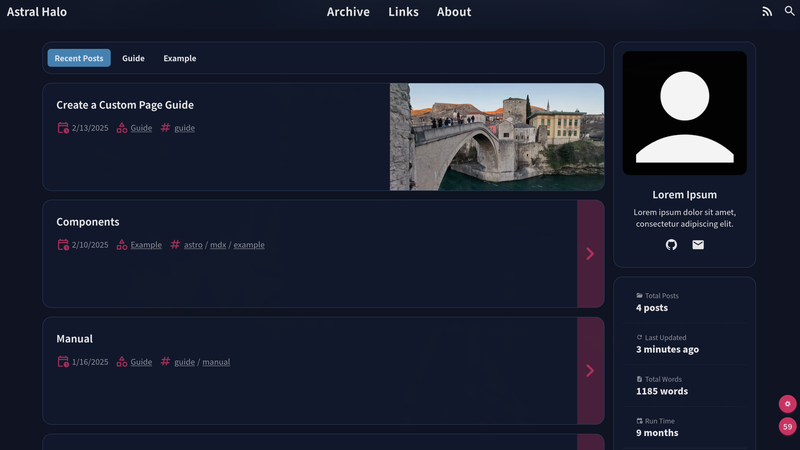
AstralHalo is a static blog template built with Astro, TypeScript, and Tailwind CSS, available on Codeberg.
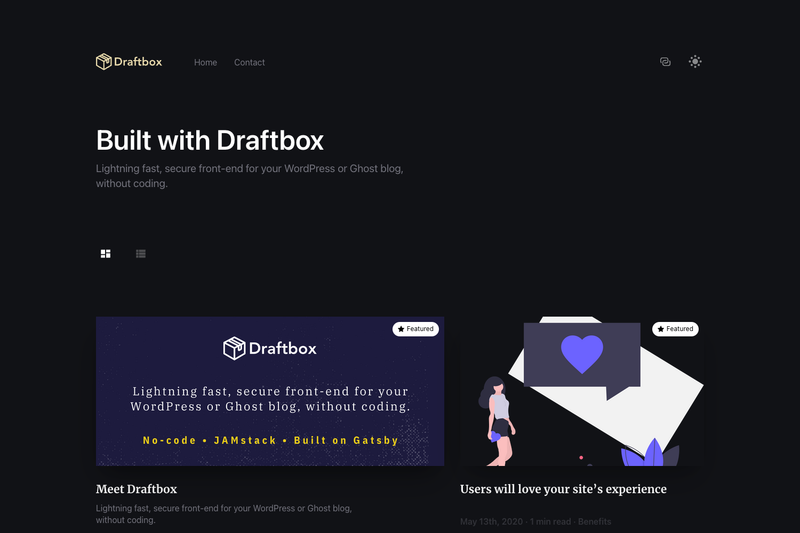
A feature-rich Gatsby theme plugin for creating blogs from a headless WordPress CMS.
Next.js Tailwind Blog Template is a free, open-source blog starter built on Next.js 14, TypeScript, and Tailwind CSS 3.0 that turns Markdown and MDX files into a production-ready blog with SEO, theming, and one-click deployment.
Next.js Tailwind Blog Template is a production-ready blog starter created by GeeksKai and published on GitHub under the MIT License. It accepts Markdown/MDX files as content input, uses Contentlayer for content management, and outputs a fast, SEO-optimized blog built with React Server Components. The template ships with Next.js 14, Next/Font for optimized typography, Next/Image for image handling, and Tailwind CSS 3.0 for styling.
EXPORT=1 UNOPTIMIZED=1 yarn build.yarn to install dependencies, then yarn dev to start writing content in Markdown or MDX with frontmatter for title, date, tags, draft, and summary.The template is installed by cloning the repository or running npx degit 'geekskai/blog'. After installing dependencies with yarn, start the development server with yarn dev. Content is added as Markdown/MDX files with YAML frontmatter in the posts directory. Deployment is handled by one-click buttons for Vercel or Netlify, or the static export command with environment variables set for optional services.
$env:PWD = $(Get-Location).Path in PowerShell before each dev server start; optional services like Giscus, Mailchimp, or Algolia require external API keys and environment configuration.The template is free and open source under the MIT License, with no paid tiers. It was built by GeeksKai and can be used for personal and commercial projects without a license fee.
Yes, the template is open source under the MIT License and completely free to use. You can clone it, modify it, and deploy it for personal or commercial projects without paying anything.
It includes MDX support with syntax highlighting and KaTeX math, three blog layouts and two listing layouts, dark/light mode, multiple comment systems (Giscus, Utterances, Disqus), analytics options, newsletter integrations, command palette search, and multiple authors support.
You can use the one-click deploy buttons for Vercel or Netlify, or run EXPORT=1 UNOPTIMIZED=1 yarn build to generate a static site. For Vercel, you may need to configure environment variables for services like comments, analytics, or newsletters.
Yes, but the README notes that Windows users need to run $env:PWD = $(Get-Location).Path in PowerShell before each yarn dev command to ensure the dev server starts correctly.
Yes, comments are supported through Giscus, Utterances, or Disqus, and newsletters can be integrated with Mailchimp, ConvertKit, Buttondown, Klaviyo, Revue, EmailOctopus, or Beehiiv. Each service requires its own API keys set in environment variables.