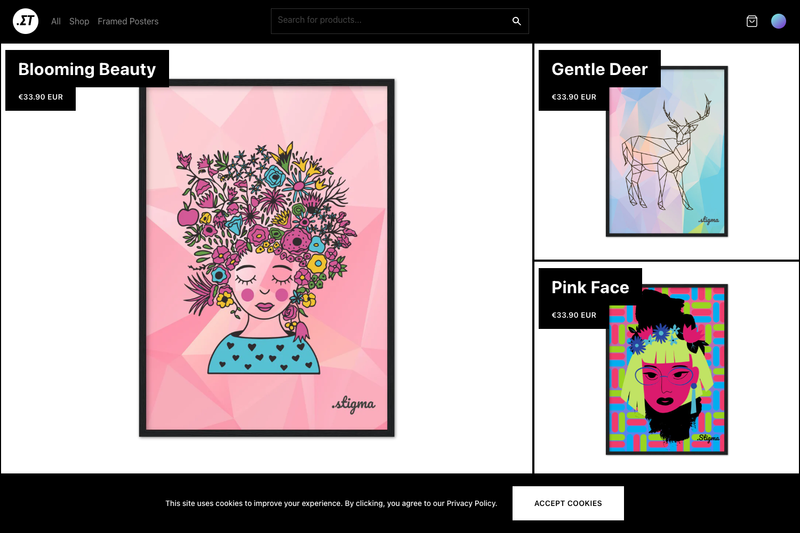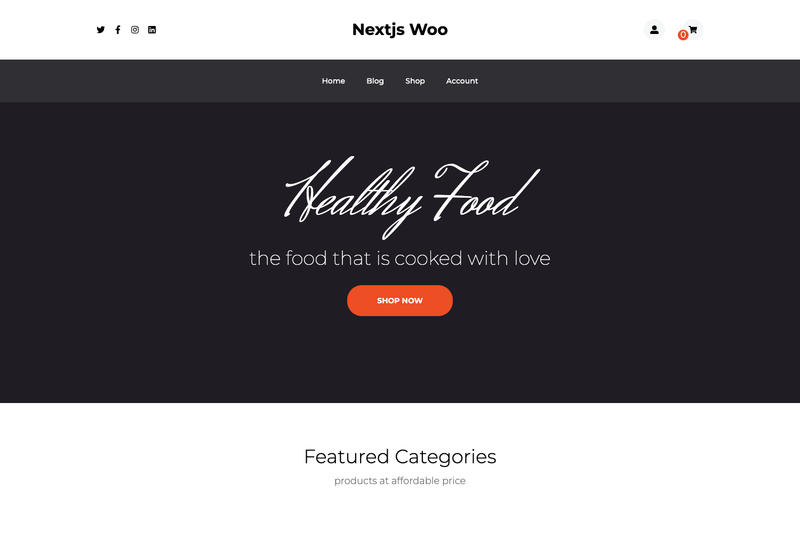
Nextjs WooCommerce Example is a Next.js starter project that demonstrates building an ecommerce storefront on top of a WordPress site using the WooCommerce REST API. Bootstrapped with create-next-app, it provides a standard React and Next.js setup with pages routing and API routes, while the repository's clear purpose is to show how to fetch WooCommerce product data into a headless frontend.
What is Nextjs WooCommerce Example?
Nextjs WooCommerce Example is a minimal Next.js application, bootstrapped with create-next-app, that uses the pages directory structure and ships a sample API route. The project's stated goal, per its repository description, is to serve as an example of using the WooCommerce REST API from a Next.js frontend, meaning it connects a React-based storefront to a WooCommerce plugin backend on WordPress. It runs on Next.js, which provides server-side rendering, static generation, and API routes out of the box, and it is developed as an open-source example with two GitHub stars at the time of review.
Key Features
- Create Next App foundation — Uses the standard create-next-app structure with
pages/index.jsas the homepage andpages/api/hello.jsas a sample API route; thepages/apidirectory maps to/api/*for building backend functions. - WooCommerce REST API integration — Built as an example specifically for fetching products, orders, and other data from a WooCommerce store using the REST API, which requires a WordPress site with the WooCommerce plugin and API credentials.
- API routes — Includes a working sample endpoint at
/api/hellothat can be edited inpages/api/hello.js, demonstrating how Next.js handles server-side code without a separate server. - Hot-reload development — Running
npm run devstarts a development server at localhost:3000, and editingpages/index.jsautomatically updates the page in the browser. - Vercel deployment — The readme directs users to deploy via the Vercel Platform, which is the recommended hosting for Next.js apps and supports the framework's features natively.
- React and WordPress combo — Combines React components on the frontend with WordPress/WooCommerce on the backend, a common headless commerce architecture.
Who is it for?
- Headless ecommerce developers — Use this as a starting point to build a custom storefront that calls WooCommerce REST API endpoints for products and cart data.
- Next.js learners — See a concrete example of a project structure with API routes and how to run a dev server, then extend it with WooCommerce API calls.
- WordPress developers — Explore how to decouple a WordPress backend from the frontend while keeping WooCommerce as the order and product management system.
What can you do with it?
- Set up a headless storefront quickly: Clone the repo, install dependencies with
npm install, runnpm run dev, and use the provided structure to start fetching products from your WooCommerce store. - Prototype WooCommerce API connectivity: Use the sample API route to test that your WordPress site's REST API is reachable before building out full product listing and checkout pages.
- Learn Next.js API routes: The
pages/api/hello.jsexample shows how serverless functions work in Next.js, which you can expand to proxy WooCommerce requests and keep API keys secure.
How does it work?
The project runs as a standard Next.js app: npm run dev starts the development server at port 3000, where the homepage loads from pages/index.js. The pages/api folder creates serverless API endpoints, so any file added there—like the existing hello.js—becomes accessible at /api/ plus the filename. To use WooCommerce data, you would replace the sample endpoint with calls to the WooCommerce REST API (for example, /wp-json/wc/v3/products) using your consumer key and secret, then render the returned JSON in React components.
FAQ
Is this template free?
Yes, the repository is publicly available as a GitHub project, and the readme shows it is open source. There is no mention of pricing or licensing restrictions beyond the standard open-source model.
What do I need before using it?
You need Node.js to run the Next.js dev server, and if you want the WooCommerce example to work, a WordPress site with the WooCommerce plugin installed and REST API enabled, along with API keys.
Does it include a checkout flow?
No, the readme does not describe any built-in checkout or cart functionality. It appears to be a basic example focused on REST API integration, so you would need to add checkout features yourself.
How do I deploy it?
The readme recommends deploying via the Vercel Platform, which is built by the creators of Next.js and integrates seamlessly with the framework.