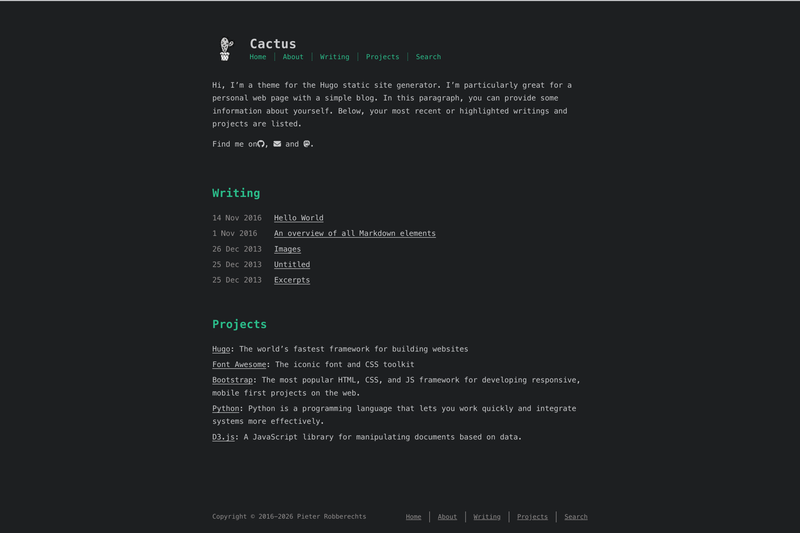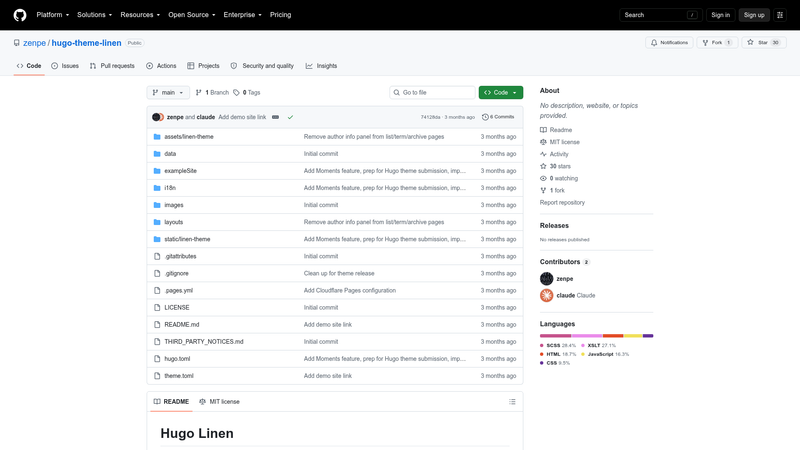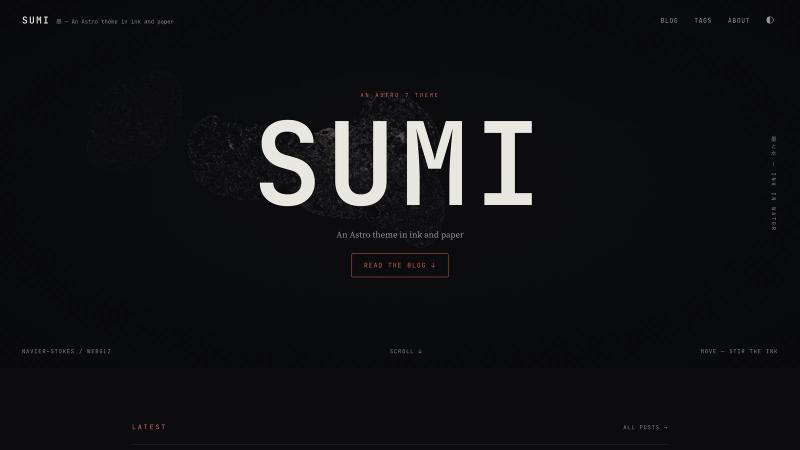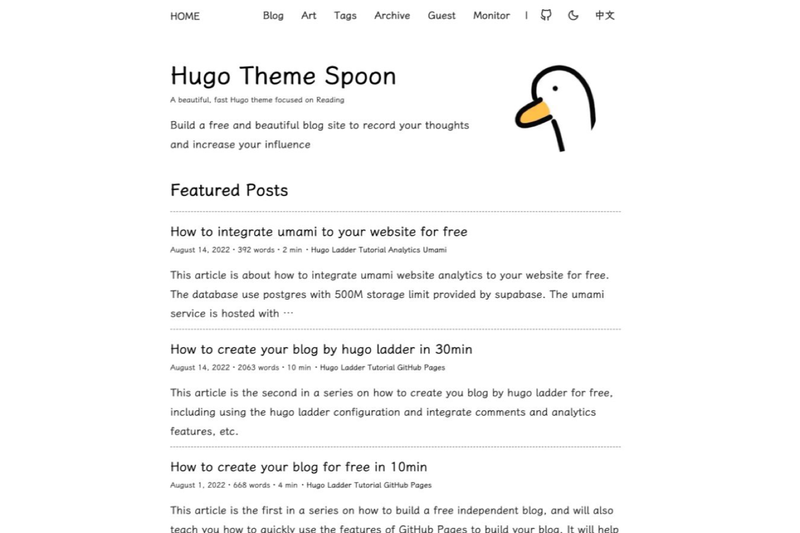
No Fate is a Hugo theme for publications that pair an editorial voice with structured records, archives, projects, and long-form writing, built as a derivative rewrite of Hugo PaperMod.
What is No Fate?
No Fate is an open-source static-site theme that runs on Hugo 0.158.0 or later, standard or Extended. It takes Hugo content — typically leaf bundles containing an index.md plus images and source files — and renders it as a semantic HTML site with four page modes: editorial, poster, archive, and record. No Fate uses Hugo-native templates and asset pipelines, so it does not require Node.js, Tailwind, webpack, or any JavaScript framework for building.
What makes No Fate stand out?
- Four page modes —
editorialfor essays and histories,posterfor arguments and questions,archivefor image-led collections, andrecordfor formal tables and bibliographies; mode selection resolves per page, then section, thenparams.noFate.defaultMode. - Two presentation styles — the default
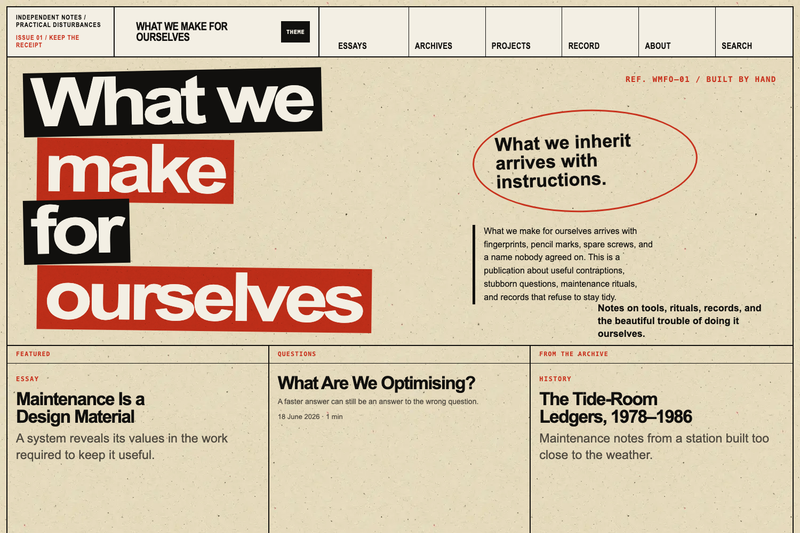
cleanstyle is quiet and typographically direct; the alternatewildstyle adds dense editorial grids, signal-colour blocks, oversized display type, and a worn print surface. Both layers share identical content structure and accessibility behaviour. - Build-time content validation — optional validation checks page modes, hero metadata, hero alternative text, bundle structure, and proposition references, causing production builds to fail when explicitly selected homepage content is missing.
- Publication-oriented homepage — a modular homepage with
opening,featured_argument,questions,featured_archive,selected_writing,visual_interruption,current_work, andformal_recordmodules replaces the conventional blog listing. - Structured records — data-driven pages for publications, talks, exhibitions, releases, and datasets support chronological indexes, year/type/topic filters, creator highlighting, source and export links, and machine-readable entries without JavaScript.
- Downstream extension hooks —
hooks/head-start.html,hooks/head-end.html, andhooks/body-end.htmlare stable partials to override from the downstream site;assets/css/extended/loads after the theme styles. - Testable quality gates — the repo includes an automated suite with rendered-link checks, HTML validation, axe, Lighthouse thresholds, visual regression on Chromium, and installation-path tests for both module and submodule setups.
Who should use No Fate?
Independent journals and small editorial organisations can use No Fate to publish essays, questions, and archival records under a single content model. Researchers and curators building image-led histories benefit from the archive mode and the record mode for bibliographies and formal indexes. Writers and designers who want a portfolio with long-form notes and project archives get a static site without maintaining a JavaScript toolchain.
What can you do with No Fate?
- Editorial magazines — publish feature essays in editorial mode, short declarative arguments in poster mode, and an issue index in record mode, with optional section RSS and search.
- Project or research archives — store each item as a leaf bundle with multiple images and source PDFs, set
visual.mode: archiveandvisual.hero_alt, and let the theme generate responsive images via the Hugo image pipeline. - Personal publications with character — switch to the wild style and configure a masthead label and issue string under
params.noFate.wildfor a print-like identity. - Rigorous site migrations — follow the included migration guide to map existing content to page modes, restructure into leaf bundles, and manage staged cut-over and rollback.
How does No Fate installation work?
The repository supports two install paths. With Hugo Modules, a downstream site adds github.com/OliverObst/no-fate to its import graph and pins a semantic version tag; before the first release, evaluators can pin an exact commit SHA. Alternatively, a Git submodule can be added at themes/no-fate and checked out to a release tag. The README recommends pinning a tag and overriding templates rather than editing the theme files.
Pricing
No Fate is free to use and is distributed under the MIT license. Upstream PaperMod copyright notices remain in the LICENSE file, and UPSTREAM.md records the exact source revision and update policy.
FAQ
Is No Fate free?
Yes, No Fate is distributed under the MIT license, so it is free to use and modify. Upstream PaperMod copyright notices remain in the LICENSE file, and UPSTREAM.md records the exact source revision.
What Hugo version do I need?
No Fate requires Hugo 0.158.0 or later; both standard and Extended versions are supported. The CI build matrix tests standard Hugo at that minimum plus the current supported release.
Does No Fate require Node.js or Tailwind?
No. Building a site with No Fate uses only Hugo-native templates and asset pipelines. Node.js and Playwright are needed only if you run the repository's optional automated quality-testing suite.