Newsletter
Join the Community
Subscribe to our newsletter for the latest news and updates

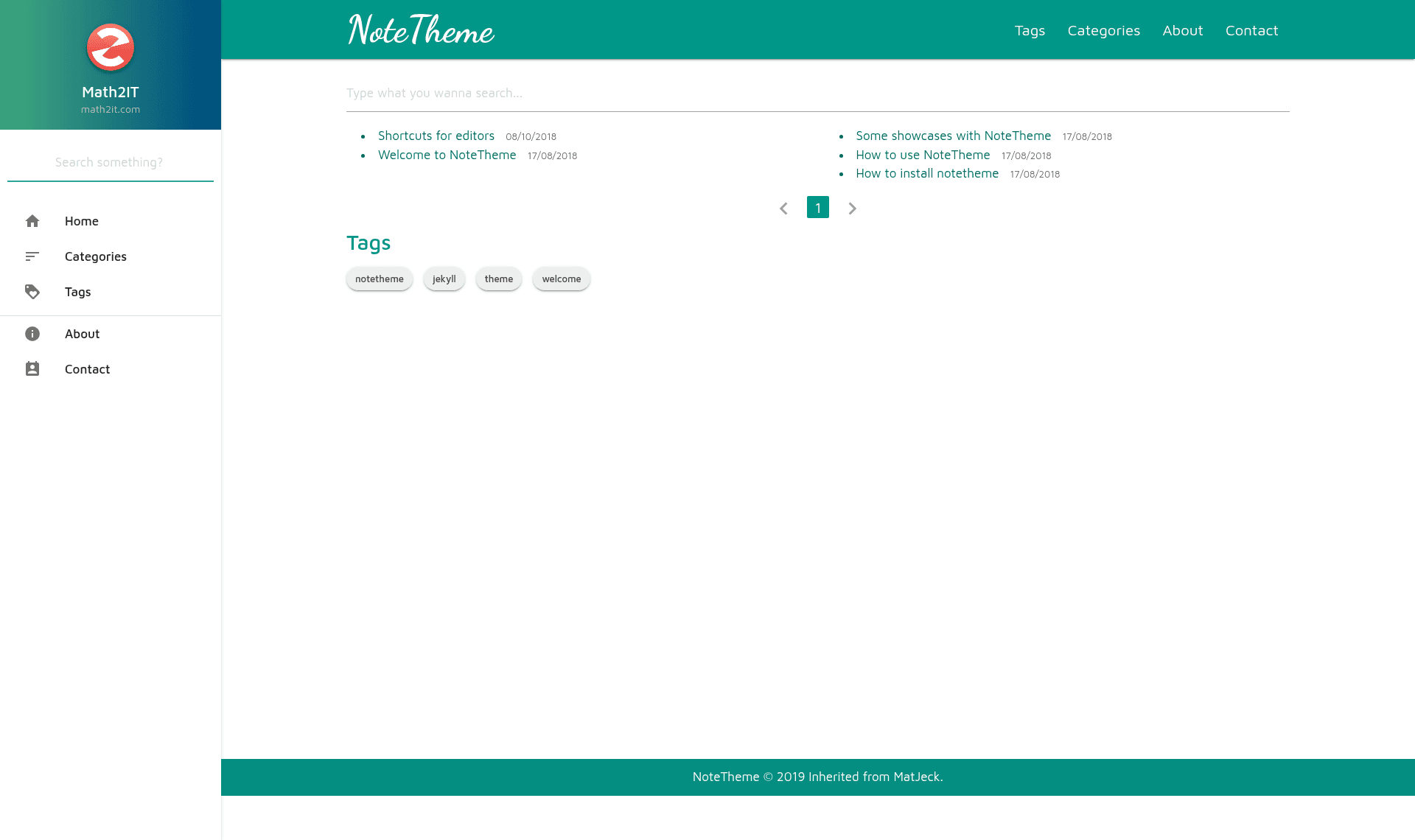
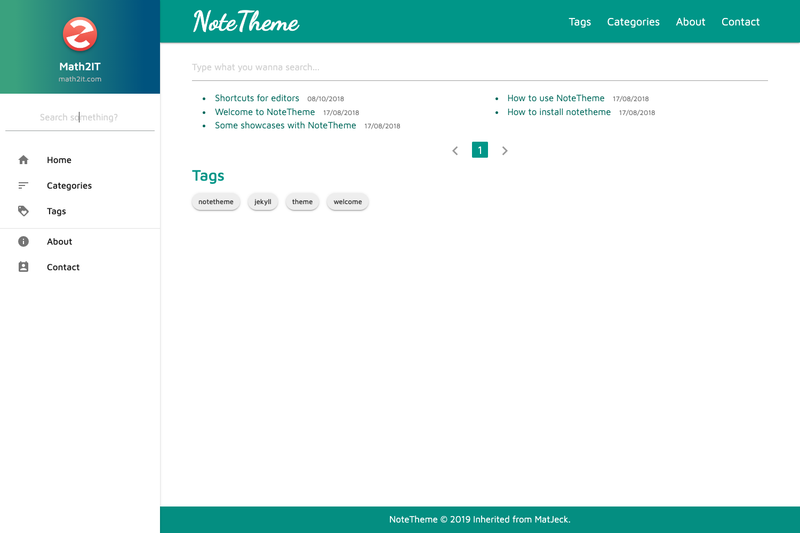
A Jekyll theme for taking notes with math and code support, featuring MathJax, DataCamp Light, Disqus, and search.
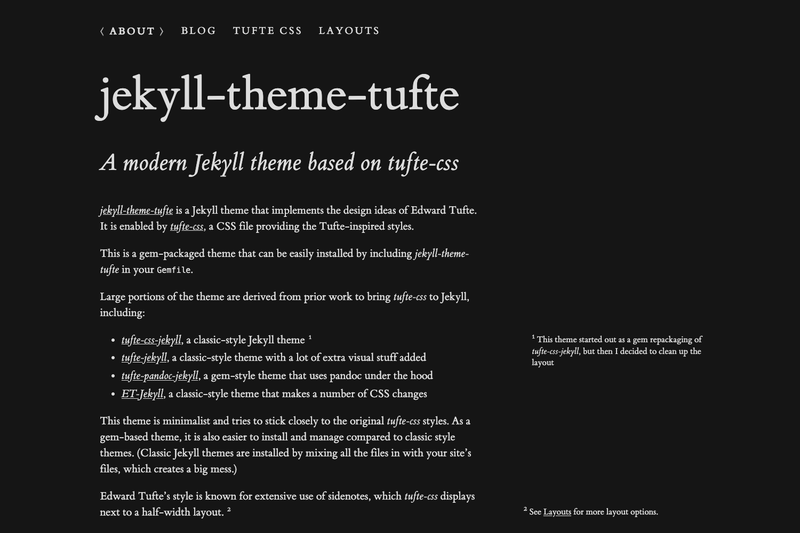
A minimalist Jekyll theme inspired by Edward Tufte's design, based on tufte-css, with margin notes and dark mode.

Parsa is a free Jekyll blog theme from Themefisher, ideal for personal blogs and portfolio websites, with YAML-based customization.
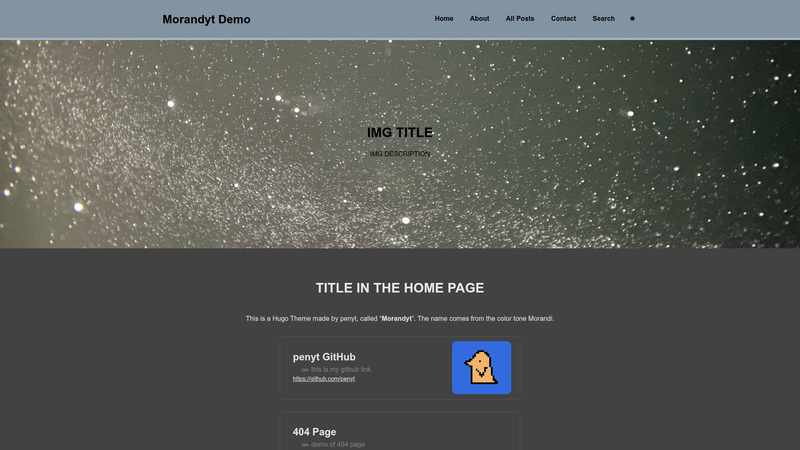
Morandyt is a minimal Hugo theme with soft, muted Morandi color palettes, built for blogs and personal sites.
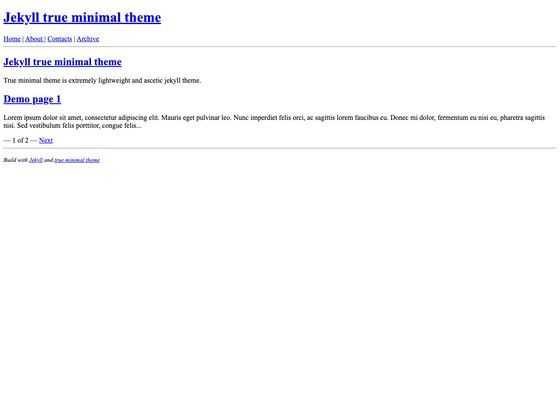
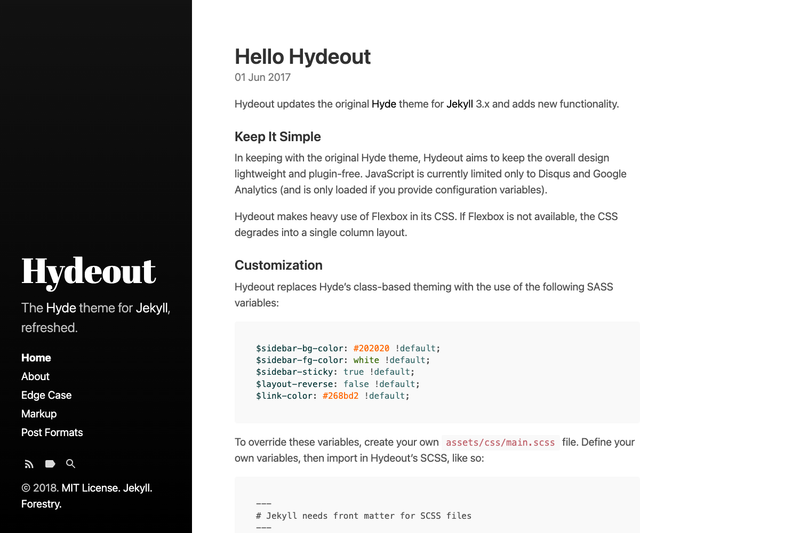
Minimal and ascetic Jekyll theme for content-focused static blogs and personal sites.
NoteTheme is a Jekyll theme built specifically for note-taking, forked from the Matjek theme and restructured around math and code content. It runs on any GitHub Pages Jekyll installation and produces a static site with automatic Table of Contents, search, Disqus comments, MathJax rendering, and embedded Python/R code environments via DataCamp Light.
NoteTheme is a Jekyll theme for creating note-focused static websites, designed for people who work heavily with mathematics and computer code. The theme takes Markdown posts as input and renders them into a static blog-style site with a fixed sidebar Table of Contents, search functionality, and category/tag organization. It is maintained by dinhanhthi (Dinh Anh Thi) and is available on GitHub under the gh-pages branch.
$E=mc^2$ and see them rendered as real equations on the page.NoteTheme is installed by downloading the theme's code from its GitHub repository, specifically the gh-pages branch which contains the full source files. The repository includes instructions that walk you from the beginning: creating a GitHub Pages site with Jekyll, applying NoteTheme, and then writing notes. The theme expects posts as Markdown files with YAML front matter; it handles the rest of the rendering automatically.
The theme is available for download from its public GitHub repository; no pricing is stated on the project page. It is an open-source Jekyll theme you can use on GitHub Pages at no hosting cost.
You need a Jekyll environment — GitHub Pages provides this automatically when you push the theme code to a repository. The installation guide covers the setup from scratch, including creating a GitHub account and enabling Pages.
Yes, MathJax is integrated, so you can write LaTeX math in your Markdown posts and it will be rendered as formatted equations in the browser.
Yes, via DataCamp Light. The theme supports embedding interactive Python or R code environments side-by-side, where visitors can run and edit the code snippets.