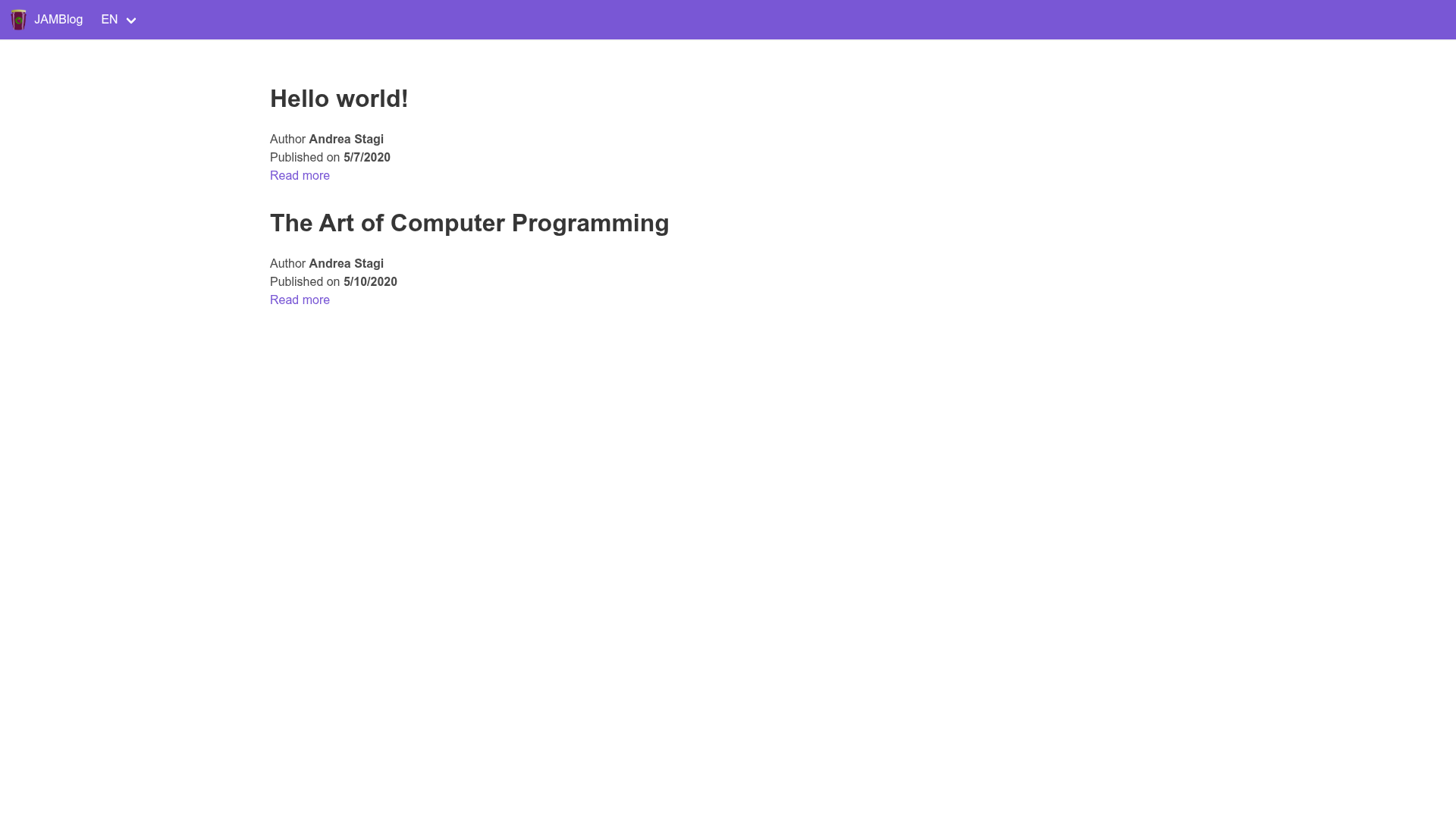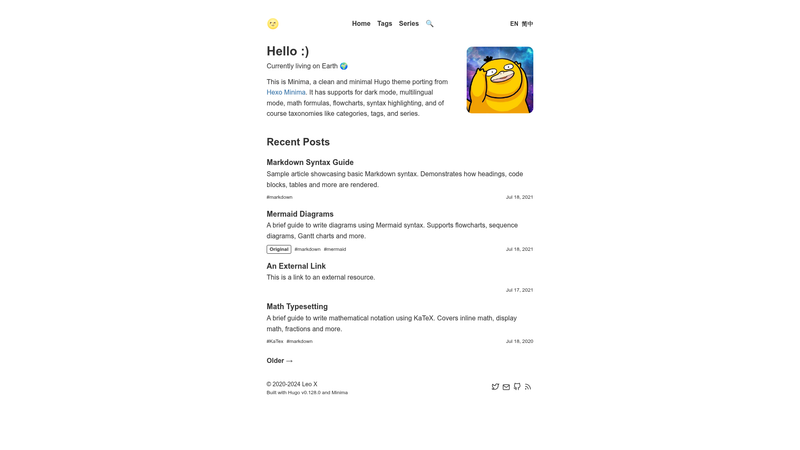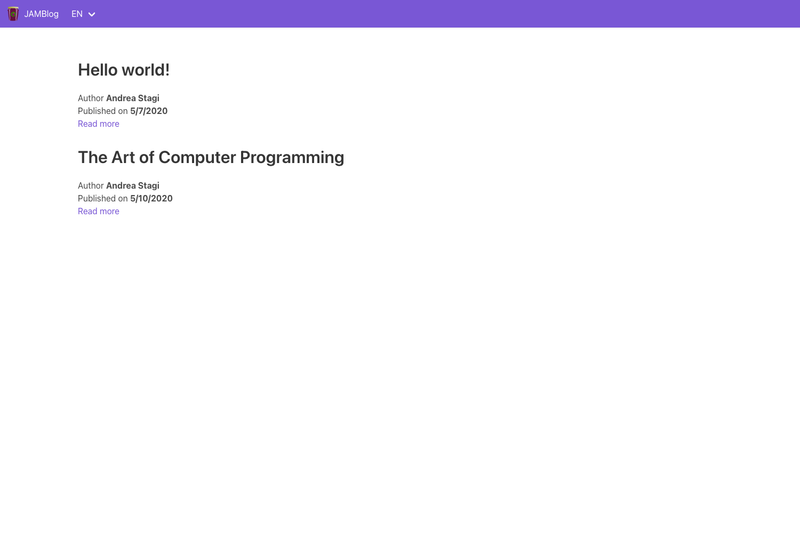
This is a JAMStack multilanguage blog template built with Nuxt.js and Strapi, designed to generate a static site with internationalization support. It is a GitHub repository that includes a frontend, a headless CMS integration, and deployment settings for Netlify, and it links to a step-by-step tutorial on dev.to.
What is this template?
The template is a boilerplate for building a multilingual blog using the JAMStack architecture. It uses Nuxt.js as the frontend framework and Strapi as the headless CMS for content management. The template takes content from Strapi and produces a fully static site through the yarn export command, which can then be served by any static hosting provider. The project is based on the tutorial "How to build a JAMStack multi-language blog with Nuxt.js" by astagi on dev.to.
Key Features
- Nuxt.js frontend — The blog is built on Nuxt.js, a Vue.js framework, providing a component-based user interface.
- Strapi CMS integration — Strapi serves as the headless CMS, allowing content to be created and managed through an admin panel.
- Multilanguage / i18n support — The template is designed for internationalization, enabling content to be published in multiple languages.
- JAMStack static export — The
yarn exportcommand generates a complete static site with no server-side requirements. - Netlify deployment badge — The repository includes a Netlify status badge, indicating it is set up for continuous deployment with Netlify.
- Yarn scripts — Provides predefined commands for installation, development, building, exporting, and serving the site locally.
Who is it for?
- Developers building multilingual blogs — They can use this template as a starting point to understand how Nuxt.js and Strapi work together in a JAMStack setup.
- Content teams that need a headless CMS — Editors can manage blog posts and translations in Strapi while developers handle the frontend.
- Organizations deploying to static hosting — Because the site is exported as static files, it can be hosted on Netlify or any similar service at low cost and high performance.
What can you do with it?
- Multilingual content creators: Publish blog posts in multiple languages and have Nuxt.js handle routing and locale switching.
- JAMStack learners: Study a working example of a Nuxt.js + Strapi project with i18n, including how to structure the data and pages.
- Rapid blog launch: Use the provided scripts to quickly scaffold a blog, then customize the design and content in Strapi.
How does it work?
The template provides a set of Yarn commands to manage the project. After running yarn install to install dependencies, yarn dev starts a development server with hot reload at localhost:3000. For production, yarn build builds the application, and yarn export generates the static site. Finally, yarn serve serves the exported site locally.
FAQ
What is Strapi?
Strapi is a headless CMS that provides an admin panel for managing content. In this template, it acts as the content source for the Nuxt.js frontend.
Do I need Yarn to run this project?
Yes, all the provided commands use Yarn, so you need the Yarn package manager installed. You can install it via npm or standalone.
Where can I find instructions?
The repository links to a dev.to tutorial by astagi that explains how to build the blog step by step.
Can I deploy this to any static hosting service?
Since the site is exported as static files with yarn export, it can be deployed to any static host. The repository includes a Netlify badge, suggesting Netlify is a recommended option.