Newsletter
Join the Community
Subscribe to our newsletter for the latest news and updates

A configurable portfolio-style Jekyll theme for writers.
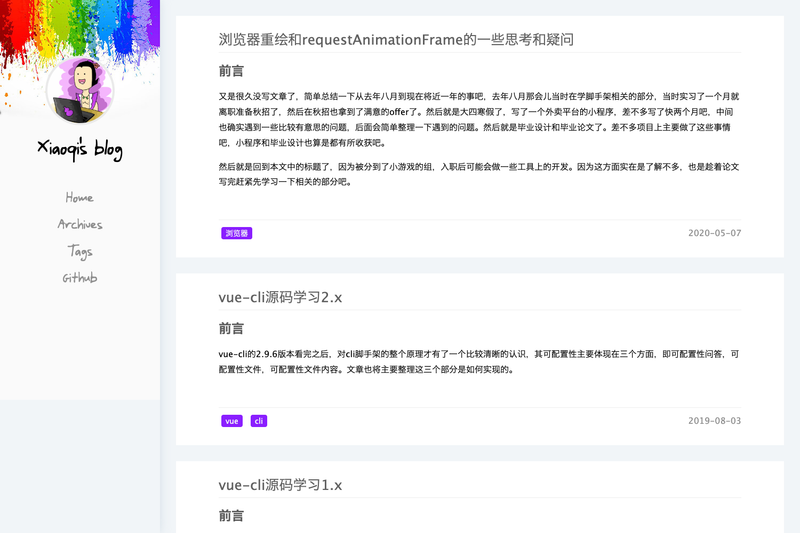
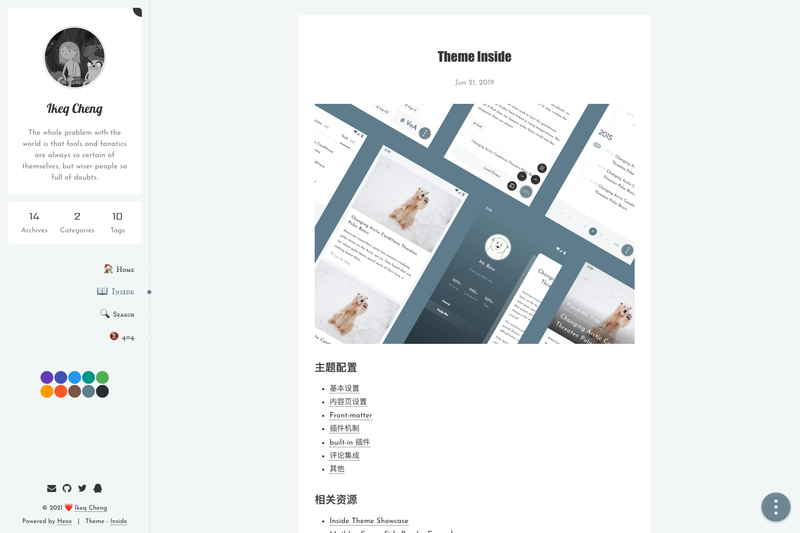
A minimal Hexo blog theme by Qxiaoqi with home, archives, and tags pages, customizable navigation, and dual GitHub/Gitee deployment.
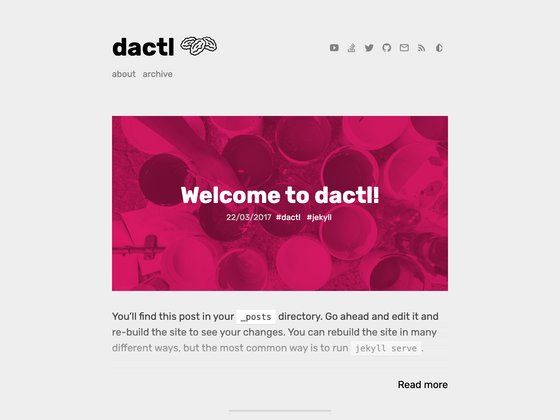
A fast, configurable Jekyll blog theme with a live Light/Dark theme switcher, hero-image post layouts, and GitHub Pages support.
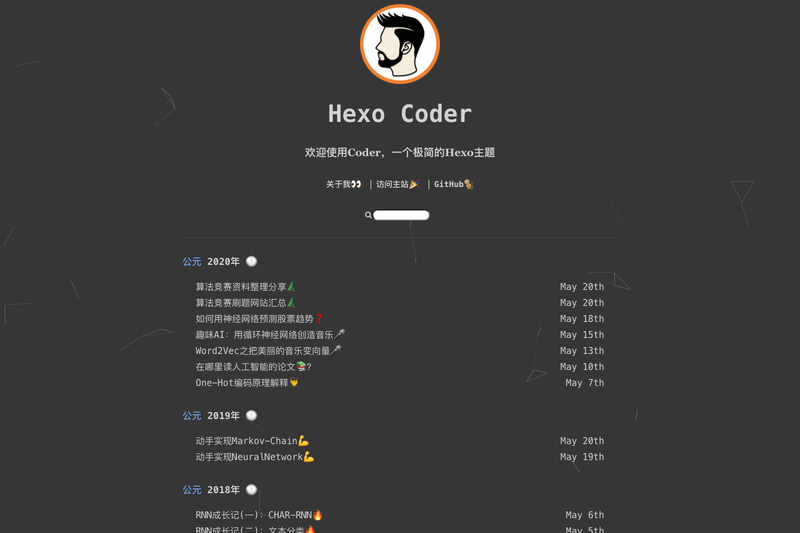
A clean, minimal Hexo blog theme for developers with dark/light styles, local search, and Valine comments.
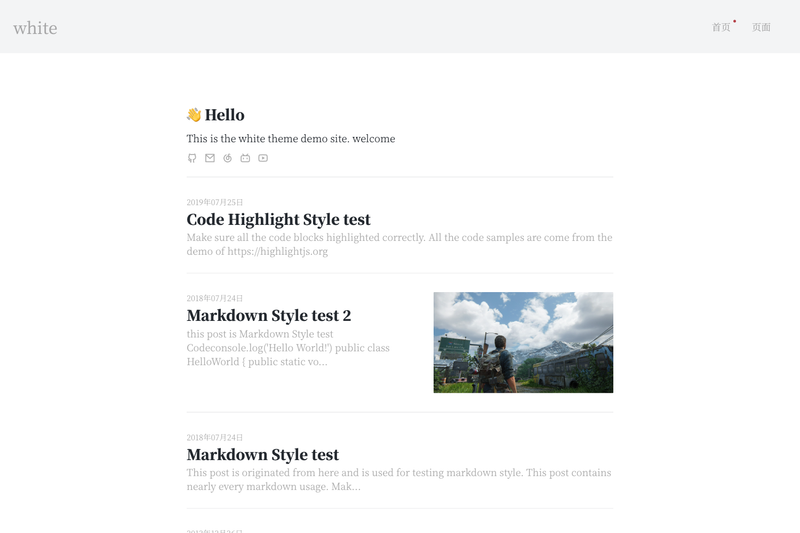
A pure, minimal Hexo theme that turns Markdown posts into a clean, white-styled blog.
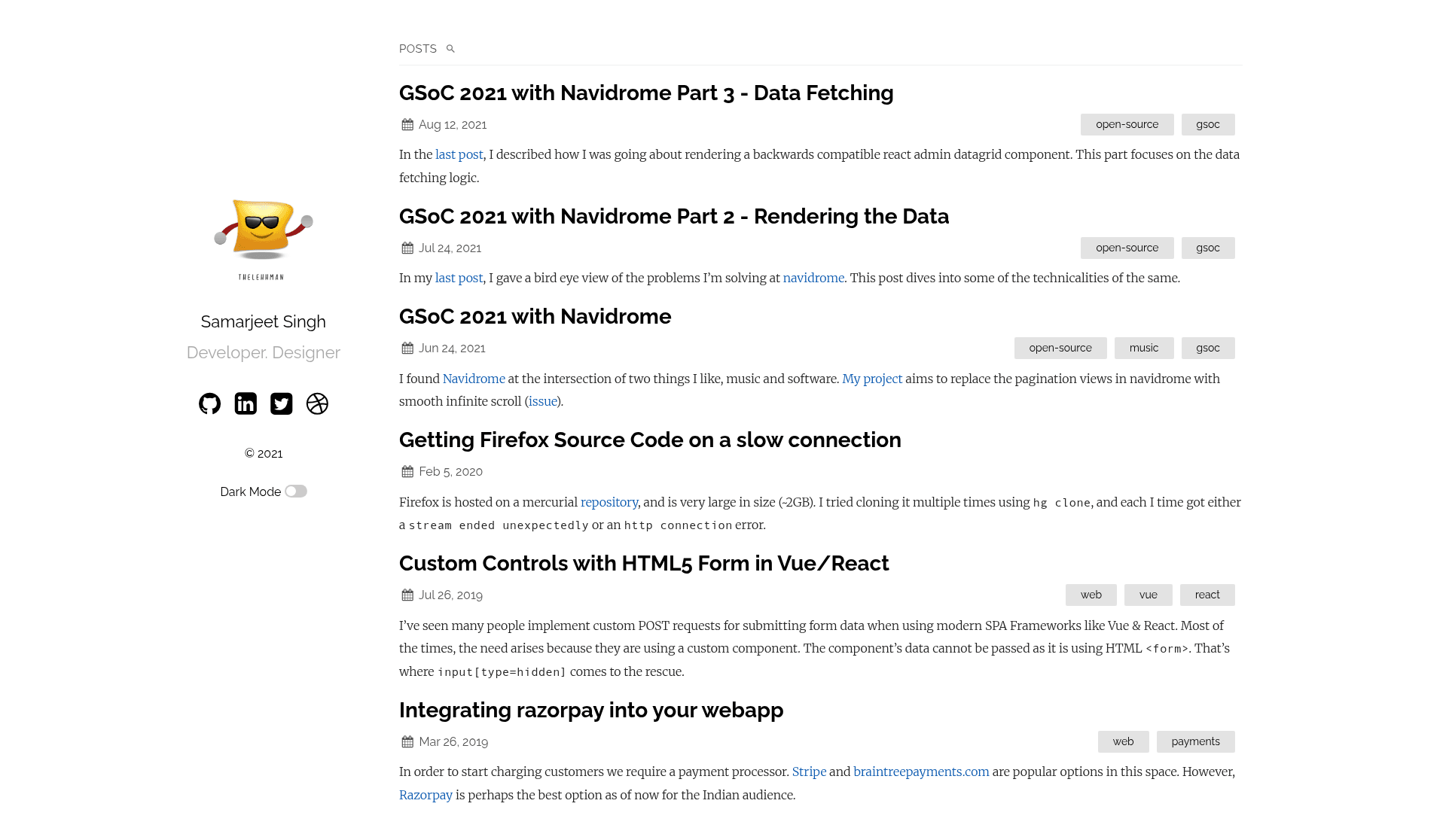
Plainwhite is a minimalist portfolio-style Jekyll theme for writers, distributed as a Ruby gem and GitHub-hosted remote_theme, that turns a standard Jekyll site into a personal blog and portfolio with a single line of configuration.
Plainwhite is an open-source Jekyll theme designed for writers and developers who want a clean, single-column portfolio and blog. It takes the standard Jekyll inputs — Markdown posts, pages, and a _config.yml file — and outputs a static HTML site with a sidebar portrait, tagline, and post list. The theme is maintained by Samar Sault (GitHub user samarsault), released under the MIT License, and has 471 stars on GitHub. It can be installed either as a gem (gem "plainwhite") or as a remote_theme on GitHub Pages (remote_theme: samarsault/plainwhite-jekyll).
dark_mode flag; the site checks the OS color scheme and saves the user's preference in a cookie.search flag; search is powered by Simple-Jekyll-Search and generates a search.json file in the site root with post metadata and content.disqus_shortname in the plainwhite config block.analytics_id; no extra plugin needed.assets/portfolio.png or overriding portfolio_image; support for a separate dark-mode image via portfolio_image_dark.condensed_mobile option.show_excerpts), multiline taglines, custom baseurl, and html_lang attribute are all set from _config.yml.social_links.remote_theme with no local build required, ideal for personal project pages.html_lang to any valid language code to control the HTML lang attribute.Yes. Plainwhite is open source under the MIT License, so it is free to use, modify, and distribute. You can also donate to the author via PayPal if you find it useful.
Add remote_theme: samarsault/plainwhite-jekyll to your _config.yml. No gem installation is needed for GitHub Pages.
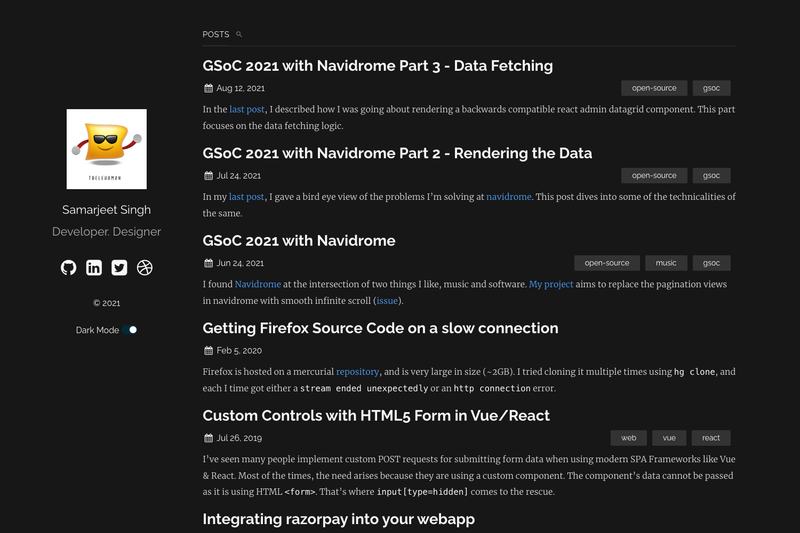
Yes, set plainwhite.dark_mode: true. The theme then adapts to the OS preferred color scheme and stores the choice in a cookie. You can provide a separate dark-mode portfolio image via portfolio_image_dark.
Set plainwhite.search: true. The theme uses the Simple-Jekyll-Search plugin to generate a search.json file that the JavaScript searches for posts based on user input.
Plainwhite includes three layouts: Home, Page, and Post. You can control which layouts use the condensed mobile sidebar via the condensed_mobile setting.